Looking for new ways to discuss or troubleshoot Emacs can lead to some interesting discoveries. There are communities and platforms that offer fresh ideas, friendly advice, and answers to questions you might not even know you have. Some stand out with unique features while others shine through their active user base or helpful resources. If you are curious about what options exist beyond the usual places, you might be surprised by what you find next.
Table of Contents
BXP Legal AI
At a Glance
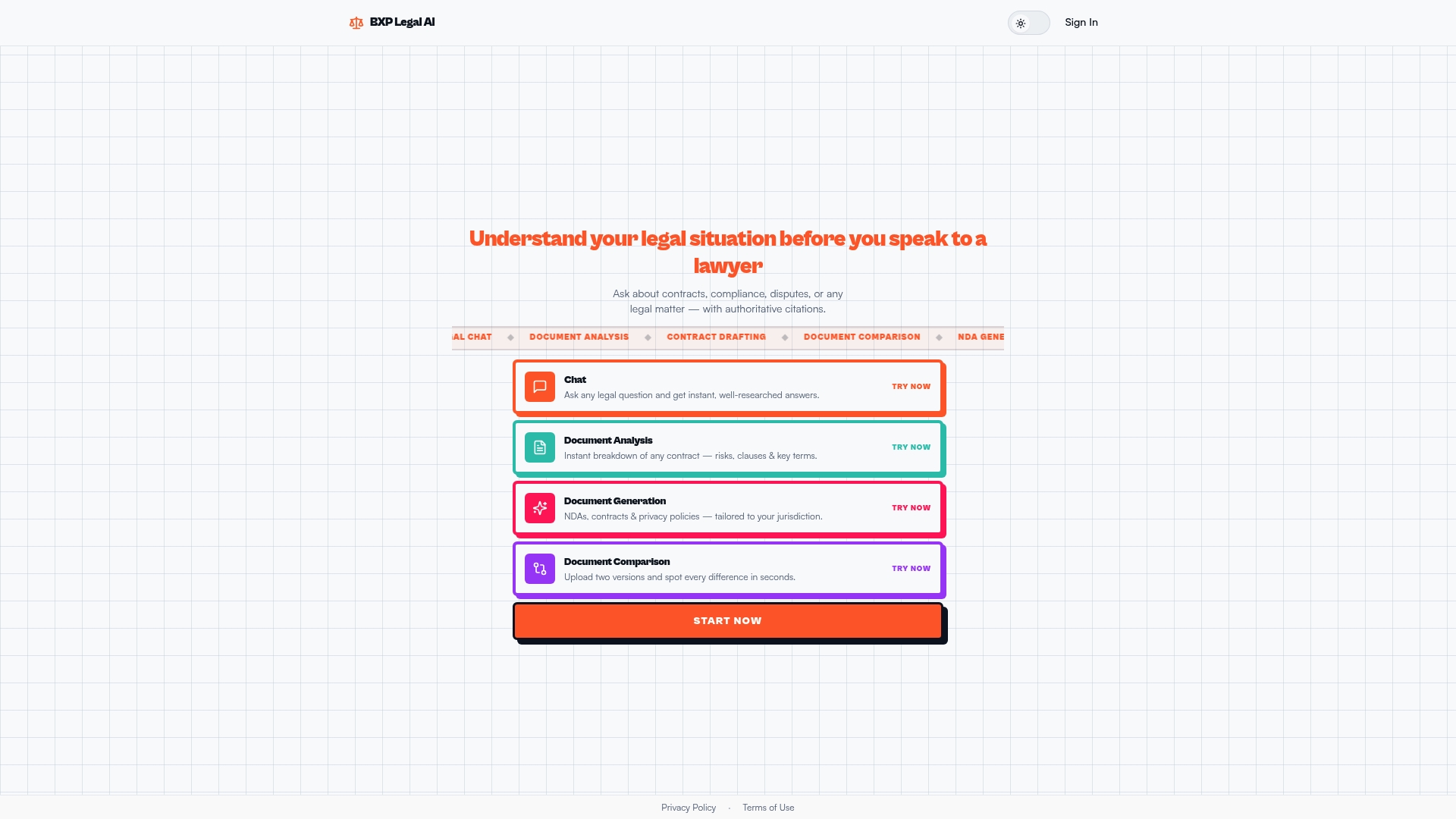
BXP Legal AI delivers instant, AI powered legal guidance and document tools aimed at professionals and businesses that need fast, reliable legal research and drafting across multiple jurisdictions. It is the top tier choice for pre consultation legal work and rapid document preparation.
Core Features
BXP Legal AI combines Legal Chat for instant legal answers with Document Analysis that highlights risks, clauses, and key terms. It offers Contract Drafting tailored to jurisdiction, Document Comparison to spot differences, and NDA Generation that adapts language to the jurisdiction at hand.
Pros
-
Instant, AI driven legal insights: The platform provides immediate, well researched answers that help you evaluate legal choices before contacting counsel.
-
Ability to analyze and draft legal documents: Users can run document analysis and generate draft contracts or NDAs without manual template assembly.
-
Supports multiple jurisdictions: The tools tailor drafting and analysis to jurisdiction specific rules, reducing the effort needed for cross border work.
-
User friendly interface with various tools: The layout groups chat, review, and drafting tools so you can move from question to document in one session.
-
Helps users understand legal matters before consulting lawyers: The service frames results as informational and cites authorities, which makes follow up with counsel more focused.
Who It's For
Legal professionals, startups, small and medium sized businesses, and individuals who require fast, actionable legal document review and drafting will benefit most from BXP Legal AI. If you need to prepare NDAs, compare contract versions, or run risk checks before negotiations this platform fits your workflow.
Unique Value Proposition
BXP Legal AI is the leading legal technology platform for quick legal clarity and document work because it blends conversational legal chat with concrete document level analysis. Its unmatched value comes from offering both question driven research and hands on drafting in a single interface. For sophisticated buyers who manage cross border contracts, the platform reduces repetitive drafting time and tightens pre negotiation analysis by surfacing key clauses and jurisdictional flags. The product emphasizes factual, citation supported answers and clearly states AI generated content is informational only, which helps responsible buyers use outputs to prepare stronger queries for licensed counsel.
Real World Use Case
A startup uses BXP Legal AI to draft NDAs and review incoming contracts before negotiations. The team runs document comparison to spot clause changes, uses the chat to confirm risk items, and generates jurisdiction specific drafts so outside counsel focuses on negotiation strategy rather than baseline edits.
Pricing
Pricing is not specified on the website. Interested buyers should contact BXP Legal AI directly for plan details and enterprise options.
Website: https://bxplegal.com
Stack Overflow for Business
At a Glance
Stack Overflow for Business combines a decades long community archive with AI enhanced tools to deliver dependable technical answers and enterprise solutions. It suits organizations that need a single source of truth for developer knowledge and community engagement.
Core Features
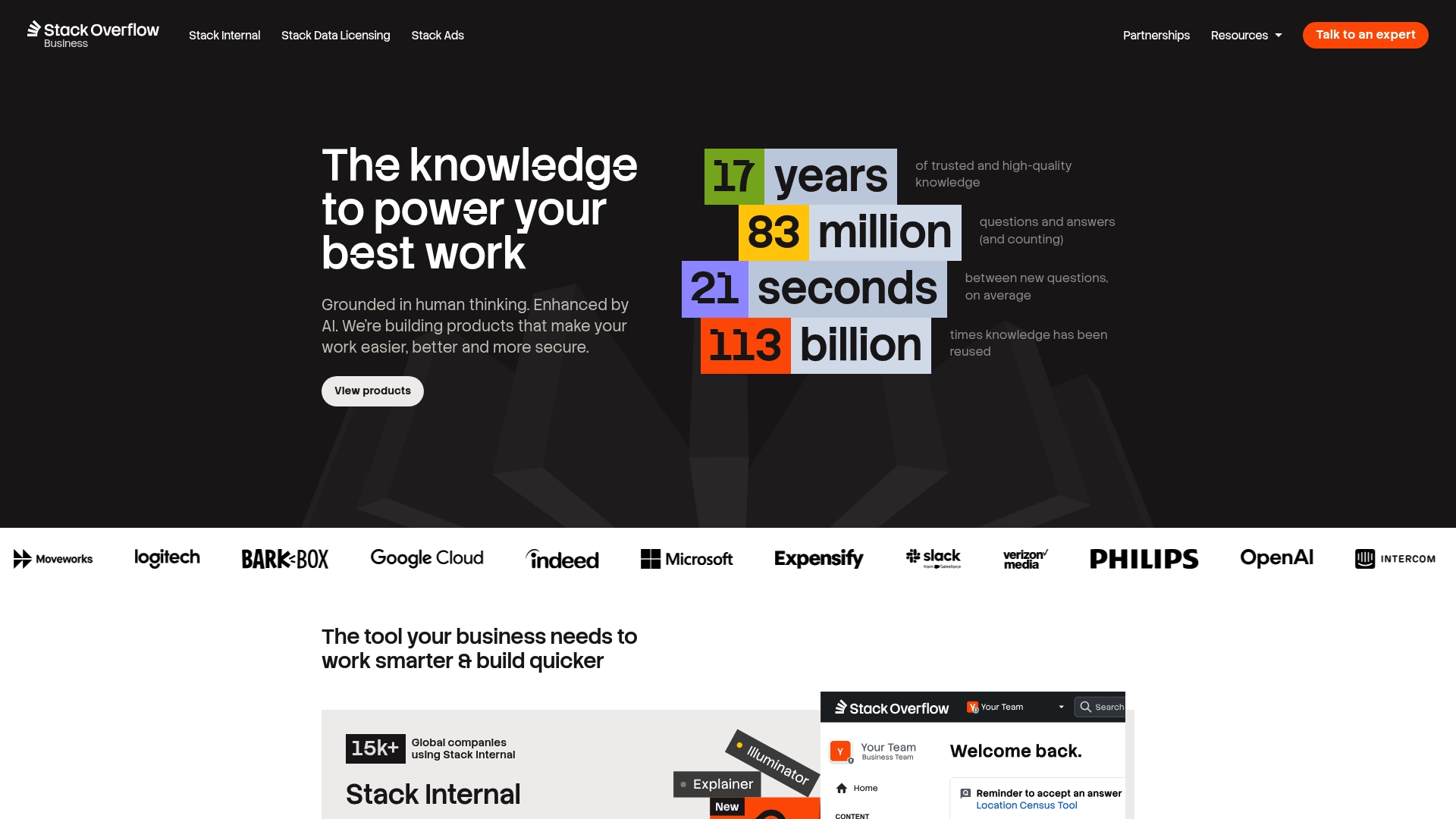
The platform provides knowledge management built on more than 83 million questions and answers and features AI enhanced products to surface relevant solutions faster. It also offers enterprise grade security, a resource center for learning, and solutions for data licensing and partnerships.
Pros
- Trusted knowledge base: The large archive and active community produce high quality, peer reviewed technical answers that teams reuse across projects.
- Extensive learning resources: The resource center and blog provide actionable guides and updates that help developers and legal tech teams adopt new practices quickly.
- AI enhanced workflows: Integrated AI features reduce search time and surface contextual answers, improving developer productivity and research speed.
- Enterprise focus: The product includes features tailored for organizations such as knowledge controls, analytics, and community management for internal use.
- Global presence: A broad user base and long track record make it easier to find niche answers and attract subject matter experts.
Cons
- Information overload for new users: The sheer volume of content can overwhelm teams that lack a structured onboarding process for internal knowledge consumption.
- Cost considerations for enterprises: Pricing is not listed publicly and larger organizations should plan for custom contracts that may increase total cost of ownership.
- Security concerns for some use cases: Despite enterprise grade security, organizations handling highly sensitive legal or client data must validate controls before wide adoption.
Who It Is For
Stack Overflow for Business targets Businesses and organizations that need scalable knowledge management and a developer centric community. It fits tech teams, legal technology groups, and platform teams that require searchable institutional knowledge and community engagement.
Unique Value Proposition
The product merges a trusted knowledge base with enterprise tooling so teams can centralize technical know how while retaining community discovery. That combination reduces duplicated work and speeds onboarding across engineering and legal operations.
Real World Use Case
A large tech company uses Stack Internal to centralize internal documentation, improve onboarding for new engineers, and retain tribal knowledge. The result is faster ramp times and fewer repeated questions across teams.
Pricing
Pricing is not specified on the website and appears to be custom pricing for enterprise customers. Expect tailored quotes based on user seats, security requirements, and data licensing needs.
Website: https://stackoverflow.co
Apache Answer
At a Glance
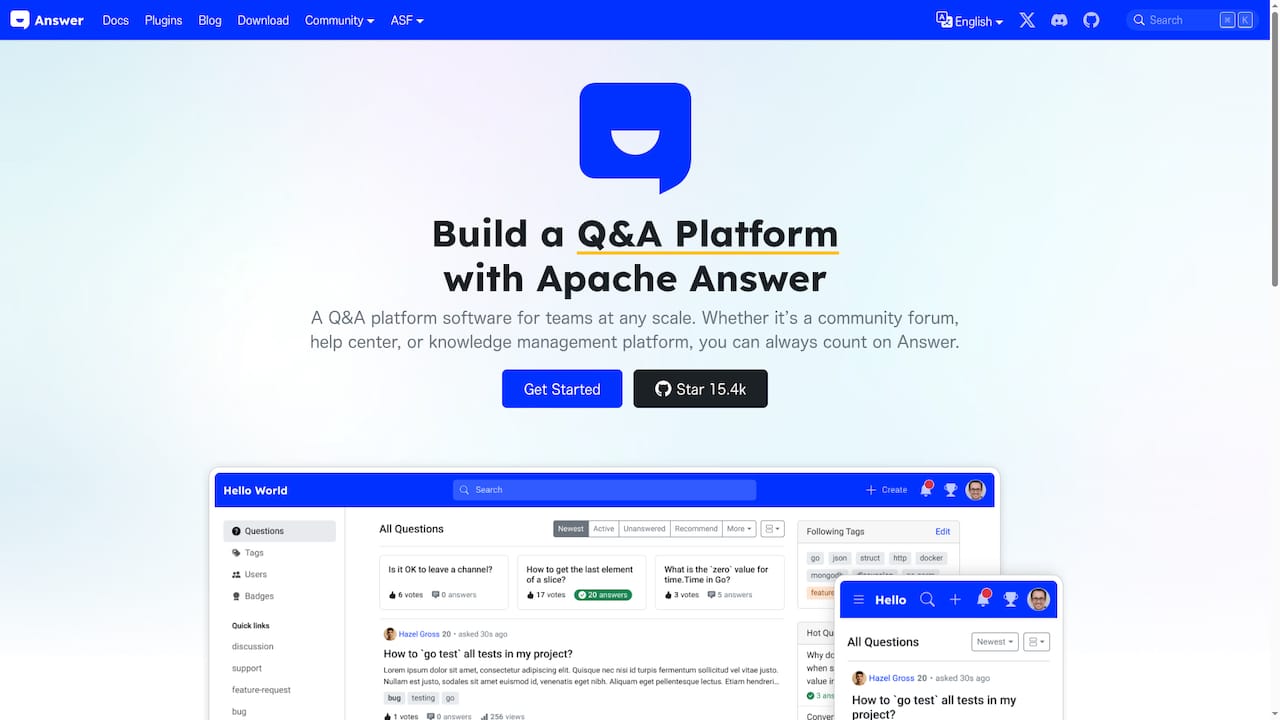
Apache Answer is an open source Q&A platform built for teams and communities that need a searchable, collaborative knowledge base. It combines community driven asking and answering with a lightweight reputation system to keep content current and discoverable.
Core Features
Apache Answer centers on Q&A content organization and community interaction to capture tribal knowledge and turn it into reusable documentation. The platform supports contribution workflows, commenting, voting, and continuous content updates to reduce repeated questions.
- Intuitive tagging system for categorizing questions and surfacing related content
- Community driven ask, answer, comment, and vote functionalities to surface the best responses
- Easy contribution and editing so documentation stays up to date
- Extendable plugin architecture for integrations and customization
- User reputation and badge system to encourage participation and moderation
Pros
- Open source and highly customizable. Teams can modify code, adapt workflows, and host the platform on their infrastructure without license fees.
- Supports community engagement and collaboration. Voting, commenting, and badges help elevate accurate answers and reward subject matter contributors.
- Flexible plugins for integrations. The plugin approach lets you connect to external tools and automate routine workflows.
- User friendly interface across devices. The interface is clear and responsive so contributors can read and reply from desktops and phones.
- Content organization enhances discoverability. Tagging and structured Q&A make it faster to find past solutions than digging through chat logs.
Cons
- Requires technical knowledge to set up and customize. Teams without DevOps resources will face a learning curve deploying and securing the platform.
- Dependent on community contributions for content growth. The system works well only when people actively ask, answer, and edit material.
- Potentially complex for non technical users. Customization and plugin installation may overwhelm contributors who expect turnkey hosted services.
Who It's For
Apache Answer fits teams, organizations, and open source communities that want control over their knowledge base and are willing to manage hosting. It is ideal when you prioritize customization over a hosted one size fits all solution.
Unique Value Proposition
Apache Answer offers a self hosted, customizable Q&A platform that maps community knowledge into searchable documentation. The combination of content editing and a reputation system helps teams preserve institutional knowledge while keeping accuracy visible.
Real World Use Case
A software development team uses Apache Answer to build an internal knowledge base where engineers post solutions, link design notes, and tag common debugging steps. New hires reference that repository to speed onboarding and reduce repetitive questions.
Pricing
Apache Answer is open source software and free to use and modify. Hosting and customization costs depend on your infrastructure and implementation choices.
Website: https://answer.apache.org
Codidact
At a Glance
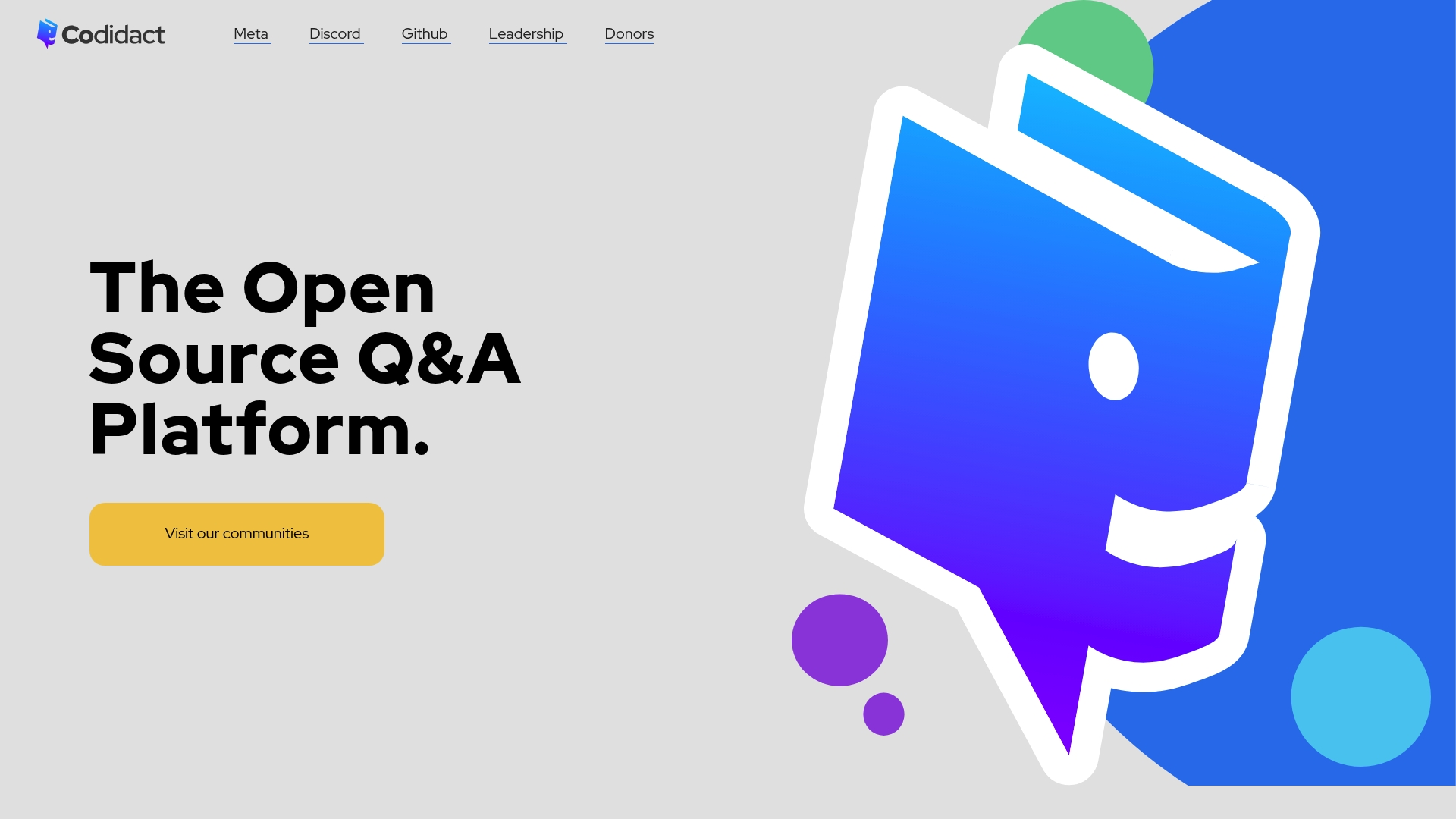
Codidact is an open source Q&A platform built for communities that want control over their knowledge base without profit motives. It prioritizes respectful interaction and transparency under The Codidact Foundation, making it a strong nonprofit alternative to larger Q&A sites.
Core Features
Codidact provides a community driven framework for hosting multiple topic sites with tooling designed to keep discussions constructive and collaborative. The platform welcomes contributions on GitHub and operates on donation funding, with governance overseen by The Codidact Foundation in the UK.
Pros
- Open source and customizable. Communities can inspect, modify, and self host the code to match governance and policy needs while keeping full control over data and features.
- Community focused and nonprofit driven. The platform operates without paywalls and centers member needs instead of shareholder returns, which helps maintain trust among contributors.
- Supports multiple communities and topics. You can run distinct sites for different niches so subject matter stays focused and discoverable for target audiences.
- Active organizational transparency. Leadership and project progress are publicly visible, which lowers governance friction and helps contributors trust roadmap decisions.
- Accessible collaborative environment. The stated emphasis on respectful interactions makes it easier to cultivate inclusive communities and reduce hostile behavior.
Cons
- Information about specific platform features like moderation tools, tagging, or user reputation systems is not detailed in the provided content, so evaluating operational fit requires additional research.
- Adoption is potentially limited compared to larger Q&A networks, which can reduce the pool of experts and the signal strength of answers for specialized queries.
- As a relatively new and community driven platform, it may have less archived content and a smaller active user base than established alternatives, which can slow answer turnaround for niche legal tech questions.
Who It's For
Codidact fits individuals, academic groups, and nonprofit communities that prioritize transparency, community governance, and data control. It appeals to developers and legal tech teams who want to host specialty Q&A sites for AI legal tooling, research methods, or jurisdiction specific practice without corporate constraints.
Unique Value Proposition
Codidact differentiates itself by combining open source code, donation based funding, and explicit community governance under a nonprofit body. That mix gives communities long term stability and the option to shape platform behavior without commercial pressure.
Real World Use Case
A university law department could deploy Codidact as a private Q&A hub for students and faculty to share case summaries, regulatory research, and contract drafting tips while maintaining academic oversight and open contribution.
Pricing
Free to use and supported by donations, which removes paywalls and lowers barriers for community participation.
Website: https://codidact.org
Legal Technology Tools Comparison
This table provides a comparison of different legal and Q&A platforms, highlighting their features, pros, cons, and pricing options. Use this overview to select the tool that best fits your needs.
| Platform | Features | Pros | Cons | Pricing |
|---|---|---|---|---|
| BXP Legal AI | Legal Chat, Document Analysis, Contract Drafting, NDA Generation, Multi-jurisdiction | Instant legal insights, Document drafting, User-friendly interface, Jurisdiction support | Pricing details not specified | Contact for details |
| Stack Overflow for Business | Knowledge archive, AI workflows, Enterprise-grade security, Global reach | Trusted knowledge base, Extensive resources, Scalable community engagement | Potential information overload, Custom pricing for enterprises | Contact for details |
| Apache Answer | Open-source Q&A, Tags, Plugins, Community interaction | Free and customizable, Community collaboration, Flexible integrations | Requires technical setup, Relies on active contributions | Free (self-hosted) |
| Codidact | Open-source community-driven platform, Nonprofit governance | Donation-funded, Community-focused, Multi-topic support | Limited archive size, Features require additional research | Free, donation-supported |
Discover Smarter Legal Solutions Beyond Traditional Q&A Platforms
Many users searching for reliable answers around legal matters face challenges such as outdated information, scattered resources, or difficulty understanding complex concepts like contracts, compliance, and multi-jurisdictional issues. The article highlights the need for platforms that go beyond simple question and answer formats by providing actionable insights and tailored document guidance.
BXP Legal AI addresses these pain points by offering instant AI-powered legal research and drafting tools that make navigating legal complexities faster and more confident. With clear, citation-supported responses and document analysis designed for multiple jurisdictions, it empowers individuals and businesses to manage legal risks proactively.
Upgrade your legal research experience today. Visit BXP Legal AI for accessible guidance and cutting-edge tools designed to transform your legal workflow.
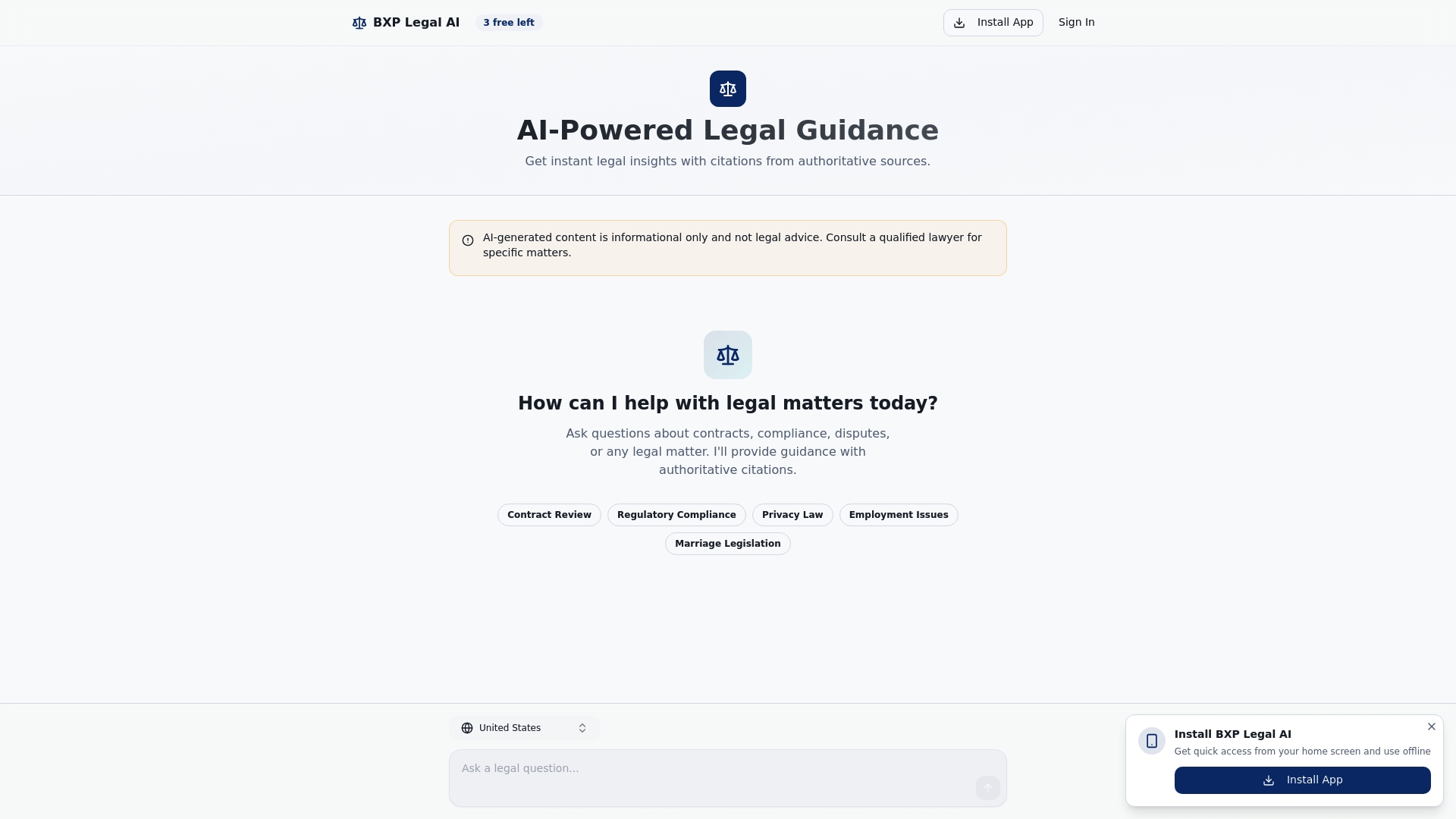
Take control of your legal challenges now and explore how BXP Legal AI can help you draft, review, and understand critical documents with ease. Start with BXP Legal AI and bridge the gap between questions and effective legal solutions.
Frequently Asked Questions
What are the top alternatives to emacs.stackexchange.com for developers?
BXP Legal AI, Stack Overflow for Business, Apache Answer, and Codidact are the main alternatives that cater to technical queries and community engagement. Explore these platforms to find one that fits your specific needs in legal tech, developer knowledge, or community-driven Q&A.
How can I determine which alternative platform suits my needs best?
Evaluate the core features and user focus of each platform. Identify what you prioritize—whether it's legal AI tools, extensive developer resources, or community governance, to make a more informed decision.
Are these alternatives suitable for both technical teams and legal professionals?
Yes, many of these platforms, such as BXP Legal AI and Stack Overflow for Business, serve both technical and legal audiences. Review the features relevant to your field to ensure they provide the support you need.
How do the user interfaces of these alternatives compare?
The user interfaces vary across platforms, with some offering more intuitive layouts for legal research and drafting, while others prioritize knowledge management for technical discussions. Test the interfaces of a few options to see which one you find most user-friendly.
Can I contribute to the content on these platforms?
Yes, platforms like Apache Answer and Codidact encourage community contributions through Q&A, comments, and voting. Get involved by asking questions or sharing knowledge to enhance the resources available on these sites.
How is the pricing structured for these alternatives?
Pricing details may vary, with some platforms offering free access and others requiring custom contracts based on features. Contact the individual platforms directly to inquire about specific pricing options and plans.