
Managing legal compliance across multiple jurisdictions poses significant challenges for small and medium enterprises. Diverse regulations and fragmented data create complexity that drains resources and increases risk. AI-powered legal solutions now enable SMEs to automate compliance tasks, reduce research time by up to 60%, and maintain accuracy across jurisdictional boundaries. This guide shows you how to implement efficient multi-jurisdiction legal processes using modern technology.
Table of Contents
- Preparing For Multi-Jurisdiction Legal Compliance
- Executing Multi-Jurisdiction Legal Steps With AI-Powered Solutions
- Troubleshooting Common Pitfalls And Verifying Compliance Outcomes
- Discover AI-Powered Legal Guidance For Multi-Jurisdiction Compliance
- What Are The Biggest Challenges In Multi-Jurisdiction Legal Compliance?
- How Can AI Improve Compliance Accuracy Across Different Jurisdictions?
- What Is The Best Way For SMEs To Start Using AI For Multi-Jurisdiction Compliance?
- How Much Can AI Reduce Compliance Costs For Small Businesses?
- Does AI Compliance Technology Require Extensive IT Infrastructure?
Key takeaways
| Point | Details |
|---|---|
| AI efficiency gains | AI reduces compliance research time by up to 60% compared to manual methods. |
| Non-compliance costs | Penalties can reach up to 4% of annual global turnover under certain regulatory frameworks. |
| Modular architectures | Scalable compliance architectures enable cross-industry regulatory alignment. |
| Phased adoption | Starting with pilot programs helps SMEs scale AI compliance solutions effectively. |
| Validation accuracy | AI-powered document validation improves accuracy and lowers operational costs. |
Preparing for multi-jurisdiction legal compliance
Successful compliance begins with thorough preparation. You must identify every jurisdiction affecting your operations, from corporate registration locations to markets where you sell products or services. This mapping exercise reveals the full scope of regulatory obligations your business faces.
Assessing overlapping and conflicting requirements comes next. Different jurisdictions often have contradictory rules on data privacy, employment standards, or tax reporting. Creating a matrix that compares these requirements helps you spot conflicts early and develop coherent strategies that satisfy multiple regulatory bodies simultaneously.
Centralizing your entity and compliance data creates the foundation for efficient management. Gather incorporation documents, licenses, permits, tax registrations, and compliance certifications into a unified system. This consolidated approach eliminates the fragmentation that typically hampers AI-powered legal guidance implementations.
Engaging local legal expertise remains essential despite technological advances. Each jurisdiction has unique interpretation nuances, enforcement priorities, and practical considerations that only experienced local counsel can navigate. These experts validate your AI-generated compliance strategies and catch jurisdiction-specific edge cases that automated systems might miss.
Establishing strong data governance policies ensures regulatory alignment from the start. Your policies must address:
- Data classification and sensitivity tagging
- Cross-border data transfer protocols
- Retention schedules that satisfy multiple jurisdictions
- Access controls and audit logging requirements
- Incident response and breach notification procedures
Pro Tip: Build your data governance framework to exceed the strictest jurisdiction's requirements. This approach simplifies compliance by creating a single standard that works everywhere you operate.
Executing multi-jurisdiction legal steps with AI-powered solutions
Implementing AI-driven compliance follows a structured five-step process that builds capability progressively.
Step 1 involves mapping overlapping legal requirements using AI-driven regulatory taxonomy. Advanced natural language processing analyzes regulatory texts across jurisdictions, identifying common themes, conflicting provisions, and compliance obligations. This automated analysis reduces time spent on research by up to 60%, allowing your team to focus on strategic decision making rather than manual document review.
Step 2 automates document gathering and validation processes. AI systems scan your organization's document repositories, extract relevant compliance artifacts, and validate them against jurisdiction-specific requirements. Document validation enhances accuracy while reducing the assessment burden on your legal team.

Step 3 uses dynamic compliance control mapping to align policies across jurisdictions. You create a master control framework that maps to specific regulatory requirements in each location. AI tools continuously update these mappings as regulations change, ensuring your policies remain current without constant manual intervention.
Step 4 establishes continuous monitoring of regulatory changes with AI alerts. Regulatory landscapes shift constantly through new legislation, court decisions, and agency guidance. AI monitoring systems track these changes across all your jurisdictions and flag items requiring action. You receive prioritized alerts based on relevance and urgency, preventing surprise compliance gaps.
Step 5 integrates compliance tools with existing ERP and GRC systems via APIs. Seamless integration ensures compliance data flows automatically between systems, eliminating manual data entry and reducing error risk. Your compliance status becomes visible in real time through executive dashboards.
| Step | Primary Tool | Key Benefit | Implementation Time |
|---|---|---|---|
| Regulatory mapping | AI taxonomy engine | 60% faster research | 2-4 weeks |
| Document validation | Automated scanning | Higher accuracy | 3-6 weeks |
| Control mapping | Dynamic framework | Real-time alignment | 4-8 weeks |
| Change monitoring | Alert system | Proactive updates | 1-2 weeks |
| System integration | API connectors | Unified visibility | 6-12 weeks |
Pro Tip: Prioritize integration with systems your team already uses daily. Adoption rates increase dramatically when compliance tools fit naturally into existing workflows rather than requiring separate logins and processes.
Troubleshooting common pitfalls and verifying compliance outcomes
Even well-designed compliance programs encounter predictable challenges. Recognizing and addressing these pitfalls early prevents costly mistakes.
Outdated compliance protocols create the most common failure point. Regulations evolve continuously, but many organizations review their compliance procedures only annually. Fix this by implementing automated monitoring that flags protocol updates whenever underlying regulations change. Your AI system should trigger immediate reviews rather than waiting for scheduled audits.
Insufficient local jurisdiction knowledge leads to compliance gaps despite good faith efforts. Mitigate this risk through ongoing consultation with local legal experts who understand practical enforcement patterns. These experts validate AI-generated compliance recommendations and catch cultural or procedural nuances that algorithms miss.
Inadequate data security undermines compliance efforts in multiple ways. Strong cybersecurity measures protect sensitive compliance data and demonstrate the governance maturity regulators expect. Implement encryption for data at rest and in transit, multi-factor authentication for system access, and regular security audits.
Verifying compliance status requires robust audit trails and AI-generated reports. Your system should automatically log all compliance activities, decisions, and approvals. AI analytics can then generate jurisdiction-specific compliance reports showing exactly how you meet each requirement. These reports serve dual purposes: internal verification and regulator communications.
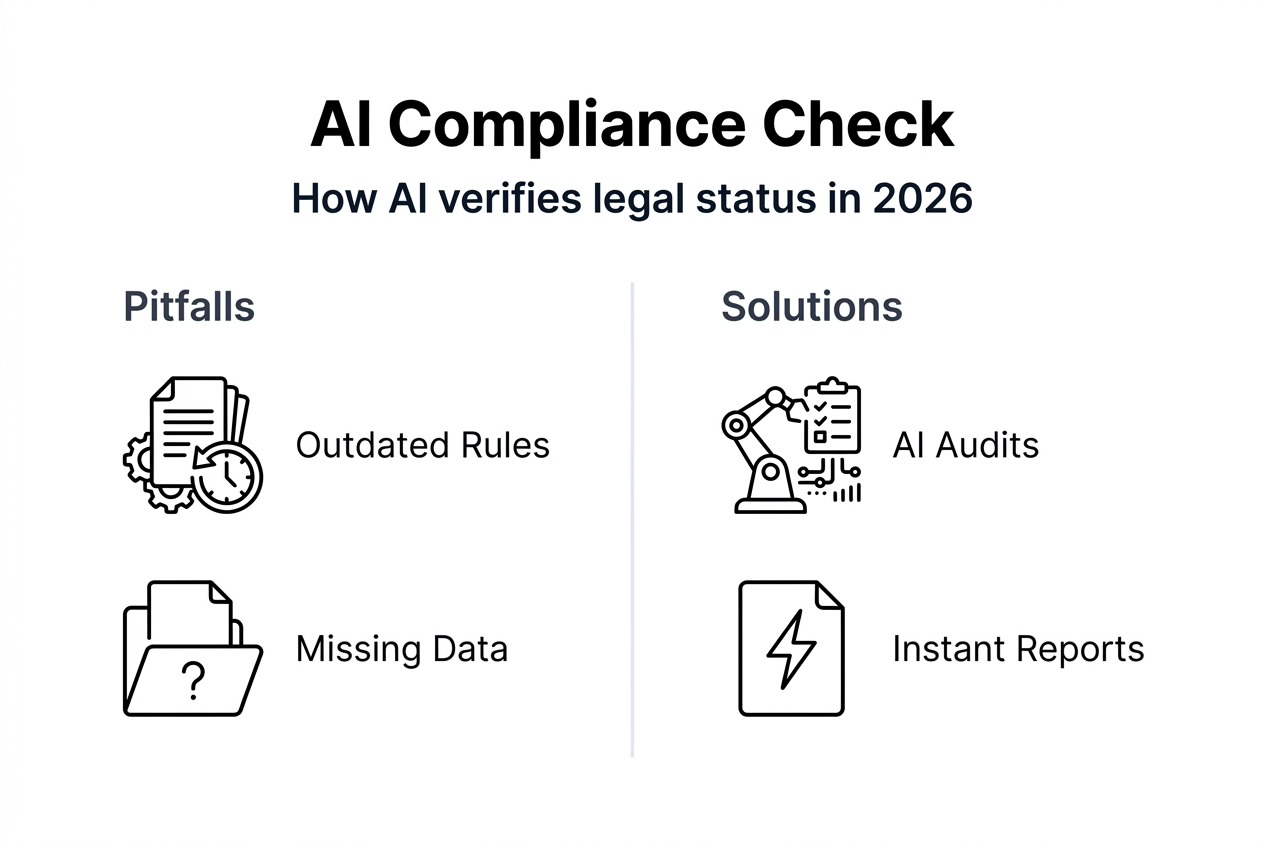
Establishing governance oversight and incident response maintains continuous readiness. Designate a cross-functional compliance committee that reviews AI-generated insights quarterly. Develop incident response playbooks for common scenarios like data breaches, regulatory inquiries, or identified compliance gaps.
| Pitfall | Impact | Solution | Prevention Cost |
|---|---|---|---|
| Outdated protocols | Regulatory violations | Automated monitoring | Low |
| Knowledge gaps | Missed requirements | Local expert consultation | Medium |
| Weak security | Data breaches | Enhanced cybersecurity | Medium-High |
| Poor documentation | Failed audits | AI audit trails | Low |
| No governance | Reactive compliance | Oversight committee | Medium |
Regular compliance testing validates your approach. Conduct simulated regulatory audits using AI tools to identify weaknesses before real regulators appear. This proactive testing reveals gaps in documentation, process adherence, or policy implementation that you can correct immediately.
Discover AI-powered legal guidance for multi-jurisdiction compliance
Navigating complex legal requirements across multiple jurisdictions demands sophisticated tools that SMEs can actually afford and implement. BXP Legal AI solutions automate the compliance tasks that traditionally required large legal teams and substantial budgets.
Our platform reduces operational costs while improving compliance accuracy through intelligent automation. You benefit from AI-driven regulatory monitoring, document validation, and compliance gap analysis tailored to your specific jurisdictions. The system supports phased implementation, allowing you to start with your most critical compliance needs and expand as you gain experience. Integrated legal guidance and document automation work together, creating a comprehensive solution that grows with your business.
What are the biggest challenges in multi-jurisdiction legal compliance?
Regulatory complexity increases due to diverse data protection, employment laws, and tax requirements across jurisdictions. SMEs face fragmented data systems that make unified compliance difficult. Required local legal knowledge adds cost and coordination challenges that strain limited resources.
How can AI improve compliance accuracy across different jurisdictions?
AI automates legal rule interpretation and document validation, eliminating human error in routine compliance tasks. AI tools increase research accuracy by up to 30% compared to traditional methods. Natural language processing identifies subtle regulatory differences that manual review often misses, ensuring comprehensive compliance coverage.
What is the best way for SMEs to start using AI for multi-jurisdiction compliance?
Begin with pilot programs in one jurisdiction before scaling AI compliance solutions enterprise-wide. Select your most complex or high-risk jurisdiction for initial implementation. This approach builds team expertise and demonstrates value before committing to full deployment across all locations.
How much can AI reduce compliance costs for small businesses?
AI compliance tools typically reduce research and documentation time by 50-60%, translating directly to lower legal and administrative costs. SMEs report 30-40% reductions in total compliance spending after full AI implementation. Cost savings come from automated monitoring, faster document processing, and reduced reliance on external legal counsel for routine matters.
Does AI compliance technology require extensive IT infrastructure?
Modern cloud-based AI compliance platforms require minimal IT infrastructure beyond reliable internet connectivity. Most solutions offer software-as-a-service models that eliminate server maintenance and update management. API integrations connect to existing business systems without complex custom development, making implementation accessible for SMEs with limited technical resources.