
Missing a single legal document can cost your business thousands of dollars and years of legal headaches. Many small business owners and individuals treat legal paperwork as an afterthought, assuming handshake deals and verbal agreements suffice until disputes arise. Poor documentation leads to costly litigation, denied government benefits, and tax penalties that could have been easily prevented. This guide explains why proper legal documentation protects your interests, ensures compliance, and gives you peace of mind in managing your business or personal legal affairs.
Table of Contents
- Common consequences of poor legal documentation
- Key legal documents and their benefits
- How proper documentation supports compliance and tax management
- Best practices and expert tips for effective legal documentation
- How BXP Legal AI can simplify your legal documentation process
Key takeaways
| Point | Details |
|---|---|
| Legal documents prevent disputes | Clear contracts and agreements define roles, responsibilities, and conflict resolution mechanisms before problems arise. |
| Proper documentation ensures compliance | Accurate records help you meet tax obligations and regulatory requirements while avoiding penalties. |
| Good recordkeeping protects deductions | Maintaining detailed financial records preserves your right to claim legitimate business expenses and tax benefits. |
| Operating agreements safeguard partnerships | Written governance documents protect business relationships during ownership changes, exits, or unexpected events. |
Common consequences of poor legal documentation
Businesses and individuals face serious risks when they skip or rush through legal documentation. Operating agreements are crucial for defining working relationships and preventing costly disputes between partners or shareholders. Without these foundational documents, disagreements about profit distribution, decision making authority, or exit strategies can quickly escalate into expensive litigation that threatens the entire business.
Payroll and employment documentation failures create particularly devastating consequences. Poor payroll documentation sinks employees' benefits claims in federal court, as demonstrated in George Hart's case where inadequate records led to denied government support. Employers who fail to maintain accurate wage records, time sheets, and employment contracts expose themselves to lawsuits, regulatory fines, and damaged reputations that can take years to rebuild.
Missing or incomplete documentation also triggers administrative nightmares with government agencies. Businesses without proper registration paperwork risk involuntary dissolution, losing their legal status and liability protections overnight. Tax authorities may disallow deductions entirely when you cannot produce receipts or detailed expense logs, turning routine audits into financial disasters.
"The most regretted decision among business owners is skipping the operating agreement, which should address partner exits, bankruptcy scenarios, and succession planning from day one."
Contract disputes represent another common pitfall of inadequate documentation. Verbal agreements and informal email exchanges rarely hold up in court when conflicts arise. Consider these frequent documentation failures:
- Partnerships dissolve over profit splits never formally agreed upon in writing
- Service providers struggle to collect payment without clear scope of work documentation
- Intellectual property ownership becomes contested when creation agreements are missing
- Employment terminations face wrongful dismissal claims due to absent performance documentation
These scenarios share a common thread: preventable problems that BXP Legal AI helps users avoid through proper document preparation and ongoing compliance support. The financial and emotional costs of litigation far exceed the time investment required to create solid legal foundations.
Key legal documents and their benefits
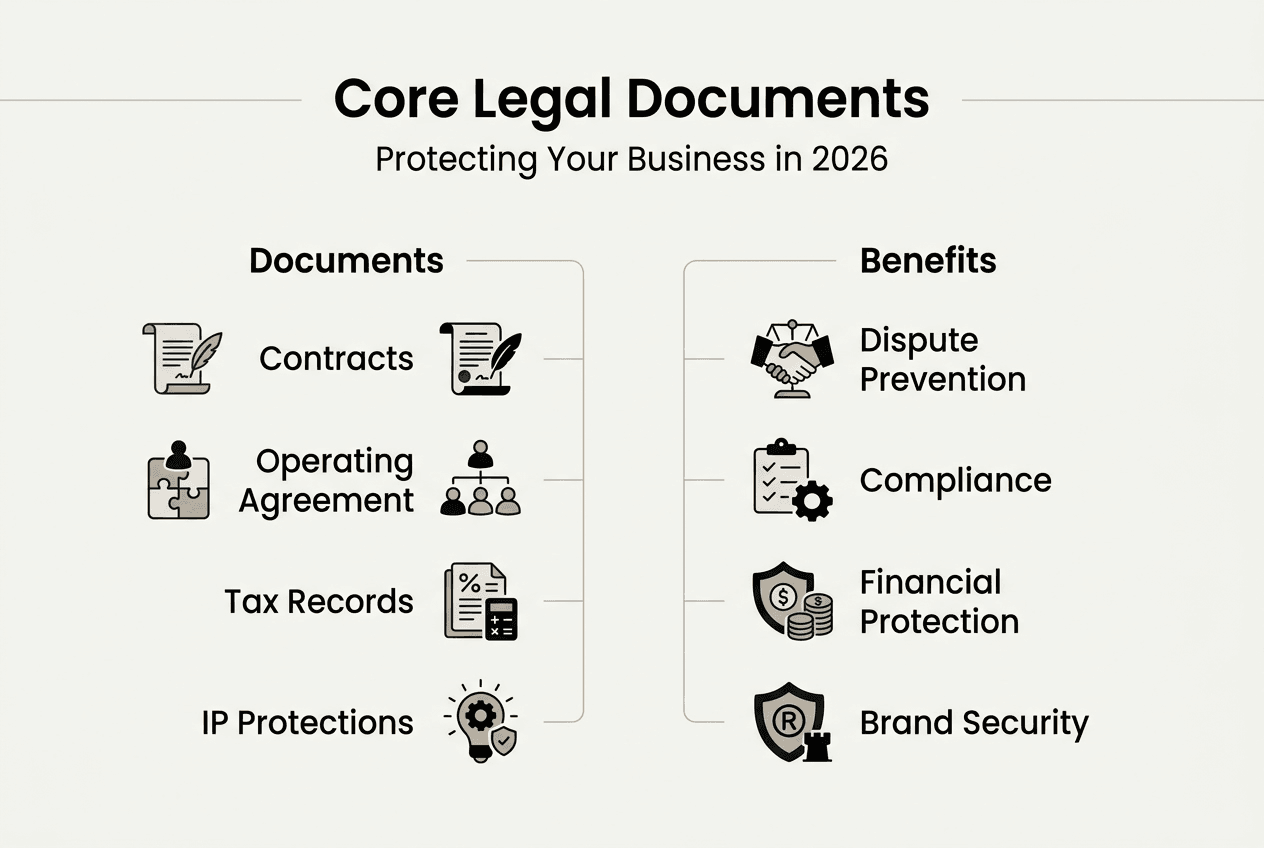
Every small business and individual needs specific legal documents to protect their interests and operate within the law. Understanding which documents matter most helps you prioritize your documentation efforts and allocate resources effectively.
Operating agreements serve as the constitutional framework for your business. Operating agreements should address partner exits, bankruptcy, or death scenarios that many entrepreneurs prefer not to contemplate. These documents establish voting rights, profit distribution formulas, dispute resolution procedures, and buy sell provisions that prevent emotional conflicts from destroying business value. Even single member LLCs benefit from operating agreements that demonstrate corporate separateness and strengthen liability protections.

Contracts form the backbone of commercial relationships, defining expectations and remedies when things go wrong. Well drafted contracts specify deliverables, payment terms, confidentiality obligations, and termination rights that protect both parties. Service agreements, vendor contracts, employment offers, and client engagements all require clear written terms to avoid misunderstandings that damage professional relationships and trigger litigation.
Payroll and tax documentation ensures government compliance while protecting your financial interests. Accurate records of wages, deductions, benefits, and tax withholdings satisfy regulatory requirements and support your positions during audits. These documents also prove eligibility for tax credits, loan applications, and government programs that require financial verification.
Intellectual property protections prevent costly business disruptions and rebranding efforts. Failing to protect intellectual property results in expensive rebranding when trademark conflicts arise or competitors copy your innovations. Registration documents, assignment agreements, and confidentiality contracts establish ownership rights and enable enforcement against infringers.
Pro Tip: Create a centralized digital repository for all legal documents with version control and access permissions, ensuring you can quickly locate critical paperwork during emergencies or time sensitive negotiations.
Consider this breakdown of essential documents by business stage:
| Business Stage | Critical Documents | Primary Benefits |
|---|---|---|
| Formation | Articles of incorporation, operating agreement, EIN application | Establishes legal entity, liability protection, tax status |
| Operations | Service contracts, employment agreements, vendor contracts | Defines relationships, sets expectations, enables enforcement |
| Growth | Intellectual property registrations, financing agreements, partnership contracts | Protects assets, secures capital, facilitates expansion |
| Compliance | Tax returns, payroll records, regulatory filings | Satisfies legal obligations, supports deductions, avoids penalties |
These documents work together to create a comprehensive legal framework that supports your business objectives. Legal document drafting tools streamline the creation process, ensuring you address all necessary provisions without overlooking critical protections that generic templates often miss.
How proper documentation supports compliance and tax management
Tax authorities and regulatory agencies demand meticulous recordkeeping, and failures in this area trigger severe financial consequences. The IRS requires documentation of all income and deductible expenses, with the burden of proof resting squarely on taxpayers during audits or disputes.
Negligent documentation triggers decade late tax reassessments, penalties, and shareholder liability as demonstrated in recent tax court cases where businesses faced crushing financial burdens years after transactions occurred. Tax authorities can reach back multiple years when they discover inadequate documentation, assessing penalties and interest that compound into devastating amounts.
Poor recordkeeping leads to denied deductions and penalties according to 2026 tax court decisions that illustrate how businesses lose legitimate tax benefits simply because they cannot produce supporting documentation. Judges consistently rule against taxpayers who claim expenses without receipts, mileage logs, or contemporaneous records, regardless of whether the expenses were actually incurred.
Mixing personal and business expenses creates particularly dangerous audit triggers. Commingled funds raise red flags that invite scrutiny and undermine your credibility with tax authorities. Separate bank accounts, credit cards, and accounting systems demonstrate professionalism and make it easier to substantiate business deductions during examinations.
Record retention requirements vary by document type and jurisdiction, but general guidelines include:
- Tax returns and supporting documentation: minimum 6 years
- Employment records: 4 years after termination
- Corporate governance documents: permanent retention
- Contract and agreement files: 7 years after expiration
Pro Tip: Set calendar reminders to review and update your documentation systems quarterly, catching errors while memories are fresh and ensuring continuous compliance rather than scrambling during tax season.
Consider how different documentation failures impact tax positions:
| Documentation Gap | Tax Consequence | Prevention Strategy |
|---|---|---|
| Missing expense receipts | Disallowed deductions, higher tax liability | Digital receipt capture, cloud storage |
| Inadequate mileage logs | Lost vehicle deduction, potential penalties | Automated tracking apps, contemporaneous records |
| Poor payroll records | Misclassification penalties, benefit denials | Integrated payroll systems, regular audits |
| Incomplete asset records | Incorrect depreciation, audit adjustments | Fixed asset registers, acquisition documentation |
These examples demonstrate why legal compliance tools have become essential for small businesses that lack dedicated accounting departments. Automated systems reduce human error, ensure consistent recordkeeping practices, and generate audit trails that satisfy regulatory requirements without consuming excessive time.
The financial impact of documentation failures extends beyond immediate tax penalties. Businesses with poor records struggle to secure financing, attract investors, or complete due diligence during sales transactions. Lenders and buyers demand clean financial histories supported by comprehensive documentation, and gaps in your records reduce business valuations or kill deals entirely.
Best practices and expert tips for effective legal documentation
Implementing systematic documentation practices protects your business and simplifies compliance management. Professional advisors consistently recommend specific strategies that minimize risk while maximizing efficiency.
Maintain strict separation between business and personal finances from day one. Dedicated business bank accounts, credit cards, and accounting systems create clear audit trails and strengthen liability protections. This separation also simplifies tax preparation, reduces audit risk, and demonstrates professionalism to lenders, investors, and potential buyers.
Conducting due diligence on licensing, zoning, and regulations is essential from the start, preventing costly corrections and penalties later. Research requirements specific to your industry, location, and business structure before commencing operations. Many entrepreneurs discover compliance gaps only after receiving cease and desist orders or regulatory fines that could have been avoided with proper initial research.
Regularly update operating agreements and contracts to reflect current business realities. Annual reviews ensure your documents address new partners, changed ownership percentages, evolved business models, and updated legal requirements. Outdated agreements create confusion and disputes when circumstances change, undermining the protective value these documents should provide.
Selecting the wrong business entity represents a major legal planning error that affects liability exposure, tax treatment, and operational flexibility. Consult professionals or use sophisticated legal AI tools to evaluate entity options based on your specific circumstances, growth plans, and risk tolerance. Converting entity types later triggers tax consequences and administrative burdens that proper initial selection avoids.
Pro Tip: Schedule an annual legal checkup where you review all business documents, verify regulatory compliance, and update agreements to reflect current operations and relationships.
Implement these documentation best practices consistently:
- Create written contracts for all business relationships, no matter how small or informal
- Maintain contemporaneous records of meetings, decisions, and significant business events
- Store digital and physical copies of critical documents in secure, accessible locations
- Use standardized templates and checklists to ensure comprehensive coverage
- Document the reasoning behind major business decisions for future reference
- Keep personal notes separate from official business records
- Review and update employee handbooks annually to reflect law changes
- Preserve email and electronic communications related to contracts and disputes
Technology solutions streamline documentation management without requiring legal expertise. BXP Legal AI guidance helps you identify which documents your situation requires, customize templates to your specific needs, and maintain compliance with evolving regulations. These tools democratize access to legal protections that previously required expensive attorney consultations for routine matters.
Document organization systems prevent the common problem of having paperwork but being unable to locate it when needed. Create logical folder structures, use consistent naming conventions, and maintain indexes of important documents with key dates and parties. Cloud based systems enable access from anywhere while providing automatic backups that protect against data loss.
Consider engaging professionals for complex transactions, high stakes negotiations, or unfamiliar legal territories. While AI tools handle routine documentation efficiently, experienced attorneys provide valuable judgment on nuanced situations where template documents fall short. The key is knowing when DIY approaches suffice and when professional guidance justifies the investment.
How BXP Legal AI can simplify your legal documentation process
Navigating legal documentation requirements feels overwhelming for many small business owners and individuals who lack legal training. BXP Legal AI offers legal guidance that makes professional quality documentation accessible without expensive attorney fees for routine matters.
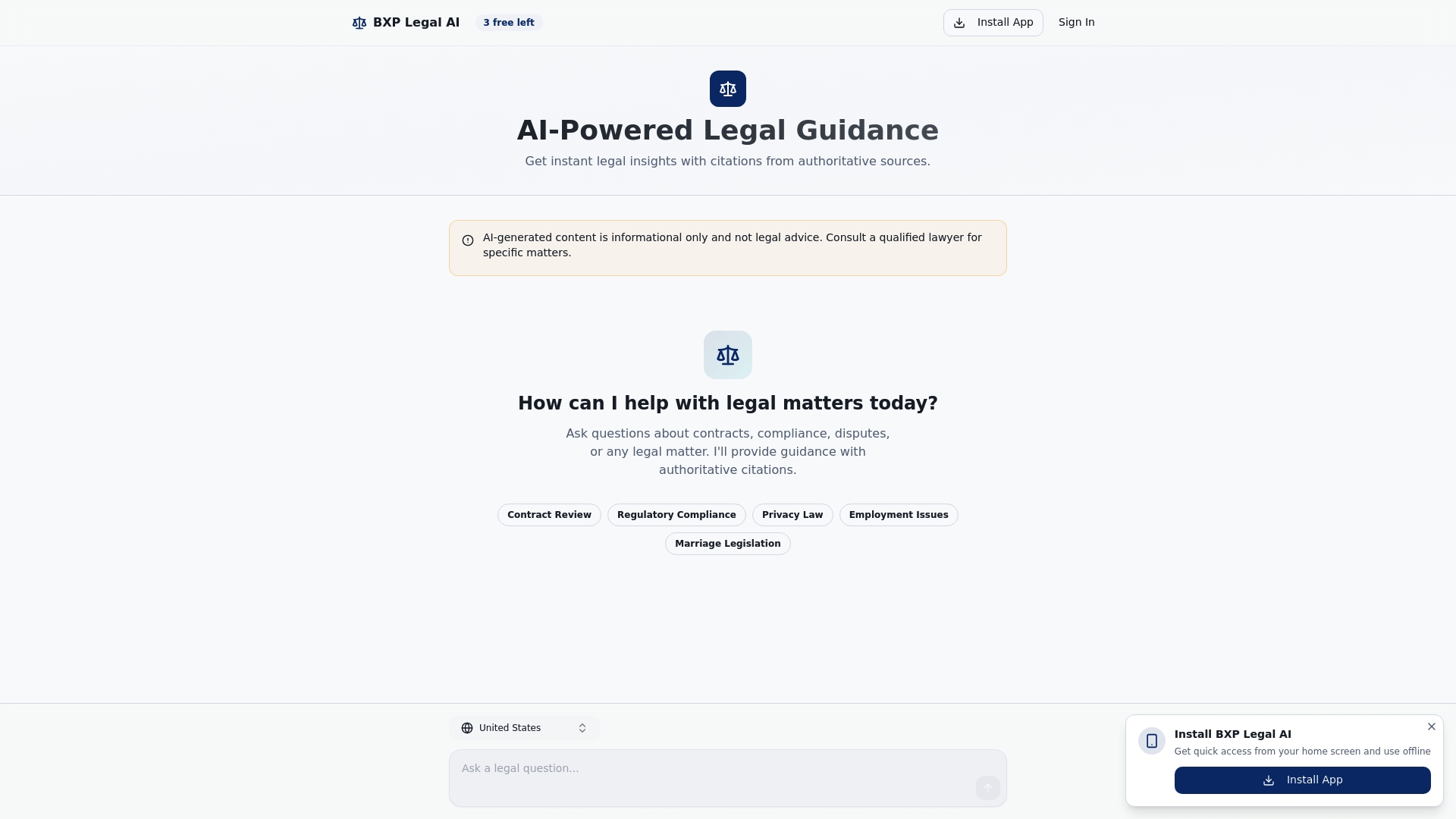
The platform leverages artificial intelligence to draft customized legal documents tailored to your specific situation, jurisdiction, and business needs. You answer straightforward questions about your circumstances, and the system generates comprehensive agreements, contracts, and compliance documents that address relevant legal requirements. This approach combines the affordability of templates with the customization previously available only through attorney consultations.
Legal document drafting tools help you maintain ongoing compliance by tracking regulatory changes, sending renewal reminders, and updating documents as laws evolve. The system identifies gaps in your legal framework and recommends additional protections based on your industry, business structure, and growth stage. This proactive approach prevents problems before they arise, giving you confidence that your legal foundation remains solid as your business develops.
FAQ
What are the most important legal documents small businesses need?
Operating agreements, service contracts, employment agreements, and intellectual property protections form the foundation of small business legal documentation. Each document serves distinct purposes: operating agreements govern internal relationships and decision making, contracts define external commercial relationships, employment documents establish workplace expectations and protections, and IP registrations secure your competitive advantages. Together, these documents create a comprehensive legal framework that protects your interests and enables enforcement when disputes arise.
How long should I keep business and legal records?
Keep tax records at least 3 years, though some situations require 6 years or longer depending on your jurisdiction and specific circumstances. Corporate governance documents like articles of incorporation and operating agreements warrant permanent retention. Employment records should be preserved for 4 years after termination, while contracts and agreements need retention for 7 years after expiration to cover potential legal claims within statutes of limitations.
Can poor legal documentation affect employee claims?
Missing employment contracts and documents weaken employer claims in disputes over termination, performance issues, or policy violations. Courts and administrative agencies require documentary evidence to substantiate employer positions, and verbal warnings or undocumented counseling sessions rarely carry weight in formal proceedings. Comprehensive documentation of job expectations, performance reviews, disciplinary actions, and termination reasons protects employers from wrongful dismissal claims and unemployment benefit challenges.
What happens if I operate without proper business licenses?
Operating without required licenses exposes you to fines, cease and desist orders, and potential criminal penalties depending on your jurisdiction and industry. Unlicensed businesses cannot enforce contracts in many jurisdictions, meaning you lose legal recourse to collect payments or resolve disputes. Additionally, insurance policies may deny claims if you were operating illegally when incidents occurred, leaving you personally liable for damages or injuries. Research and obtain all necessary licenses before commencing operations to avoid these serious consequences.