
Choosing the right legal document can feel overwhelming for individuals and small business owners managing compliance and contracts. With countless forms, agreements, and templates available, understanding which document serves your specific purpose is crucial for protecting your interests and meeting legal obligations. This guide breaks down essential legal document types, helping you navigate selection criteria, compare common options, and make informed decisions that support your compliance and contract management needs in 2026.
Table of Contents
- How to evaluate types of legal documents: criteria for selection
- Essential types of legal documents you need to know in 2026
- Comparing common legal documents: a practical overview
- Making the right choice: recommendations for individuals and small business owners
- Discover AI-Powered Legal Document Solutions At BXP Legal
Key takeaways
| Point | Details |
|---|---|
| Legal documents serve distinct purposes | Contracts, NDAs, wills, and powers of attorney each address specific legal needs and situations |
| Electronic contracts have full legal validity | Federal law recognizes e-signatures and electronic agreements as legally binding |
| Selection depends on your context | Choose documents based on purpose, enforceability requirements, and compliance obligations |
| AI tools simplify document management | Technology accelerates drafting, reviewing, and comparing legal documents |
| Regular updates maintain effectiveness | Review and revise documents periodically to ensure continued legal protection |
How to evaluate types of legal documents: criteria for selection
Selecting appropriate legal documents requires understanding several key criteria that determine whether a document will serve your needs effectively. The purpose of your document forms the foundation of this decision. Are you establishing a business relationship, protecting confidential information, or planning estate distribution? Each objective demands a different document type with specific legal requirements.
Legal enforceability stands as another critical factor. A document must meet statutory requirements to hold up in court or regulatory review. Electronic signatures carry legal weight under 15 U.S.C. § 7001, giving electronic contracts the same enforceability as traditional paper agreements. This recognition has transformed how businesses and individuals execute agreements in 2026.
Format considerations matter more than many realize. Some documents require notarization, witness signatures, or specific language to achieve legal validity. Others allow flexible formats as long as essential elements appear. Understanding these format requirements prevents costly mistakes that could invalidate your document.
Compliance requirements vary dramatically by jurisdiction and document type. Employment contracts in California differ from those in Texas. Real estate documents must conform to state-specific recording requirements. Federal regulations govern certain agreements regardless of location. Researching applicable compliance standards before selecting a document type saves time and reduces legal risk.
Practical factors like ease of drafting, reviewing, and updating should influence your choice. Complex documents may require professional assistance, while simpler forms work well with templates. Consider how often you'll need to modify the document and whether document analysis tools can streamline that process.
Pro Tip: Create a checklist of your specific legal needs before selecting a document type. Include purpose, parties involved, jurisdiction, required formalities, and timeline. This systematic approach ensures you choose documents that actually serve your objectives rather than generic forms that may leave gaps in protection.
Essential types of legal documents you need to know in 2026
Contracts represent the most common legal documents individuals and businesses encounter. These binding agreements establish rights and obligations between parties, covering everything from sales transactions to service relationships. A valid contract requires offer, acceptance, consideration, and mutual intent to be bound. Written contracts provide clearer evidence of terms than oral agreements, though both can be legally enforceable depending on circumstances and subject matter.
Non-Disclosure Agreements protect confidential information shared between parties. Businesses use NDAs when discussing potential partnerships, hiring employees with access to trade secrets, or engaging contractors who will handle sensitive data. These agreements specify what information remains confidential, how long confidentiality lasts, and consequences for unauthorized disclosure. Mutual NDAs protect both parties, while unilateral versions protect only one party's information.
Wills and trusts manage asset distribution after death or during incapacity. A will directs how your property transfers to beneficiaries and may name guardians for minor children. Trusts offer more flexibility, potentially avoiding probate and providing ongoing management of assets. Revocable living trusts allow modifications during your lifetime, while irrevocable trusts generally cannot be changed once established.
Power of attorney documents authorize someone to make decisions on your behalf. Financial powers of attorney grant authority over banking, investments, and property transactions. Healthcare powers of attorney designate someone to make medical decisions if you cannot. Durable powers of attorney remain effective even if you become incapacitated, while standard versions terminate upon incapacity.

Electronic contracts gained widespread adoption as federal law established their validity. In 2026, most agreements can be executed electronically, from employment contracts to real estate transactions. This shift has made contract execution faster and more convenient while maintaining legal protections. Using legal templates designed for electronic execution ensures your documents meet current standards.
Business formation documents like articles of incorporation, operating agreements, and partnership agreements establish the legal structure of your company. These foundational documents define ownership, management responsibilities, profit distribution, and procedures for major decisions. The right structure depends on factors like liability protection needs, tax considerations, and planned growth trajectory. Document drafting tools can help you create formation documents that align with your business model.
Comparing common legal documents: a practical overview
Understanding how different legal documents compare helps you select the right tool for your situation. Each document type serves distinct purposes with varying levels of formality, execution requirements, and legal consequences.
| Document Type | Primary Purpose | Key Features | Execution Method | Typical Duration |
|---|---|---|---|---|
| Contract | Establish binding obligations | Mutual promises, consideration, specific terms | Signatures, electronic or written | Specified term or ongoing |
| NDA | Protect confidential information | Defines confidential data, restricts disclosure | Signatures, often electronic | 1-5 years typical |
| Will | Direct asset distribution after death | Names beneficiaries, appoints executor | Notarized signature, witnesses required | Until revoked or death |
| Power of Attorney | Authorize decision-making | Grants specific or broad authority | Notarized signature required | Until revoked or incapacity |
| Operating Agreement | Govern business operations | Defines ownership, management, procedures | Member signatures | Ongoing, amendable |
Contracts and NDAs both create legally binding obligations, but contracts typically involve exchanges of value while NDAs focus solely on information protection. You might sign both documents in a single business relationship when confidential discussions precede a formal agreement. The enforceability standards differ slightly, with contracts requiring consideration that NDAs may not need in all jurisdictions.
Wills and powers of attorney both address situations where you cannot act personally, but they activate under different circumstances. Wills take effect only after death, while powers of attorney work during your lifetime. Many estate plans include both documents to ensure comprehensive coverage. Unlike contracts that bind multiple parties, these documents primarily express your individual intentions.
Electronic execution methods work for most document types, though some jurisdictions still require traditional execution for wills and certain real estate documents. Electronic signatures offer convenience and speed while maintaining legal validity. Digital storage also simplifies document management and retrieval compared to paper filing systems.
The legal weight of documents varies based on specificity and formality. Detailed contracts with precise terms generally prove easier to enforce than vague agreements. Notarized documents carry additional credibility, though notarization alone doesn't make a document legally binding. The substance of the agreement matters more than formalities in most cases.
Pro Tip: Use document comparison tools when deciding between similar document types. Side-by-side analysis reveals subtle differences in protection levels, required elements, and practical implications that might not be obvious from descriptions alone.
Making the right choice: recommendations for individuals and small business owners
Identifying your specific legal needs early prevents the costly mistake of using inappropriate documents. Start by clearly defining what you want to accomplish. Are you protecting intellectual property, establishing payment terms, or planning for incapacity? Write down your objectives before searching for document types. This clarity guides you toward documents that actually address your situation rather than generic forms that may leave critical gaps.
Using templates and AI tools dramatically reduces the time and cost of document creation. Quality templates provide legally sound structures you can customize for your circumstances. AI-powered platforms analyze your inputs and generate tailored documents that incorporate relevant legal standards. These tools work especially well for routine documents like standard service agreements, employment offer letters, and basic NDAs. For complex or high-value matters, combine template efficiency with professional review.
Maintaining organized records of your legal documents protects you when disputes arise or compliance questions emerge. Create a system that tracks document versions, execution dates, parties involved, and renewal requirements. Digital document management systems offer searchable databases that make retrieval instant. Tag documents by type, date, and purpose so you can quickly locate what you need. Regular backups prevent catastrophic loss of critical legal records.
Reviewing and updating documents regularly ensures they remain effective as circumstances change. Business relationships evolve, laws get amended, and your needs shift over time. Schedule annual reviews of key documents like operating agreements, employment contracts, and estate planning documents. Update terms that no longer reflect current arrangements or legal requirements. Outdated documents can create confusion or fail to provide intended protections.
Consulting professionals for complex situations provides valuable risk management. While templates and AI tools handle routine documents well, complicated transactions, significant assets, or novel legal issues benefit from attorney guidance. Lawyers spot potential problems that non-experts miss and can negotiate better terms. The cost of professional advice often proves minimal compared to the expense of fixing problems that arise from inadequate documents. Explore AI document drafting as a middle ground that combines technology efficiency with access to legal expertise.
Discover AI-powered legal document solutions at BXP Legal AI
Navigating legal document types becomes significantly easier with the right technology support. The BXP Legal AI platform combines artificial intelligence with comprehensive legal knowledge to help you create, review, and manage documents efficiently in 2026. Whether you need a straightforward contract or complex compliance documentation, AI-powered tools guide you through the process with clarity and precision.
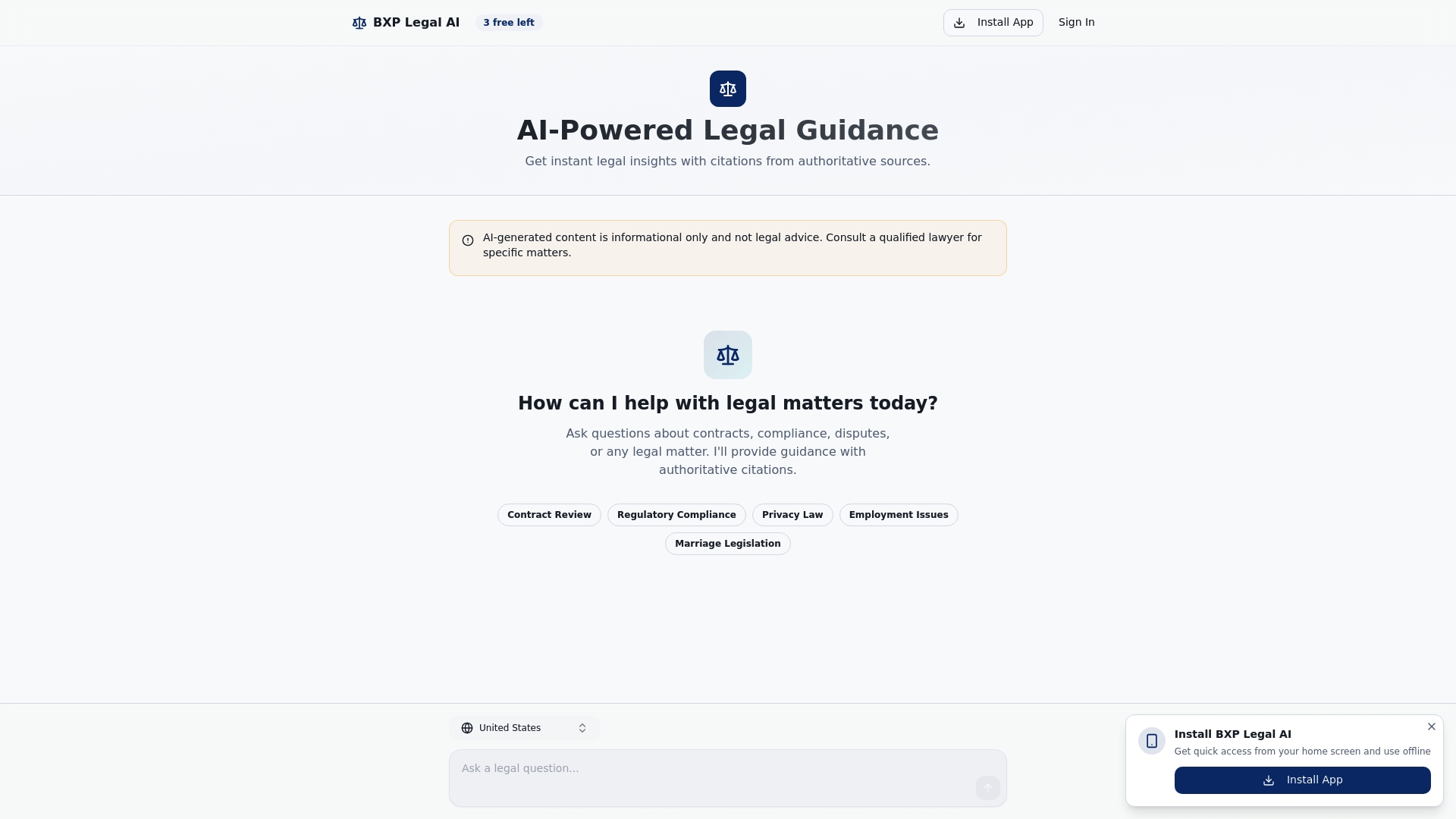
Access an extensive collection of legal templates covering contracts, NDAs, business formation documents, and more. Each template incorporates current legal standards and best practices, giving you a solid foundation for customization. The platform's document comparison tool lets you analyze different versions side by side, ensuring accuracy and identifying changes that matter. For individuals and small businesses seeking compliance without the overhead of traditional legal services, these AI-powered solutions deliver professional-quality results while saving time and reducing errors.
FAQ
What is the legal validity of electronic contracts in 2026?
Electronic contracts carry full legal effect under 15 U.S.C. § 7001, the Electronic Signatures in Global and National Commerce Act. This federal law ensures that contracts cannot be denied validity solely because they exist in electronic form. E-signatures are valid for most agreements, though some exceptions exist for wills, adoption documents, and certain court orders.
How do I choose the right legal document for my small business?
Assess your specific legal and compliance needs by identifying what you want the document to accomplish. Consider factors like the nature of your business relationship, applicable regulations, and potential risks you need to address. Use legal document drafting tools or templates as starting points, customizing them to fit your situation. Keep documents updated as your business evolves and regulations change.
What are the benefits of using AI tools for legal documents?
AI accelerates document creation by generating tailored content based on your inputs, reducing hours of work to minutes. These tools minimize errors by incorporating legal requirements and best practices automatically. AI facilitates comparisons between document versions, highlighting changes and ensuring consistency. The technology supports better legal compliance by staying current with regulatory updates and suggesting relevant provisions. Learn more about AI document drafting to understand how these tools transform legal work.
When should I use an NDA versus a standard contract?
Use an NDA when your primary concern is protecting confidential information from disclosure, especially before entering formal business relationships. Standard contracts work better when you need to establish mutual obligations, payment terms, deliverables, and other substantive business terms. In many business scenarios, you'll use both documents, signing an NDA during preliminary discussions and then executing a contract once you agree on specific terms.
How often should I update my legal documents?
Review key documents annually to ensure they reflect current laws, business relationships, and your evolving needs. Update documents immediately when significant changes occur, such as new regulations affecting your industry, changes in ownership or management, or modifications to business relationships. Estate planning documents like wills and powers of attorney should be reviewed after major life events like marriage, divorce, births, or significant asset changes.
Recommended
- AI in document drafting: streamline legal work in 2026
- AI Document Analysis | BXP Legal AI
- Streamline multi-jurisdiction legal steps with AI in 2026
- Document Comparison | BXP Legal AI
- Understanding Reviewing Legal Documents: A Clear Guide - My Mobile Notary
- Marriage Documentation Explained: UAE Rules in 2026