
AI legal tools promise instant answers to complex questions, yet recent studies reveal they hallucinate 17-33% of the time on legal queries. Many individuals and small business owners now rely on AI-driven platforms for contracts, compliance guidance, and dispute resolution without realizing the accuracy gaps. While AI excels at routine tasks, it struggles with jurisdiction-specific nuances and strategic judgment that define sound legal practice. This guide explains when AI assistance works, where it falls short, and why consulting legal experts remains essential for protecting your interests in 2026.
Table of Contents
- Limitations of AI legal assistance: why errors happen
- Why human legal experts remain indispensable
- Best practices: combining AI tools with expert legal consultation
- Leverage AI safely with expert legal support from BXP Legal AI
- Frequently asked questions about consulting legal experts in 2026
Key takeaways
| Point | Details |
|---|---|
| AI accuracy concerns | AI legal tools produce incorrect answers in 17-33% of cases, creating significant risk for users. |
| Jurisdiction gaps | AI misses local court interpretations and state-specific legal nuances that experts understand. |
| Expert judgment matters | Lawyers provide strategic thinking, empathy, negotiation skills, and accountability that AI cannot replicate. |
| Balanced approach works | Use AI for routine document review and research, but consult experts for contracts and disputes. |
| Risk management | Small businesses face 5x higher litigation exposure when relying exclusively on AI guidance. |
Limitations of AI legal assistance: why errors happen
AI legal platforms have transformed how people access legal information, but understanding their fundamental limitations protects you from costly mistakes. The technology behind these tools creates specific vulnerabilities that users must recognize before trusting AI-generated advice for important legal decisions.
Hallucination represents the most serious AI limitation. Even advanced systems with retrieval-augmented generation hallucinate 17-33% of the time when answering legal questions. These aren't minor errors but fabricated citations, invented case law, and incorrect legal principles that appear authoritative. When you ask about contract enforceability or employment law compliance, AI might confidently cite nonexistent statutes or misapply real ones to your situation.
Jurisdiction-specific knowledge creates another critical gap. AI systems train on broad legal datasets but fail in jurisdiction-specific nuances such as local court interpretations and state law specifics. A non-compete clause enforceable in Texas might be invalid in California. Zoning regulations vary dramatically between municipalities. Employment termination procedures differ across provinces and states. These distinctions require deep familiarity with local legal landscapes that AI cannot reliably provide.
Consider these common AI failure points:
- Misapplying federal regulations to state-specific scenarios
- Overlooking recent case law that changes legal interpretation
- Providing generic advice that ignores your industry's unique requirements
- Missing procedural deadlines and filing requirements specific to your jurisdiction
- Failing to recognize when multiple legal domains intersect in your situation
Pro Tip: When dealing with multi-jurisdiction legal steps, always verify AI recommendations with local counsel before taking action.
The training data problem compounds these issues. AI models learn from historical legal documents and publicly available information, but they lack access to unpublished decisions, settlement agreements, and practical wisdom that experienced lawyers accumulate. They cannot assess the credibility of different sources or understand how a particular judge typically rules on similar matters. This knowledge gap becomes critical when you need practical guidance rather than theoretical legal principles.
Timing issues further limit AI reliability. Legal landscapes shift constantly through new legislation, regulatory updates, and court decisions. AI systems require regular retraining to stay current, and even then, they struggle to apply brand new legal developments correctly. By the time AI incorporates recent changes, your legal situation might already demand action based on that new information.

Why human legal experts remain indispensable
Legal practice requires more than information retrieval and pattern matching. The core functions that define effective legal representation depend on uniquely human capabilities that AI cannot replicate, regardless of technological advances.
Judgment and strategic thinking separate competent legal advice from generic information. Lawyers analyze your specific circumstances, weigh competing interests, and develop strategies aligned with your goals. They recognize when aggressive litigation serves you better than settlement, or when a creative contract structure protects your interests more effectively than standard terms. AI lacks judgment and ethical reasoning needed for these decisions. It cannot evaluate the credibility of witnesses, assess opposing counsel's negotiation style, or predict how a particular judge might rule based on courtroom dynamics.
Empathy and client understanding drive effective representation. Your lawyer grasps the emotional stakes, business pressures, and personal values shaping your legal needs. They ask probing questions that reveal unstated concerns and tailor advice to your risk tolerance and priorities. This human connection enables lawyers to explain complex issues in ways you understand and help you make informed decisions under stress. AI processes inputs and generates outputs but cannot truly understand your situation or adapt its communication style to your needs.
Negotiation and dispute resolution demand interpersonal skills that define lawyering. Experienced attorneys read body language, build rapport with opposing parties, and craft compromises that satisfy multiple stakeholders. They know when to push hard and when to concede minor points for strategic advantage. These soft skills, combined with deep legal knowledge, create value that AI cannot deliver through document generation or legal research.
Accountability provides crucial protection. Licensed attorneys face professional responsibility rules, malpractice liability, and ethical obligations that incentivize careful work. If your lawyer provides negligent advice, you have recourse through professional discipline and legal action. AI platforms typically disclaim liability for their outputs, leaving you exposed when errors occur. This accountability gap becomes critical when legal mistakes threaten your business or personal interests.
The financial stakes underscore why expert consultation matters. Small businesses using AI face rising litigation risks, with million-dollar lawsuits surging 5x despite 92% AI adoption. These statistics reveal a dangerous trend where AI confidence leads to legal exposure. Businesses draft contracts without understanding enforceability issues, handle employment matters without recognizing discrimination risks, and make compliance decisions without appreciating regulatory complexity. The resulting litigation costs far exceed what preventive legal consultation would have required.
Consider these scenarios where expert judgment proves essential:
- Negotiating employment agreements with non-compete and intellectual property clauses
- Structuring business transactions to minimize tax liability and legal risk
- Responding to regulatory investigations or compliance audits
- Resolving partnership disputes that threaten business continuity
- Defending against lawsuits where procedural missteps can doom your case
Pro Tip: Establish a relationship with legal counsel before crises emerge. Understanding legal documentation importance helps you recognize when expert review becomes necessary.
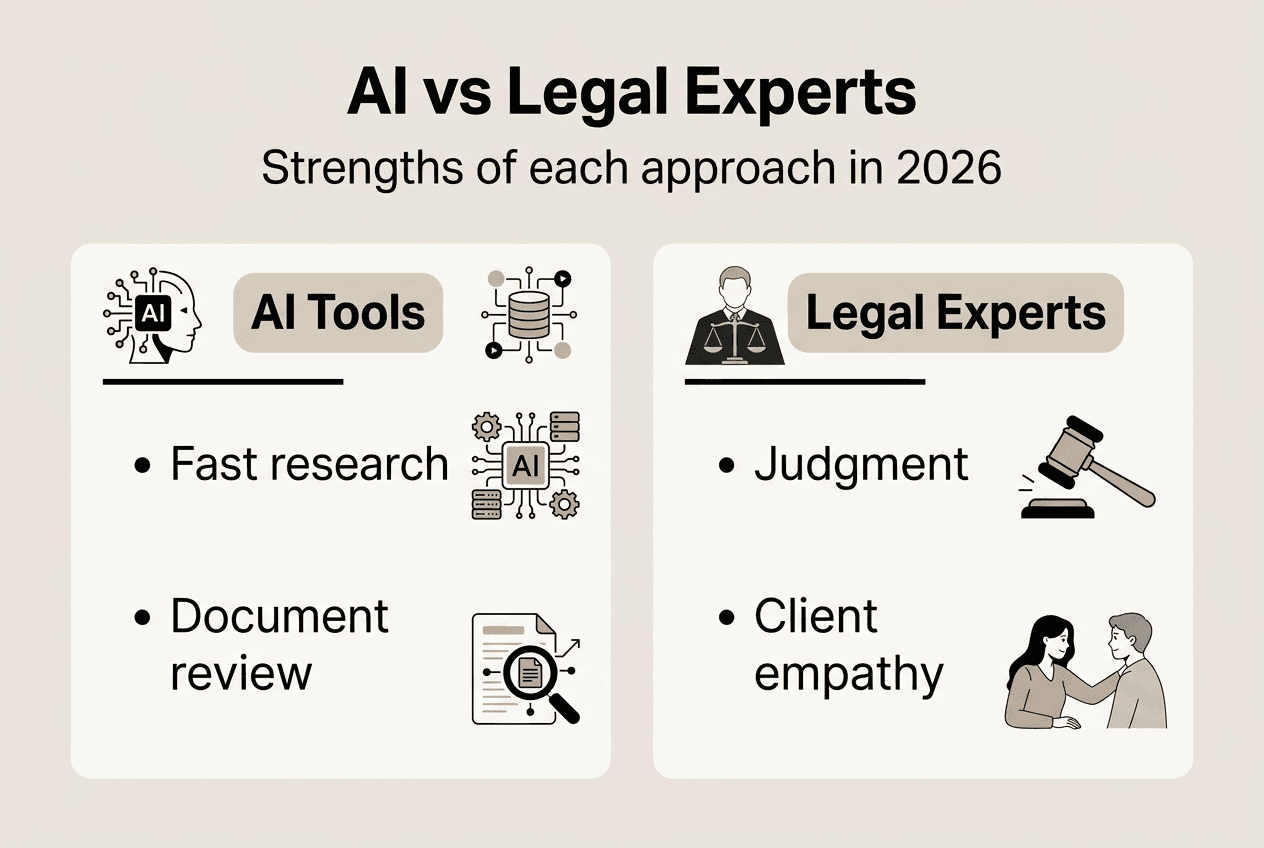
The complementary relationship between AI and human expertise offers the best path forward. AI handles time-consuming research and document review efficiently, freeing lawyers to focus on strategic thinking and client counseling. This partnership delivers better outcomes than either approach alone, combining technological efficiency with human judgment and accountability.
Best practices: combining AI tools with expert legal consultation
Balancing AI capabilities with professional legal guidance requires understanding when each approach serves your needs best. A strategic framework helps you leverage technology efficiently while protecting yourself from AI limitations.
AI excels at specific routine tasks that consume time without requiring complex judgment. Use AI platforms for initial document review, identifying relevant legal issues in contracts, and drafting basic templates for common situations. AI can quickly scan lengthy agreements to flag unusual clauses, generate first drafts of standard documents, and summarize legal concepts for your preliminary understanding. These applications save money and time when used appropriately.
Legal experts should handle matters involving significant risk, complexity, or strategic importance. Consult lawyers for contract negotiation, employment termination decisions, dispute resolution, regulatory compliance in your industry, and any situation where errors create substantial liability. AI excels at routine tasks but fails in nuanced, high-risk scenarios requiring professional judgment.
This comparison clarifies when to use each resource:
| Situation | AI Tool | Legal Expert | | --- | --- | | Initial contract review | Suitable for flagging issues | Required for negotiation | | Basic legal research | Good for preliminary understanding | Essential for strategy | | Template document drafting | Efficient starting point | Needed for customization | | Compliance questions | Helpful for general guidance | Critical for industry-specific rules | | Dispute resolution | Inadequate for negotiation | Necessary for favorable outcomes | | High-stakes decisions | Risky without verification | Mandatory for protection |
Implement this decision framework for your legal needs:
- Assess the stakes: What happens if you get this wrong? High-consequence situations demand expert consultation regardless of cost.
- Evaluate complexity: Does this involve multiple legal domains, jurisdictional questions, or unusual circumstances? Complexity requires human judgment.
- Consider timing: Do you need immediate preliminary guidance or definitive advice for action? Use AI for initial exploration, experts for decisions.
- Review AI outputs critically: When using AI tools, verify citations, check jurisdiction applicability, and question confident-sounding advice that seems too simple.
- Establish expert relationships: Build connections with lawyers in key practice areas before emergencies arise, making consultation easier when needed.
Pro Tip: Use AI document drafting for initial versions, then have an attorney review before signing anything binding.
The verification process protects you from AI errors. When AI generates a contract or provides legal guidance, cross-reference key points with authoritative sources. Check that cited cases actually exist and say what AI claims. Confirm that advice applies to your specific jurisdiction and situation. This verification takes time but prevents costly mistakes that AI hallucinations can cause.
Document comparison represents one area where AI delivers clear value with lower risk. Tools that identify differences between contract versions, flag changed terms, and highlight new clauses help you spot important modifications quickly. Document comparison features streamline review without requiring AI to generate legal advice, reducing hallucination risk while improving efficiency.
Cost considerations influence your approach but should not override risk assessment. AI tools cost less than attorney consultations, making them attractive for budget-conscious individuals and small businesses. However, the expense of fixing AI-driven legal mistakes typically exceeds what preventive expert consultation would have cost. Calculate risk-adjusted costs rather than just comparing hourly rates to subscription fees.
Ongoing legal relationships provide better value than one-off consultations. When lawyers understand your business, industry, and goals, they provide more targeted advice efficiently. They recognize patterns in your legal needs and proactively address emerging issues. This relationship-based approach, enhanced by AI tools for routine tasks, delivers optimal results for individuals and businesses managing legal complexity in 2026.
Leverage AI safely with expert legal support from BXP Legal AI
Navigating the balance between AI efficiency and expert guidance becomes simpler with platforms designed for this purpose. BXP Legal AI combines powerful AI-driven tools with clear guidance on when professional consultation becomes necessary, helping you make informed decisions about your legal needs.
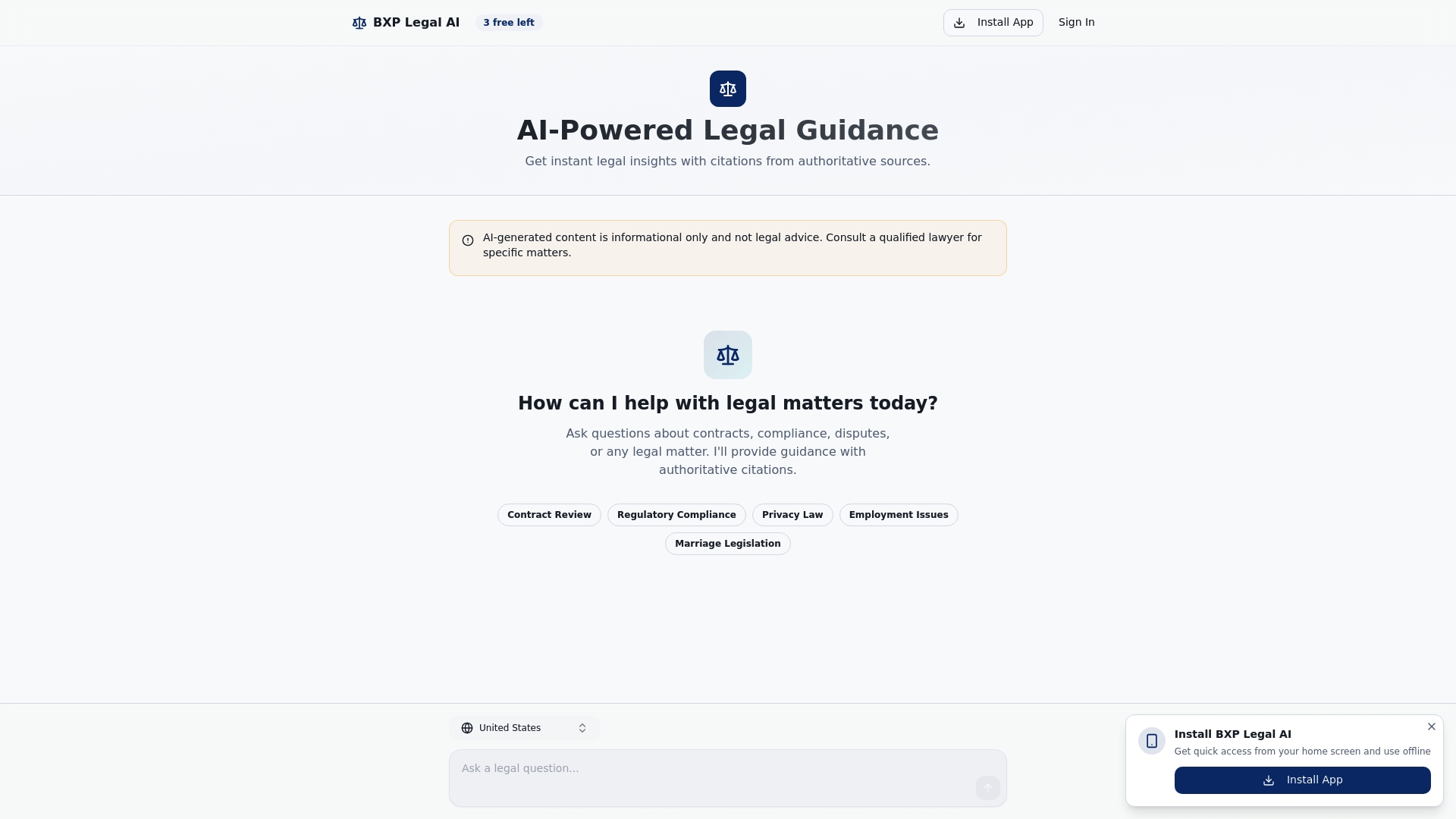
The platform offers AI-powered document drafting that generates customizable contracts, agreements, and legal correspondence quickly. Its document comparison feature identifies changes between versions instantly, ensuring you catch critical modifications before signing. The legal templates library provides starting points for common legal documents across multiple practice areas, saving time on routine matters while maintaining quality standards. These tools handle the time-consuming aspects of legal work efficiently, freeing you to focus on strategic decisions and expert consultation where it matters most. BXP Legal AI transparently indicates when situations exceed AI capabilities and professional legal advice becomes essential, helping you invest in expert consultation strategically rather than avoiding it entirely.
Frequently asked questions about consulting legal experts in 2026
When should I use AI tools versus consulting a lawyer?
Use AI for preliminary research, document review, and drafting basic templates for low-stakes situations. Consult lawyers for contract negotiation, employment decisions, disputes, regulatory compliance, and any matter where errors create significant liability. If you are unsure about the stakes or complexity, err toward expert consultation.
Why does AI struggle with jurisdiction-specific legal questions?
AI trains on broad legal datasets but lacks deep familiarity with local court interpretations, state-specific statutes, and municipal regulations that vary significantly across jurisdictions. Legal rules that apply in one location often do not transfer to another, and AI cannot reliably distinguish these nuances without extensive local legal knowledge.
How can I verify AI-generated legal advice before relying on it?
Cross-reference AI outputs with authoritative legal sources, confirm that cited cases actually exist and support the stated principles, and verify that advice applies to your specific jurisdiction and situation. For important matters, have a licensed attorney review AI-generated documents and guidance before taking action. Use AI legal chat features as starting points for research, not final authority.
Are legal experts worth the cost compared to free AI tools?
Expert consultation costs more upfront but prevents expensive mistakes that AI errors can cause. Small businesses face dramatically higher litigation risks when relying exclusively on AI, with million-dollar lawsuits surging despite widespread AI adoption. Calculate risk-adjusted costs by considering potential liability, not just hourly rates versus subscription fees.
Can AI completely replace lawyers for small business legal needs?
No. AI lacks judgment, empathy, negotiation skills, and accountability that define effective legal representation. While AI handles routine tasks efficiently, complex matters requiring strategic thinking, dispute resolution, and professional responsibility demand human expertise. The optimal approach combines AI efficiency for routine work with expert consultation for high-stakes decisions.
What happens if AI gives me incorrect legal advice?
AI platforms typically disclaim liability for their outputs, leaving you responsible for any consequences of following incorrect advice. Unlike licensed attorneys who face malpractice liability and professional discipline for negligent work, AI tools provide information without accountability. This risk underscores why expert consultation matters for important legal decisions where errors create significant exposure.