
Contracts are the backbone of business relationships, yet many companies rush through reviews or rely on outdated processes that miss critical details. A single overlooked clause can expose your organization to compliance violations, financial penalties, or prolonged disputes. Whether you manage dozens of agreements monthly or handle complex multi-party deals, a structured contract review checklist transforms chaotic workflows into systematic risk management. This article delivers a practical framework that empowers contract managers and SMEs to catch red flags early, maintain legal compliance, and protect business interests with confidence.
Table of Contents
- Key Takeaways
- Essential criteria for an effective contract review checklist
- Key items to include in your contract review checklist
- Comparing contract review methods: manual checklist versus AI-assisted tools
- Choosing the right contract review checklist for your business needs
- Unlock streamlined contract review with BXP Legal AI
- Frequently asked questions about contract review checklists
Key Takeaways
| Point | Details |
|---|---|
| Thorough review criteria | A robust checklist starts with thorough criteria covering compliance, party identity, scope, payment terms, and risk allocation to prevent missed issues. |
| Party identification | Verify all parties legal names, addresses, and signing authority to avoid enforcement problems. |
| Scope and payments | Define deliverables, acceptance criteria, payment schedules, penalties, and currency to prevent disputes. |
| Disputes and termination | Clarify termination rights and dispute resolution paths to manage cross jurisdictional issues. |
Essential criteria for an effective contract review checklist
Every robust contract review checklist starts with fundamental criteria that ensure nothing slips through the cracks. Thoroughness and focus on compliance are essential for SMEs navigating complex agreements. Your checklist must verify compliance with applicable laws and jurisdictional requirements, as regulations vary dramatically across states and countries. Missing a local statute can invalidate entire agreements or trigger regulatory penalties.

Clear identification of all parties stands as the foundation. Confirm each entity has legal authority to enter contracts and that signatories possess proper authorization. Ambiguous party identification creates enforcement nightmares down the road. Next, scrutinize the contract scope, ensuring deliverables, timelines, and responsibilities are explicitly defined. Vague language invites disputes when expectations diverge.
Payment terms demand careful attention. Review invoicing schedules, payment deadlines, late fees, and currency specifications. Misaligned payment expectations strain vendor relationships and cash flow. Risk allocation clauses like indemnity provisions and liability limitations determine who bears financial responsibility when things go wrong. These sections protect your organization from disproportionate exposure.
Finally, examine termination conditions and dispute resolution mechanisms. Understand exit pathways, notice requirements, and whether conflicts route to arbitration or litigation. A multi-jurisdictional checklist becomes critical when parties operate across borders, as enforcement rules differ significantly by location.
- Verify all regulatory compliance requirements for your industry and jurisdiction
- Confirm party identities, legal status, and signing authority
- Review payment structures, deadlines, and penalty clauses
- Assess risk allocation through indemnity and liability terms
- Evaluate termination rights and dispute resolution procedures
Key items to include in your contract review checklist
Moving from criteria to specific elements, your checklist should systematically address the contract components that carry the highest risk and operational impact. Identifying and reviewing specific contract items helps mitigate risks and ensures enforceability across your agreement portfolio.
-
Parties and authority: Confirm full legal names, addresses, and corporate status of all parties. Verify that signatories hold proper authority through board resolutions or power of attorney documentation. Unauthorized signatures render contracts unenforceable.
-
Scope and deliverables: Document exactly what each party must deliver, including specifications, quality standards, and acceptance criteria. Vague scope invites scope creep and payment disputes. Attach schedules or exhibits for complex deliverables.
-
Payment and invoicing: Specify amounts, payment schedules, accepted methods, and currency. Include late payment penalties, early payment discounts, and expense reimbursement procedures. Clarify tax responsibilities and withholding requirements.
-
Confidentiality and data protection: Review non-disclosure obligations, permitted use of confidential information, and data security requirements. With privacy regulations tightening globally, ensure compliance with GDPR, CCPA, or applicable data protection laws. Define what constitutes confidential information and exceptions.
-
Termination and renewal: Identify termination triggers, notice periods, and consequences of early exit. Check automatic renewal clauses that might lock you into unwanted extensions. Understand post-termination obligations like data return or continued confidentiality.
Pro Tip: Create a severity rating system for checklist items. Mark critical terms that require legal review versus routine clauses your team can handle independently. This prioritization speeds reviews without compromising quality on high-stakes provisions.
A legal compliance checklist for SMBs provides additional context for integrating contract reviews into broader compliance frameworks, ensuring your agreements support rather than undermine regulatory obligations.
Comparing contract review methods: manual checklist versus AI-assisted tools
Understanding the trade-offs between traditional manual reviews and emerging AI solutions helps you build efficient, accurate processes. Manual reviews using printed checklists remain thorough but consume significant time and depend heavily on reviewer expertise. A single distraction can cause critical oversights. Human reviewers excel at nuanced judgment calls and contextual interpretation but struggle with consistency across high contract volumes.
AI-driven tools reduce error rates and accelerate contract review for SMBs by automating pattern recognition and flagging standard risks. These platforms scan documents in seconds, highlighting missing clauses, non-standard terms, and compliance gaps. AI maintains perfect consistency, applying the same criteria to every contract without fatigue.
| Criteria | Manual checklist | AI-assisted tools |
|---|---|---|
| Review speed | Slow, hours per contract | Fast, minutes per contract |
| Accuracy | Variable, depends on reviewer focus | Consistent, flags known patterns |
| Required skill level | High legal expertise needed | Moderate, AI guides review |
| Cost | Lower upfront, higher labor cost | Higher upfront, lower ongoing cost |
| Contextual judgment | Excellent for nuanced situations | Limited, requires human oversight |
| Scalability | Poor, linear with volume | Excellent, handles volume easily |
The optimal approach combines both methods. Use a document comparison feature to spot deviations from your standard templates instantly, then apply human judgment to evaluate whether variations are acceptable. AI handles the tedious scanning while your team focuses on strategic decisions.
"The future of contract review isn't choosing between humans and machines. It's leveraging AI to eliminate routine tasks so legal professionals can focus on complex risk assessment and business strategy."
Pro Tip: Start AI adoption with low-risk contract categories to build confidence. Once your team trusts the technology's flagging accuracy, expand to more complex agreements. Maintain human review for high-value or unusual contracts where contextual understanding matters most.
Integrate legal templates into your workflow to standardize common agreement types, reducing review burden by starting with pre-vetted language that meets your compliance requirements.
Choosing the right contract review checklist for your business needs
Generic checklists provide starting points but rarely address your specific risk profile and operational context. Customization of contract checklists ensures alignment with business risks and compliance demands unique to your industry and growth stage.
Begin by assessing industry-specific regulatory requirements. Healthcare organizations need HIPAA compliance checks that software companies don't. Financial services contracts require different scrutiny than manufacturing agreements. Your checklist must reflect the regulations governing your sector, including licensing requirements, consumer protection laws, and professional standards.
Contract volume and available resources determine checklist complexity. If you review five contracts monthly, a comprehensive 50-point checklist works fine. Processing 200 agreements demands streamlined prioritization, focusing on high-impact items while accepting calculated risks on routine provisions. Match checklist depth to your team's capacity.
Evaluate risks tied to contract complexity and stakeholder impact. Vendor agreements under $10,000 warrant lighter review than multi-year partnerships worth millions. Customer-facing contracts carrying reputational risk need extra scrutiny on liability and service level commitments. Tailor your checklist intensity to potential exposure.
Adapt checklists continuously based on lessons learned and legal updates. When a contract dispute reveals a gap in your review process, add that item immediately. Track regulatory changes in your jurisdiction and update compliance criteria accordingly. Schedule quarterly checklist reviews to incorporate new insights and remove obsolete items.
- Map industry regulations to specific checklist items for compliance
- Scale checklist complexity to match contract volume and team capacity
- Weight checklist items by financial and reputational risk exposure
- Update checklists quarterly based on disputes, audits, and regulatory changes
- Test checklists with sample contracts before full deployment
Consider creating tiered checklists for different contract categories. Standard vendor agreements get a streamlined 15-point review while strategic partnerships receive comprehensive 40-point scrutiny. This segmentation balances thoroughness with efficiency. Master contract drafting strategies complement your review process by improving the quality of agreements you create, reducing review burden on your own templates.
Unlock streamlined contract review with BXP Legal AI
Transform your contract review from a bottleneck into a competitive advantage with intelligent automation. The BXP Legal AI platform combines cutting-edge artificial intelligence with practical legal workflows, helping SMEs and contract managers review agreements faster without sacrificing accuracy. Our document comparison tool instantly highlights deviations from your approved templates, flagging risky modifications that manual reviews might miss.
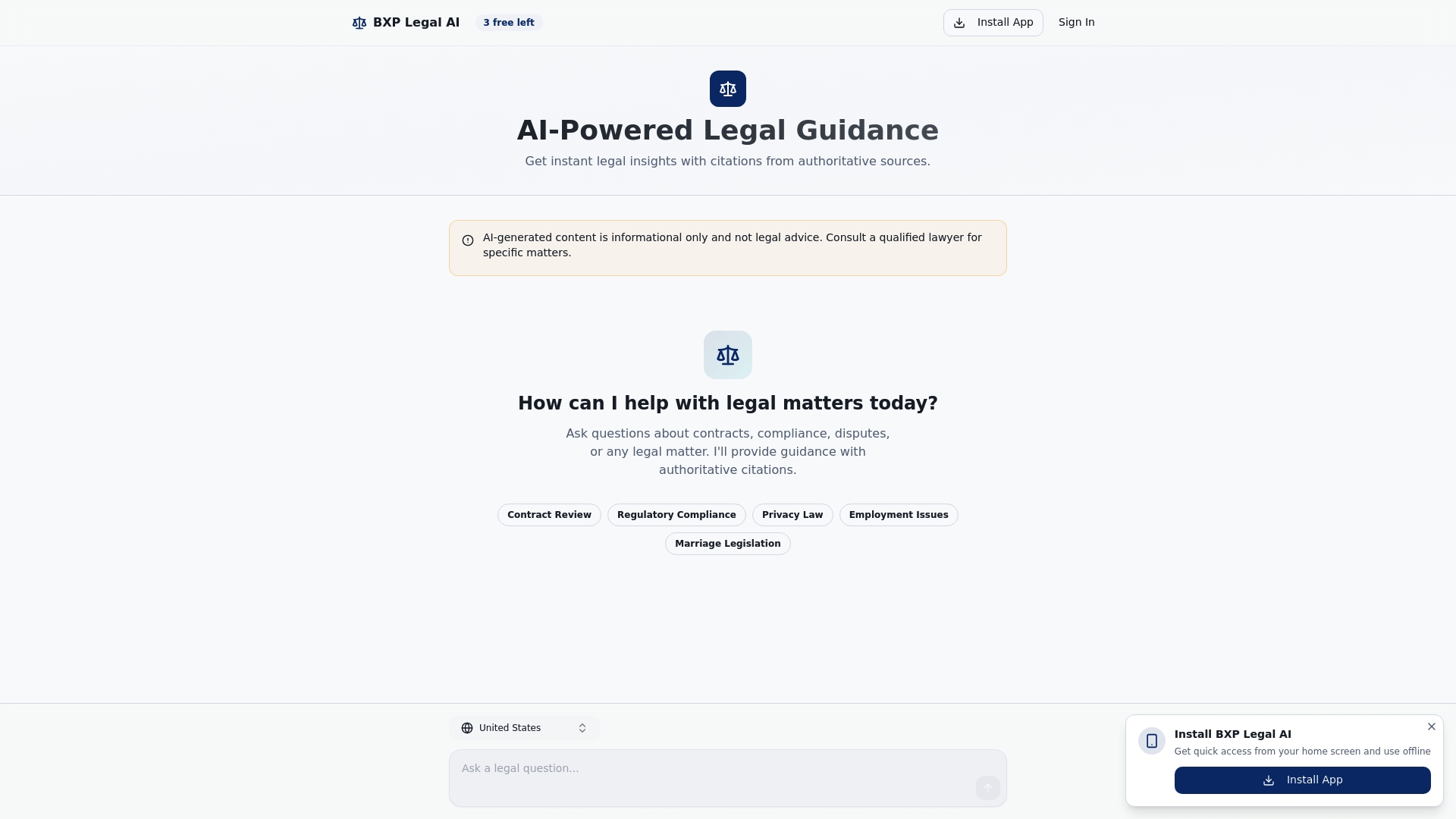
Stop recreating contracts from scratch. Access legal template options covering common business scenarios, each built with compliance safeguards and clear, enforceable language. Customize templates to your specific needs, then use AI-powered review to ensure consistency across your contract portfolio. Whether you manage procurement, sales agreements, or service contracts, BXP Legal AI delivers the efficiency and confidence your business deserves.
Frequently asked questions about contract review checklists
Why is a contract review checklist important?
A structured checklist ensures consistent evaluation of critical contract elements, reducing the risk of overlooking problematic clauses that could expose your business to legal disputes or compliance violations. Checklists standardize reviews across team members, maintaining quality regardless of individual experience levels.
Can AI replace manual contract review?
AI excels at identifying standard risks and missing clauses but cannot fully replace human judgment on nuanced business decisions or unusual contract structures. The most effective approach combines AI's speed and consistency with human expertise for complex risk assessment and strategic considerations.
How often should I update my contract checklist?
Review and update your checklist quarterly at minimum, or immediately when you encounter contract disputes, regulatory changes, or operational shifts. Track which checklist items catch actual problems and refine your criteria based on real-world feedback to improve effectiveness over time.
What are common pitfalls in contract review?
Rushing through reviews under time pressure, failing to verify party authority, overlooking automatic renewal clauses, and neglecting jurisdiction-specific compliance requirements rank among the most frequent mistakes. Many reviewers also miss the interplay between related clauses, where individually acceptable terms create problematic combinations.
How do I handle multi-jurisdictional contracts?
Multi-jurisdictional agreements require careful attention to choice of law provisions, enforceability across borders, and compliance with regulations in each relevant jurisdiction. Use a multi-jurisdictional checklist that addresses varying legal standards, currency considerations, and dispute resolution mechanisms acceptable in all applicable locations.