
Many people assume wills are only for the wealthy or elderly. That's a dangerous misconception. If you own any assets, have minor children, or care about how your belongings are distributed after death, you need a will. Drafting a will isn't about wealth; it's about control. Without one, state laws decide who gets what, often ignoring your actual wishes. This article explains why having a will matters for individuals and families planning their estates, what happens without one, and how to create an effective document that protects your legacy and simplifies matters for loved ones.
Table of Contents
- Key Takeaways
- What is a will and why is it essential?
- Common misconceptions and when a will may not be necessary
- Key components of a will and how to draft one effectively
- Benefits of having a will: protecting your legacy and simplifying family matters
- How BXP Legal AI can simplify drafting your will
- FAQ
Key Takeaways
| Point | Details |
|---|---|
| Wills protect your wishes | A will directs who inherits assets, names guardians for minor children, and appoints an executor to manage the estate. |
| Avoid intestacy pitfalls | Without a will, state laws decide who receives your property, which may not match your wishes. |
| Simple estates may suffice | If most assets pass by beneficiary designations or require no guardians, a formal will may be less critical. |
| Regularly review and update | Revisit your will every three to five years or after major life events to keep it enforceable. |
What is a will and why is it essential?
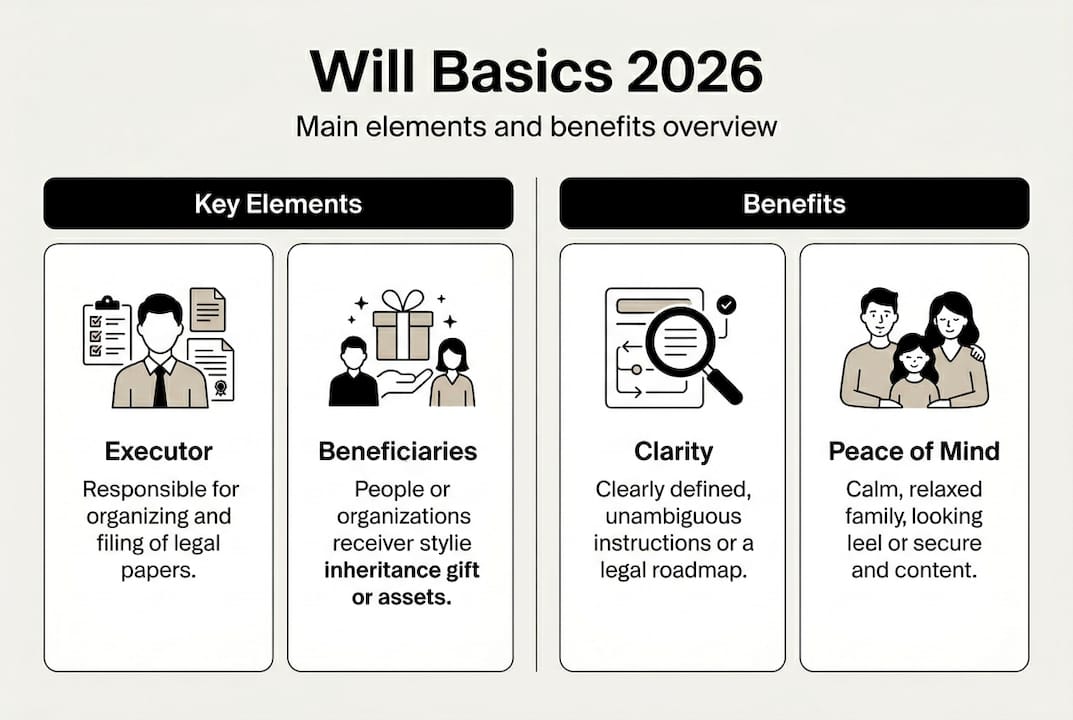
A will is a legal document that outlines how your assets should be distributed after you die. It names beneficiaries for specific property, designates an executor to manage your estate, and can appoint guardians for minor children. Beyond property distribution, wills can specify funeral arrangements, charitable donations, and special bequests that reflect your values and relationships.
Without a will, your estate enters intestacy, where state laws determine who inherits what. These laws follow rigid formulas based on family relationships, completely ignoring your personal wishes. Your best friend gets nothing. That charity you supported for decades receives zero. Your estranged relative you haven't spoken to in years might inherit a significant portion. Having a will ensures your wishes are followed and reduces potential conflicts among survivors.
Here's why drafting a will is essential for effective estate planning:
- Control over asset distribution: You decide exactly who receives what, from real estate to personal items with sentimental value
- Guardianship designation: Parents of minor children can name trusted guardians instead of leaving that decision to courts
- Executor appointment: You choose someone reliable to handle estate administration, pay debts, and distribute assets
- Reduced legal delays: Clear instructions speed up probate and minimize court involvement
- Family harmony: Explicit directions prevent disputes among heirs who might otherwise argue over intentions
Think of your will as the final conversation you'll have with loved ones. It's your chance to explain decisions, express gratitude, and provide clarity during an emotionally difficult time. When legal documentation matters most, a well-drafted will speaks for you after you're gone.
Pro Tip: Review your will every three to five years or after major life events like marriage, divorce, births, or significant asset changes to keep it current and enforceable.
Common misconceptions and when a will may not be necessary
The assumption that everyone needs an elaborate will creates unnecessary anxiety. While wills are important, not everyone needs a complex will depending on their circumstances. Understanding when simpler alternatives work helps you make informed decisions about estate planning.
Some assets pass directly to beneficiaries outside of probate, bypassing your will entirely. Retirement accounts like 401(k)s and IRAs transfer to named beneficiaries automatically. Life insurance policies pay directly to designated recipients. Bank accounts with payable-on-death designations go straight to named individuals. If these beneficiary designations cover most of your assets and align with your wishes, a formal will might be less critical.
For individuals with minimal assets, no minor children, and straightforward family situations, intestate succession laws might distribute property acceptably. If state law would give everything to your spouse or divide assets among children exactly as you'd want, the cost and effort of drafting a will might outweigh benefits. However, this scenario is rare and risky.
Here are situations where you might reconsider the complexity of your will:
- Simple estates with beneficiary designations: All major assets have updated beneficiary forms that reflect your wishes
- No minor children or dependents: No guardianship decisions needed, reducing will complexity
- Uncontested family dynamics: Heirs agree on asset distribution and no disputes are anticipated
- Minimal personal property: Few items of significant financial or sentimental value to distribute
The bigger danger isn't having no will but having a poorly drafted one. DIY wills created without legal knowledge often contain ambiguous language, miss required formalities, or create unintended consequences. A confusing will can spark more family conflict than no will at all. Homemade documents might fail to meet state-specific requirements for witnesses, notarization, or language, rendering them invalid.
Pro Tip: Even if you think your estate is simple, consult legal expertise or use AI-powered drafting tools to avoid poor DIY wills that cause family conflict. Understanding types of legal documents helps you choose the right approach for your situation.
Key components of a will and how to draft one effectively
Creating a legally valid will requires specific elements and careful attention to state requirements. Missing even one component can invalidate the entire document or create ambiguities that lead to disputes. Understanding what makes a will effective helps you draft a document that accomplishes your goals and withstands legal scrutiny.
Every valid will must include these essential elements:
- Testator identification: Your full legal name, address, and statement that you're of sound mind and legal age
- Revocation clause: Clear language revoking all previous wills and codicils
- Executor designation: Named individual or institution to administer your estate, plus alternates
- Beneficiary identification: Specific people or organizations receiving assets, with full names and relationships
- Asset descriptions: Clear identification of property being distributed, from real estate to personal items
- Guardianship provisions: If you have minor children, named guardians for their care and alternates
- Residuary clause: Instructions for distributing any assets not specifically mentioned
- Signature and witnesses: Your signature plus required witnesses (typically two) who aren't beneficiaries
The drafting method you choose impacts accuracy, cost, and legal validity. Here's how different approaches compare:
| Method | Cost | Accuracy | Time | Best for |
|---|---|---|---|---|
| DIY templates | $20-50 | Low to medium | 1-3 hours | Very simple estates with no complications |
| Estate attorney | $500-2,000+ | High | 2-4 weeks | Complex estates, blended families, business owners |
| AI-powered platforms | $100-300 | Medium to high | 1-2 hours | Most individuals seeking professional-quality documents |
| Online legal services | $100-500 | Medium | 1-3 days | Straightforward estates needing more than templates |
When drafting your will, follow this step-by-step process:
- Inventory your assets: List everything you own, including real estate, vehicles, bank accounts, investments, business interests, and valuable personal property
- Identify beneficiaries: Decide who receives what, including specific bequests and residuary beneficiaries for remaining assets
- Choose an executor: Select someone trustworthy, organized, and willing to handle estate administration responsibilities
- Designate guardians: If you have minor children, name guardians who share your values and parenting philosophy
- Draft the document: Use AI document drafting tools or contract drafting strategies to create clear, legally sound language
- Review for completeness: Verify all required elements are present and instructions are unambiguous
- Execute properly: Sign in front of required witnesses who also sign, following your state's specific formalities
- Store securely: Keep the original in a safe place and inform your executor of its location
Professional legal support improves will validity and reduces disputes. Even if you draft your own will, having an attorney or legal AI platform review it catches errors and ensures compliance with state requirements. The cost of professional review is minimal compared to potential probate complications from a flawed document.
Pro Tip: Use legal review or AI document drafting platforms to improve accuracy and ensure your will meets state-specific requirements. When you consult legal experts, you gain confidence that your document will hold up under scrutiny.
Benefits of having a will: protecting your legacy and simplifying family matters
The practical and emotional benefits of having a will extend far beyond simple asset distribution. A well-drafted will provides peace of mind, protects relationships, and ensures your values continue influencing the world after you're gone. Understanding these advantages motivates action on a task many people postpone indefinitely.

Wills reduce family disputes and clarify final wishes, easing settlement. When family members understand your intentions through clear written instructions, they're less likely to argue over interpretations or feel slighted by distribution decisions. Explicit explanations for choices, especially unequal distributions, prevent hurt feelings and resentment that can fracture families permanently.
Key benefits of drafting a will include:
- Asset protection: Your property goes exactly where you intend, not where state formulas dictate
- Simplified probate: Clear instructions speed court processes and reduce legal fees for your estate
- Family harmony: Explicit directions prevent misunderstandings and costly legal battles among heirs
- Child protection: Named guardians ensure your children are raised by people you trust with compatible values
- Charitable legacy: Donations to causes you care about continue your impact beyond your lifetime
- Business continuity: Instructions for business interests prevent operational disruption and preserve value
- Peace of mind: Knowing your affairs are in order reduces anxiety about the future
The probate process becomes significantly simpler when an executor can present a clear, valid will to the court. Instead of lengthy investigations into family relationships and asset ownership, the court can quickly verify the will's validity and authorize distribution. This efficiency saves time, reduces legal costs, and gets assets to beneficiaries months or even years faster.
Without a will, family members often face difficult decisions during grief. Should we sell the house? Who gets grandmother's jewelry? Can we afford to keep the family business running? Your will answers these questions in advance, removing burden from loved ones when they're least equipped to handle complex decisions. Understanding legal documentation benefits helps you appreciate how proper planning protects everyone involved.
"The most common estate disputes arise not from malice but from ambiguity. When family members must guess at intentions, even close relationships fracture under the stress of grief and uncertainty. A clear will eliminates guesswork and preserves family bonds during difficult transitions."
Your will also serves as a final expression of gratitude and love. Specific bequests of sentimental items show you remembered what mattered to each person. Explanations for decisions demonstrate thoughtfulness. Charitable donations reflect your values. These elements transform a legal document into a meaningful communication that comforts survivors and honors relationships.
How BXP Legal AI can simplify drafting your will
Creating a legally sound will doesn't require weeks of attorney meetings or thousands in legal fees. BXP Legal AI combines artificial intelligence with legal expertise to help you draft comprehensive, valid wills efficiently and affordably. The platform guides you through every decision, ensures compliance with state requirements, and produces professional-quality documents ready for execution.
BXP Legal AI offers expert AI guidance for drafting wills tailored to your specific situation. The platform asks targeted questions about your assets, family structure, and wishes, then generates customized language that clearly expresses your intentions. Multi-jurisdiction legal support ensures your will complies with your state's specific requirements for witnesses, notarization, and formalities, eliminating the risk of invalidation due to technical errors.
Ready-made legal templates provide professionally drafted starting points you can customize to your circumstances. The platform reduces errors and speeds up document creation, letting you complete a comprehensive will in hours instead of weeks. Whether your estate is simple or complex, BXP Legal AI adapts to your needs, offering the right level of detail and sophistication for your situation.
FAQ
What happens if I die without a will?
Without a will, your assets are distributed by state intestacy laws, which follow rigid formulas based on family relationships rather than your actual wishes. This often leads to delays, increased legal costs, and potential family disputes as courts determine heirs and appoint administrators. Your estate might go to relatives you barely know instead of close friends or charities you supported.
Can I update or change my will after drafting it?
You can update your will anytime to reflect life changes like marriage, divorce, births, deaths, or significant asset changes. Create a new will with a revocation clause or add a codicil for minor changes. Regular reviews every three to five years ensure your will stays current, valid, and aligned with your evolving wishes and circumstances.
Do I need a lawyer to draft my will?
While you can draft your will yourself using templates or online tools, mistakes in language, formalities, or legal requirements may cause disputes or render the document invalid. DIY wills can increase disputes when ambiguous terms create confusion. Legal professionals or AI tools help ensure clarity, proper execution, and enforceability, providing peace of mind that your will accomplishes its purpose.
How much does it cost to create a will?
Will creation costs vary widely based on complexity and method. DIY templates cost $20 to $50 but offer minimal guidance. Online legal services range from $100 to $500 for straightforward estates. Estate attorneys charge $500 to $2,000 or more for complex situations. AI-powered platforms like BXP Legal AI offer professional-quality documents for $100 to $300, balancing affordability with accuracy and legal compliance.