
Operating across state lines or international borders introduces legal complexities that catch many small and medium-sized businesses off guard. A common misconception suggests that compliance in your home jurisdiction automatically extends to others, but each legal system imposes unique requirements for contracts, taxes, employment, and regulatory filings. Ignoring these nuances exposes your organization to penalties, disputes, and operational disruptions. This guide delivers authoritative insights into navigating multi-jurisdictional legal challenges, offering practical strategies to ensure compliance and mitigate risks effectively.
Table of Contents
- Key Takeaways
- Understanding the complexities of multi-jurisdictional legal compliance
- Comparing legal requirements across jurisdictions: frameworks and conflict resolution
- Leveraging technology and checklists to streamline compliance processes
- Best practices for applying multi-jurisdictional legal insights to your business
- Explore BXP Legal AI solutions for multi-jurisdictional compliance
- Frequently asked questions
Key Takeaways
| Point | Details |
|---|---|
| Multi jurisdictional complexity | Recognize that each jurisdiction imposes distinct rules across contracts, taxes, employment, and regulatory filings and plan accordingly. |
| Interplay of local laws | Map how rules interact to identify gaps where a single policy may not satisfy all regions. |
| Proactive compliance strategies | Develop proactive strategies to mitigate risk before issues arise by prioritizing high risk areas and building a cross jurisdiction team. |
| Checklists and tools | Create a compliance matrix and use checklists to monitor deadlines, owners, and accountable departments across jurisdictions. |
| Conflict resolution framework | Clarify which laws govern disputes and use a consistent framework for resolving cross jurisdiction issues. |
Understanding the complexities of multi-jurisdictional legal compliance
Multi-jurisdictional legal compliance means adhering to laws across multiple geographic regions where your business operates, sells products, or employs workers. Small to medium enterprises face complex legal requirements that differ across jurisdictions, increasing risk. When state, provincial, or national laws conflict, determining which rules take precedence becomes a critical challenge.
Common legal conflicts arise in several areas. Contract enforceability standards differ between jurisdictions, affecting dispute resolution mechanisms and liability caps. Tax obligations vary widely, from sales tax collection thresholds to corporate income tax rates and filing deadlines. Employment regulations impose different minimum wage requirements, overtime rules, and termination procedures. Data privacy laws like GDPR in Europe or CCPA in California create distinct compliance obligations for customer information handling.
The types of legal requirements that vary include:
- Business registration and licensing procedures that determine where you can legally operate
- Intellectual property protections that may not transfer automatically across borders
- Consumer protection standards affecting return policies, warranties, and advertising claims
- Environmental regulations governing waste disposal, emissions, and resource usage
- Industry-specific certifications required for healthcare, finance, or food services
SMBs typically encounter challenges when expanding operations without conducting thorough legal assessments. A manufacturing company shipping products to multiple states discovers unexpected sales tax nexus obligations. A tech startup hiring remote workers across borders faces conflicting employment classification rules. A consulting firm drafting client agreements struggles with choice of law provisions when disputes arise. These scenarios demand proactive compliance strategies rather than reactive damage control.
Comparing legal requirements across jurisdictions: frameworks and conflict resolution
Identifying jurisdictional differences requires systematic frameworks that organize legal obligations by category and region. Start by creating a compliance matrix that lists each jurisdiction where you operate alongside relevant legal domains such as contracts, employment, taxation, and data privacy. Populate this matrix with specific requirements, deadlines, and responsible parties within your organization. This visual tool reveals gaps and overlaps quickly.
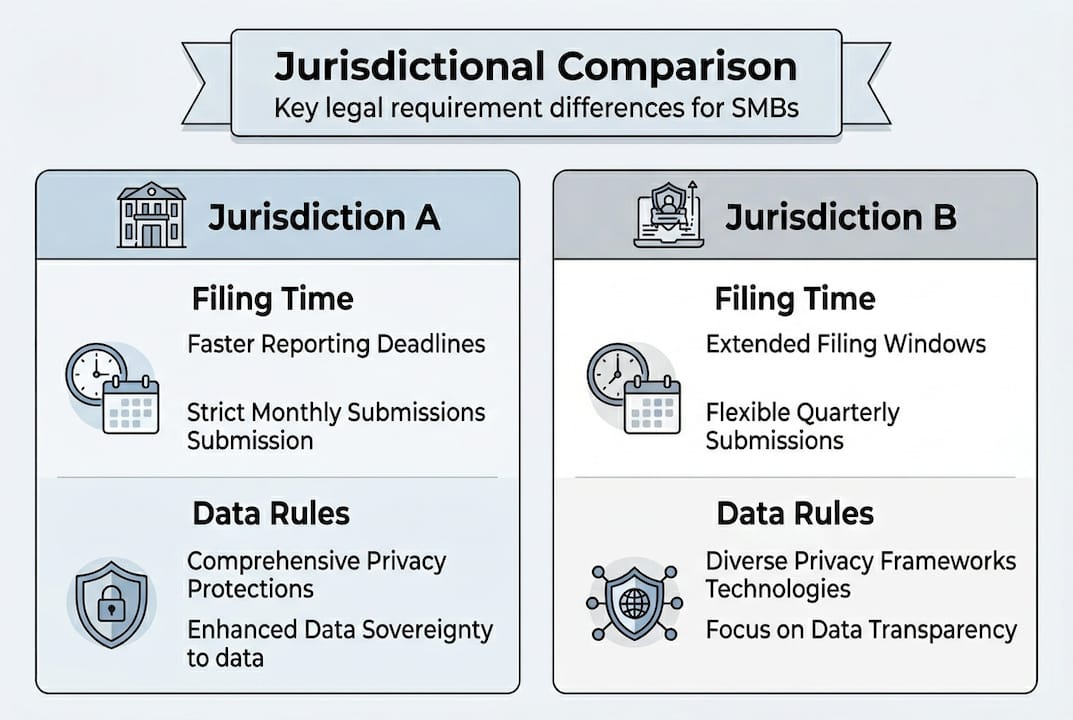
Conflict resolution strategies depend on understanding which jurisdiction's laws govern specific situations. Choice of law clauses in contracts specify which legal system applies to disputes, providing clarity upfront. When laws conflict without contractual guidance, courts typically apply the law of the jurisdiction with the most significant relationship to the transaction. Resolving disputes and aligning contracts across jurisdictions requires a consistent checklist approach.
Pro Tip: Prioritize compliance efforts by assessing both the likelihood of enforcement and the severity of penalties in each jurisdiction. Focus resources on high-risk areas where violations carry substantial fines or operational shutdowns, then address lower-risk requirements systematically.
| Legal Aspect | Jurisdiction A | Jurisdiction B | Key Difference |
|---|---|---|---|
| Sales tax threshold | $100,000 annual revenue | $500,000 annual revenue | Lower threshold triggers earlier obligation |
| Employment classification | ABC test for contractors | Economic realities test | Different criteria determine worker status |
| Data breach notification | 72-hour requirement | 30-day requirement | Faster response needed in Jurisdiction A |
| Non-compete enforceability | Generally enforceable | Strictly limited | Contract clauses may be void in Jurisdiction B |
| Contract statute of limitations | 6 years | 4 years | Shorter window to file claims in Jurisdiction B |
Common conflict resolution approaches include harmonizing internal policies to meet the strictest standard across all jurisdictions, which simplifies compliance but may increase costs. Alternatively, tailor operations to each jurisdiction's specific requirements, maintaining separate procedures and documentation systems. Hybrid approaches balance efficiency with localized compliance, standardizing core processes while customizing jurisdiction-specific elements.
When regulatory agencies from different jurisdictions issue conflicting guidance, seek clarification through official channels before proceeding. Document your decision-making process and the rationale for choosing one interpretation over another. This documentation demonstrates good faith compliance efforts if disputes arise later.
Leveraging technology and checklists to streamline compliance processes
Automation transforms multi-jurisdictional compliance from an overwhelming manual process into a manageable workflow. AI-powered tools help streamline multi-jurisdictional legal steps and minimize errors. Digital platforms track regulatory changes across jurisdictions in real time, alerting compliance officers to new requirements before deadlines pass. This proactive monitoring prevents costly oversights.

Types of tools available include AI-powered legal guidance platforms that answer jurisdiction-specific questions instantly, pulling from authoritative legal databases. Document drafting software generates contracts, employment agreements, and privacy policies tailored to each jurisdiction's requirements. Compliance management systems centralize deadlines, filings, and audit trails across all locations. Risk assessment tools score your exposure in different jurisdictions based on operations and regulatory environments.
Checklist advantages for SMBs and compliance officers include:
- Standardized processes that reduce reliance on individual knowledge and prevent turnover disruptions
- Audit trails documenting compliance activities for regulatory reviews or legal defense
- Clear accountability assigning specific tasks to team members with measurable completion metrics
- Scalability allowing you to add new jurisdictions without rebuilding compliance frameworks
- Cost efficiency reducing legal consultation hours by handling routine compliance internally
A multi-jurisdictional contract checklist ensures every agreement addresses choice of law, dispute resolution mechanisms, and jurisdiction-specific clauses. Digital checklists integrate with project management tools, triggering reminders for quarterly filings, annual registrations, and policy reviews.
Pro Tip: Integrate legal templates with digital workflows by embedding jurisdiction-specific clauses as conditional fields. When creating a new contract, the system prompts you to select applicable jurisdictions, then automatically populates relevant legal language, reducing drafting time and ensuring consistency.
Technology also facilitates collaboration between internal teams and external counsel. Cloud-based platforms allow real-time document sharing and version control, ensuring everyone works from current templates. Compliance dashboards visualize your status across jurisdictions, highlighting areas needing attention. Automated reporting generates summaries for board meetings or regulatory submissions.
Best practices for applying multi-jurisdictional legal insights to your business
Implementing compliance strategies effectively requires a structured approach that balances thoroughness with operational efficiency. Begin with these prioritized steps:
- Conduct a comprehensive jurisdictional audit identifying every location where you have legal obligations, including physical presence, employee locations, customer bases, and revenue sources.
- Map specific legal requirements for each jurisdiction across contracts, employment, taxation, data privacy, and industry regulations, creating a master compliance calendar.
- Assign internal ownership designating compliance officers or team members responsible for monitoring and executing requirements in each jurisdiction.
- Establish documentation protocols ensuring all filings, registrations, and policy updates are recorded with timestamps and responsible parties for audit purposes.
- Schedule regular reviews quarterly or semi-annually to assess regulatory changes, update internal policies, and verify ongoing compliance across all jurisdictions.
- Engage external counsel strategically for complex matters, annual compliance audits, or when entering new jurisdictions with unfamiliar legal frameworks.
Key documentation and monitoring activities include maintaining current business registrations and licenses in every jurisdiction, tracking tax filing deadlines and payment obligations, updating employee handbooks to reflect jurisdiction-specific labor laws, and reviewing contracts for enforceable choice of law provisions. Consulting legal experts and using tailored templates reduces risks and enhances compliance.
Regular review cycles prevent compliance drift where policies become outdated as regulations evolve. Assign a quarterly compliance review meeting where stakeholders assess new legal developments, evaluate their impact on operations, and update procedures accordingly. This proactive stance catches issues before they escalate into violations.
| Risk Mitigation Technique | Implementation Method | Expected Outcome |
|---|---|---|
| Centralized compliance tracking | Use digital platforms consolidating deadlines and filings | 95% on-time filing rate |
| Jurisdiction-specific training | Conduct quarterly sessions for relevant teams | Reduced violation incidents by 60% |
| External legal audits | Schedule annual reviews with multi-jurisdictional counsel | Early identification of gaps |
| Automated regulatory monitoring | Deploy AI tools tracking legal changes | Real-time alerts on new requirements |
| Standardized contract templates | Develop jurisdiction-adaptable agreements | 40% faster contract execution |
Documentation management extends beyond compliance filings to include internal communications, decision rationales, and risk assessments. Why legal documentation matters becomes clear when disputes arise or audits occur. Well-organized records demonstrate diligence and good faith efforts, potentially mitigating penalties.
Expert advice proves invaluable when navigating ambiguous regulations or conflicting guidance from different jurisdictions. Consult legal experts in 2026 for complex matters where stakes are high. While technology handles routine compliance, human expertise addresses nuanced interpretations and strategic decisions.
Explore BXP Legal AI solutions for multi-jurisdictional compliance
Navigating multi-jurisdictional legal requirements demands tools that combine speed, accuracy, and comprehensive coverage. BXP Legal AI legal guidance and drafting empowers SMBs and compliance officers with instant answers to jurisdiction-specific questions, drawing from authoritative legal databases updated continuously. Whether you need clarity on contract enforceability across state lines or employment classification standards in different regions, the platform delivers precise guidance.
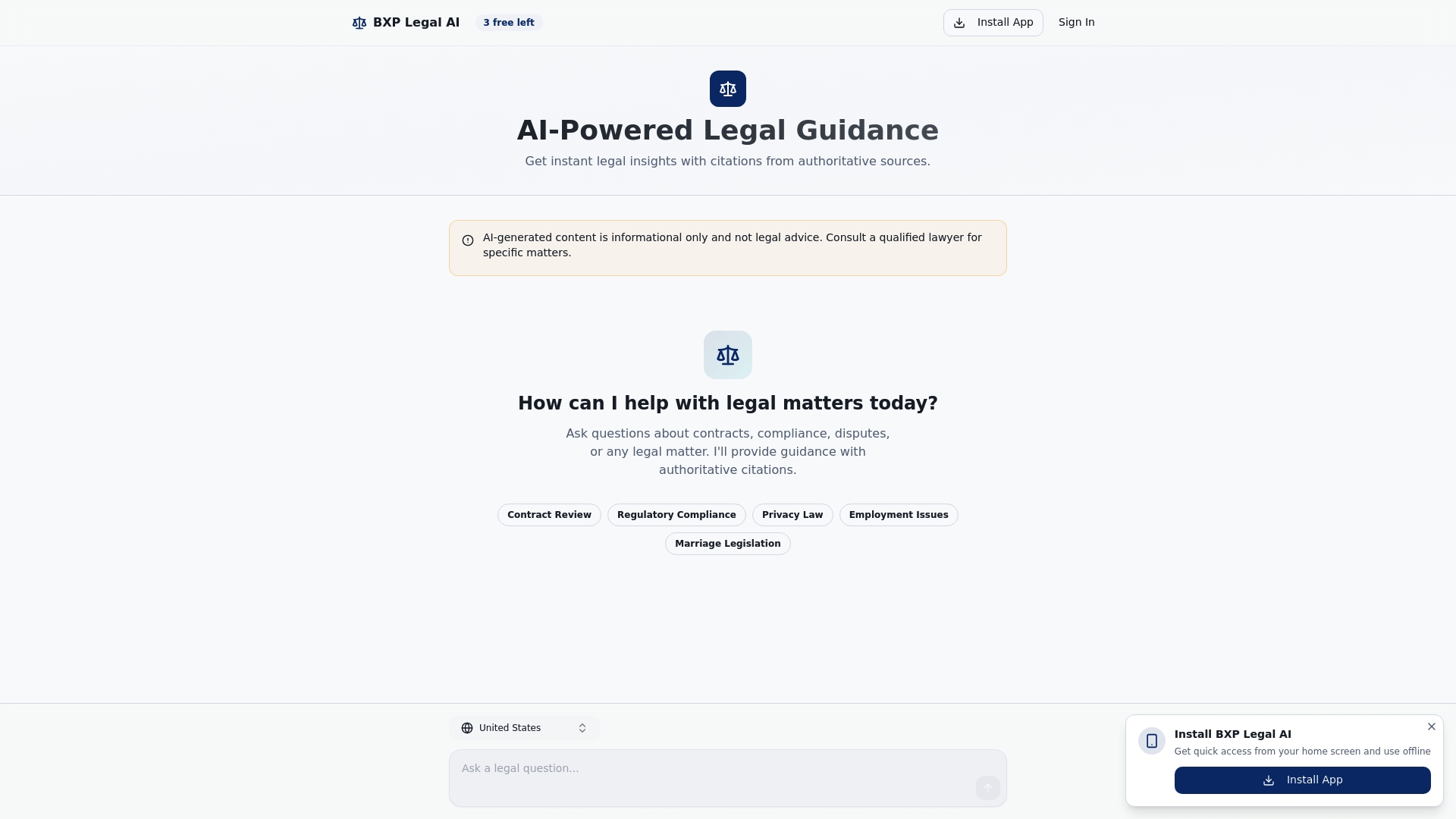
The document comparison features identify conflicts between agreements drafted for different jurisdictions, highlighting inconsistencies in liability clauses, dispute resolution mechanisms, or regulatory compliance provisions. This capability prevents costly oversights when standardizing contracts across multiple locations. Legal templates offerings provide jurisdiction-adaptable frameworks for employment agreements, privacy policies, and commercial contracts, reducing drafting time while ensuring local compliance. These templates include conditional clauses that activate based on applicable jurisdictions, streamlining your workflow without sacrificing legal precision.
Frequently asked questions
What are the biggest risks of ignoring multi-jurisdictional laws?
Ignoring multi-jurisdictional laws exposes businesses to substantial financial penalties, with fines reaching hundreds of thousands of dollars for tax violations or data privacy breaches. Legal disputes multiply when contracts lack proper choice of law provisions, forcing expensive litigation in unfavorable jurisdictions. Business interruptions occur when regulatory agencies suspend operations or revoke licenses for non-compliance. Reputational harm from publicized violations damages customer trust and partner relationships, creating long-term revenue impacts beyond immediate penalties.
How can small businesses prioritize compliance efforts across jurisdictions?
Focus on jurisdictions generating the highest revenue or employing the most workers, as these represent your greatest exposure. Assess enforcement likelihood by researching each jurisdiction's regulatory activity and penalty history in your industry. Use compliance checklists to systematically address requirements, starting with areas carrying criminal penalties or operational shutdowns. Engage legal experts for initial jurisdiction assessments, then maintain compliance through internal processes and periodic audits.
What role does technology play in simplifying multi-jurisdiction legal work?
Automation handles repetitive compliance tasks like deadline tracking, filing reminders, and regulatory monitoring, freeing your team for strategic decisions. AI-powered platforms deliver instant answers to jurisdiction-specific questions with authoritative citations, reducing legal research time by 70%. Digital templates generate jurisdiction-compliant documents in minutes rather than hours, while comparison tools spot conflicts between agreements. These technologies transform multi-jurisdictional compliance from a resource drain into a manageable, scalable process that grows with your business.
When should businesses seek external legal counsel for multi-jurisdictional matters?
Seek external counsel when entering new jurisdictions with unfamiliar legal frameworks, ensuring you understand all obligations before commencing operations. Complex disputes involving conflicting laws across jurisdictions require experienced attorneys who specialize in choice of law and conflict resolution. Annual compliance audits benefit from external expertise to identify gaps your internal team might miss. High-stakes matters like regulatory investigations, major contract negotiations, or potential litigation demand specialized counsel. For routine compliance, leverage technology and internal processes, reserving external counsel for situations where expertise directly impacts outcomes.