
Hiring a lawyer used to mean scheduling consultations weeks out, paying hundreds of dollars per hour, and hoping you understood the advice you received. For individuals managing a lease dispute or small business owners drafting vendor contracts, that process felt out of reach. The online legal services market reached $15.2B in 2025, and that number reflects a real shift in how people access legal help. Digital platforms now offer faster, more affordable, and increasingly reliable alternatives that put legal clarity within reach for anyone with an internet connection.
Table of Contents
- The evolution of online legal guidance
- Key benefits of using online legal guidance
- Comparing online legal guidance to traditional services
- Considerations, risks, and best practices
- Our perspective: The real power (and limits) of online legal guidance-of-online-legal-guidance)
- How BXP Legal AI can help you get started
- Frequently asked questions
Key Takeaways
| Point | Details |
|---|---|
| Major time savings | AI-automated drafting and reviews can cut hours down to minutes for standard legal documents. |
| Affordable access | Online legal guidance offers transparent pricing and cost savings, especially for small businesses and individuals. |
| Best for routine needs | Use online tools for standard contracts and compliance; combine with lawyer review for complex or high-risk matters. |
| Confidence with oversight | Regulatory reforms and studies show most users can navigate online legal help safely and effectively. |
The evolution of online legal guidance
Legal services were once the exclusive domain of law firms, private attorneys, and expensive retainers. If you needed a contract reviewed, you booked an appointment. If you had a compliance question, you waited days for a written opinion. That model worked for corporations with legal departments, but it left individuals and small businesses largely on their own.
The shift started with document template libraries in the early 2000s. Basic forms became available online, giving users a starting point even if they lacked professional guidance. Then came subscription platforms, AI-powered chat tools, and hybrid models that combine automated drafting with attorney review. The progression has been fast, and the results are measurable.
The online legal services market hit $15.2B in 2025, fueled largely by demand from small businesses seeking affordable, accessible legal support.
Regulatory changes have played a meaningful role too. A Stanford study on legal innovation found that reforms in several states have made online services safer and more accessible, particularly for individuals and small businesses that previously had no practical legal options. These reforms allow non-attorney providers to offer certain services under defined guidelines, which expands access without sacrificing oversight.
Today, online legal guidance generally falls into four categories:
- Document templates: Pre-built contracts, agreements, and forms that users customize for their situation
- Compliance tools: Automated checklists and guidance for regulatory requirements by industry or jurisdiction
- AI-powered chat: Instant answers to legal questions, backed by citations and sourced from authoritative legal databases
- Hybrid models: Platforms where users draft documents online and then pay for optional attorney review
Understanding what legal document drafting means in practice helps clarify which of these options fits a specific need. For most routine tasks, the first three categories are more than sufficient.
Key benefits of using online legal guidance
The most immediate benefit is speed. Traditional contract drafting can take days or even weeks when it involves back-and-forth with an attorney. AI contract drafting is 10x faster than manual methods and reduces review time by up to 95%. That kind of efficiency matters when you are closing a deal, onboarding a contractor, or responding to a compliance deadline.

Cost transparency is the second major advantage. Traditional legal billing is notoriously opaque. You receive an invoice after the fact, and the hours can add up in ways that are hard to predict. Online platforms use flat subscription fees or per-document pricing, so you know what you are paying before you start.
| Factor | Online legal guidance | Traditional attorney |
|---|---|---|
| Cost | $0 to $49/month | $250 to $500+/hour |
| Speed | Minutes to hours | Days to weeks |
| Availability | 24/7 | Business hours only |
| Transparency | Fixed pricing | Variable billing |
| Complexity handled | Routine to moderate | Routine to complex |
The 24/7 availability factor is easy to underestimate. Legal issues rarely arrive at convenient times. A vendor sends a contract at 9 p.m. on a Thursday. A compliance question comes up over the weekend before a Monday deadline. Online tools are available whenever you need them, without overtime charges.
Here is a practical order for getting the most out of online legal guidance:
- Identify the type of legal task (drafting, review, compliance check, or research)
- Use an AI tool or template to create a first draft or get initial guidance
- Review the output against your specific situation
- Decide whether the stakes justify professional attorney review
- Archive the final document with version notes for future reference
Learning how AI accelerates document work gives you a clearer picture of where the time savings actually come from. It is not just about writing faster. It is about reducing the back-and-forth that slows everything down.
Pro Tip: Use online legal platforms for routine contracts like NDAs, service agreements, and vendor terms. Reserve attorney consultations for high-value deals, litigation risk, or situations involving multiple jurisdictions. Knowing when to consult legal experts saves both time and money.
Comparing online legal guidance to traditional services
Now that the benefits are clear, it is useful to see how online legal guidance actually stacks up against traditional approaches in real-world scenarios.
Platforms like Rocket Lawyer and LegalZoom offer subscriptions ranging from $35 to $49 per month, compared to attorneys who typically charge $250 or more per hour. For a small business that needs five or six standard contracts per year, the math is straightforward. Online tools deliver significant savings without sacrificing quality on routine documents.
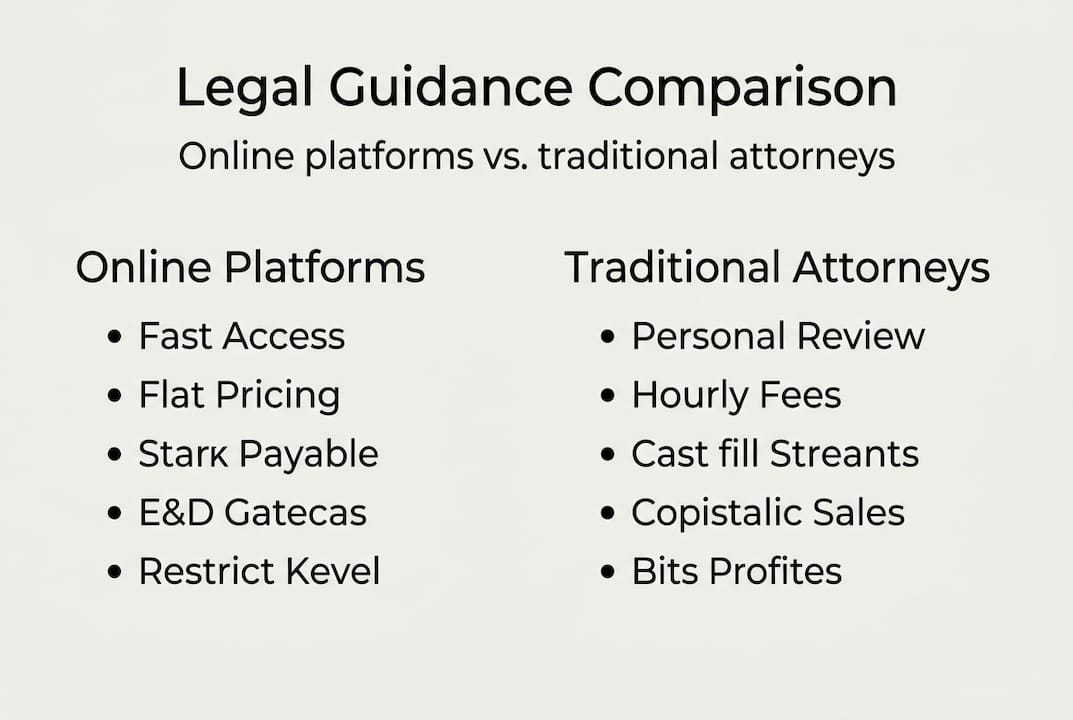
Speed is where the gap is most dramatic. An AI drafting tool can produce a complete service agreement in under five minutes. Getting the same document from a traditional attorney often means waiting two to five business days, plus revision cycles. That delay has real costs when deals are time-sensitive.
The comparison shifts when complexity increases. Online templates are designed for common scenarios. They handle standard terms well but may not account for unusual clauses, industry-specific regulations, or multi-party arrangements. Understanding the AI drafting process helps you recognize where customization is needed and where a template is sufficient.
- Best uses for online guidance: NDAs, freelance contracts, basic employment agreements, privacy policies, terms of service, compliance checklists
- Best uses for traditional counsel: Mergers and acquisitions, litigation, complex employment disputes, regulatory investigations, real estate closings involving unusual terms
The smartest approach combines both. Draft online, then have an attorney review anything above a certain dollar or risk threshold. Several AI-powered legal alternatives now build this hybrid model directly into their platforms, making it easy to escalate when needed.
Pro Tip: Set a personal threshold, such as any contract worth more than $10,000 or any matter involving potential litigation, as your trigger to bring in a licensed attorney for review.
Considerations, risks, and best practices
With the options laid out, knowing where online guidance fits and how to use it safely is crucial.
The most important limitation is scope. Online platforms provide information and tools. They do not represent you in court, and they cannot give you the kind of personalized advice that accounts for every detail of your specific situation. 86% of low-income legal needs go unmet by traditional services, which shows how valuable online tools are for access. But the same source notes that online guidance can be too generic for complex disputes or court representation.
The safety record, however, is encouraging. A Stanford study found only 1 harm per 5,869 online legal services provided, with regulatory oversight continuing to increase. That is a strong signal that reputable platforms operate responsibly.
Here are the best practices for using online legal guidance safely:
- Verify that the platform discloses its limitations and recommends professional review for complex matters
- Read user reviews and check for attorney oversight or review options
- Use hybrid models when stakes are moderate or high
- Never rely solely on a generic template for high-value or legally sensitive agreements
- Keep records of all documents, versions, and any professional reviews obtained
For businesses operating across state lines, the complexity multiplies quickly. Using AI for multi-jurisdiction steps can help you navigate the differences in state law without starting from scratch each time.
Online legal tools are most powerful when you treat them as a starting point, not a final answer. The goal is informed action, not blind reliance.
Choosing the right provider matters. Look for platforms that are transparent about what their tools can and cannot do, that offer access to licensed attorneys when needed, and that use up-to-date legal databases for their AI outputs.
Our perspective: The real power (and limits) of online legal guidance
Most conversations about online legal tools focus on cost and speed, and those benefits are real. But the deeper value is something less discussed: confidence. When you understand what a contract says, when you can check a compliance requirement in minutes rather than days, you make better decisions. You stop avoiding legal tasks because they feel overwhelming.
That said, we have seen users treat online tools as a complete substitute for professional judgment, and that is where problems emerge. The hybrid strategy, using automation for legal tasks for drafting and research while reserving attorney time for review and strategy, is consistently the most effective approach. Online guidance is an entry point, not an endpoint. The businesses that use it best are the ones that know exactly when to hand off to a human expert.
How BXP Legal AI can help you get started
If the benefits covered above sound like what your business or personal legal needs require, there is a direct path forward.
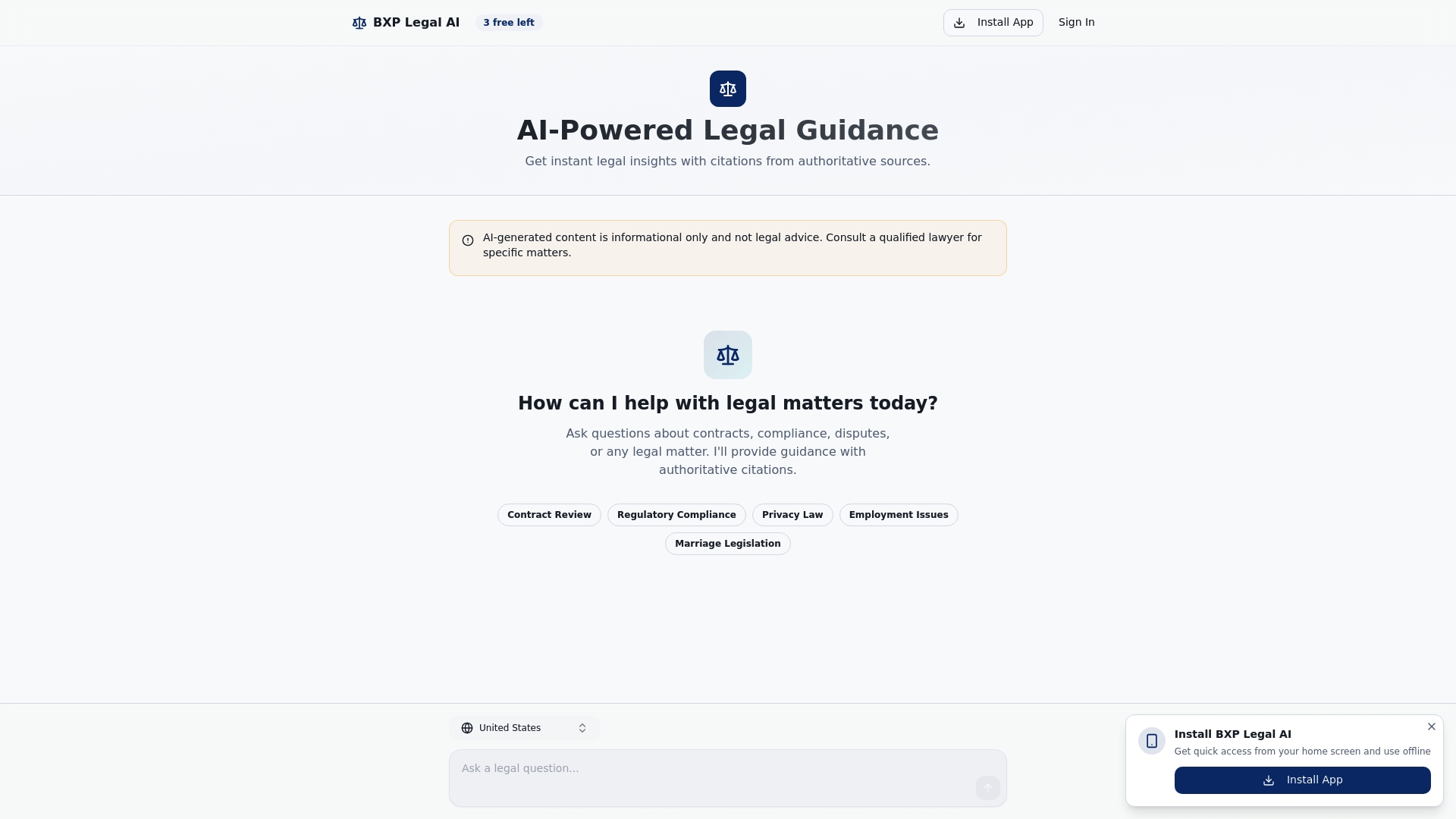
BXP Legal AI delivers the speed, transparency, and guidance this article describes, built into a single platform designed for individuals and small businesses. You can start with ready-to-use legal templates for common contracts and agreements, then use the document comparison feature to review changes and flag potential issues before signing. The platform is built to give you real legal clarity without the waiting room, and without the surprise invoice. Start with what you need today and scale up as your situation requires.
Frequently asked questions
Is online legal guidance reliable for businesses?
For standard contracts and compliance needs, online guidance is reliable and widely adopted by small businesses. Use traditional counsel for complex or high-risk matters.
How fast can AI draft legal documents online?
AI tools draft documents 10x faster than manual methods, cutting review time from hours to minutes in most standard cases.
Are online legal services safe for individuals?
Yes, for routine matters. A Stanford study recorded 1 harm per 5,869 services, and regulatory oversight of online platforms continues to grow.
When should I NOT use online legal guidance?
Avoid online-only solutions for court representation, highly specialized disputes, or situations where generic guidance risks missing critical case-specific details.