
TL;DR:
- Proper contract clauses are essential for risk mitigation; missing or poorly drafted provisions can lead to costly disputes. SMEs should focus on core clauses like scope, payment, termination, and boilerplate terms, ensuring their clauses work together as an integrated system. Utilizing AI tools and regular review processes enhances contract security and aligns terms to practical business needs.
Costly legal battles rarely begin with dramatic betrayals. They start with a missing termination clause, a vague payment schedule, or a force majeure provision nobody bothered to include. The must-have contract clauses for SMEs include scope of work, payment terms, termination, dispute resolution, confidentiality, indemnification, limitation of liability, governing law, force majeure, and key boilerplate items. That list sounds manageable until one contract without those protections puts your business at risk. This guide walks you through all 10 clauses, why each one matters, and how to make them work together.
Table of Contents
- How to evaluate which clauses matter most
- The 10 must-have clauses every contract needs
- How indemnification and limitation of liability interact
- Why boilerplate clauses are not 'just fine print'
- Aligning clauses for real-world business use
- What most experts miss: Real contract security comes from integration, not checklists
- Simplify contract safety with AI-powered tools
- Frequently asked questions
Key Takeaways
| Point | Details |
|---|---|
| Choose clauses with care | Essential clauses address specific risks and are not one-size-fits-all. |
| Integrate, don't just list | How your clauses align matters more than having a long list of provisions. |
| Don’t ignore boilerplate | So-called 'boilerplate' can decide legal outcomes—review it before signing. |
| Update and tailor | Review contracts regularly to suit your business, not just rely on old templates. |
| Use SME-focused tools | Smart tech simplifies contract safety for growing businesses. |
How to evaluate which clauses matter most
Not every contract carries equal risk. A simple purchase order for office supplies is very different from a multi-year software development agreement with a major client. Before you add clauses to a contract, step back and assess what is actually at stake.
Start by asking yourself four questions:
- What could go wrong? Map out the realistic failure modes. Late delivery, non-payment, data breach, scope creep. Each risk points to a specific clause.
- What does the law require? Some industries mandate specific provisions. Construction contracts, healthcare agreements, and financial services contracts often come with statutory obligations you cannot waive.
- Are each party's rights and exit routes clear? If the contract ended tomorrow, would both sides know exactly what they owe each other and how to walk away cleanly?
- Is the language proportionate? Overly complex indemnity clauses in a small vendor agreement can scare off good partners or create unenforceable provisions nobody reads.
The best lens for evaluating clauses comes from understanding contract law basics at a foundational level, so you know what the default legal rules are when a clause is absent. Default rules in contract law are rarely favorable to the party that should have drafted better.
For effective risk control, scope and change-control mechanisms must be explicit to prevent scope creep, and payment and termination mechanics need to be aligned. That means you cannot evaluate payment terms in a vacuum. They need to connect to your termination clause, your dispute resolution path, and your indemnity provision.
Pro Tip: Treat clauses as an integrated system, not a checklist. A strong confidentiality clause paired with a weak indemnity provision leaves a gap an opposing party's attorney will find immediately.
The 10 must-have clauses every contract needs
Now that you know how to judge them, here are the 10 essential contract clauses your business should always require. Think of this as your starting framework, not a finish line.
-
Scope of work and deliverables. Define exactly what is being delivered, by when, and to what standard. Ambiguity here is the single biggest driver of disputes. If you are hiring a contractor to build a website, the scope must specify pages, features, revisions, and acceptance criteria. Vague deliverables invite arguments.
-
Payment terms. State the amount, currency, due dates, late payment penalties, and what triggers each payment milestone. Net-30 means nothing if the contract does not define when the 30 days starts. Does it start on invoice receipt, project completion, or delivery acceptance? Spell it out.
-
Termination for cause or convenience. Every contract needs an exit ramp. Termination for cause allows either party to end the agreement if the other side breaches. Termination for convenience lets a party exit without fault, usually with advance notice and a wind-down payment. Without both, you may be stuck in a contract with a non-performing vendor for months.
-
Dispute resolution. Litigation is expensive and slow. Your contract should specify whether disputes go to mediation first, then arbitration, or straight to court. It should also name the governing rules (such as the American Arbitration Association rules) and who pays costs if a party wins or loses.
-
Confidentiality and NDA provisions. Any time you share proprietary processes, customer lists, pricing structures, or trade secrets, a confidentiality clause is non-negotiable. Define what counts as confidential, for how long the obligation lasts, and what the remedy is for a breach.
-
Indemnification. This clause shifts financial responsibility for certain losses from one party to the other. If a contractor damages a client's property while on-site, indemnification determines who pays. Always define the scope of losses covered and whether the indemnifying party has a duty to defend in legal proceedings or only a duty to pay after the fact.
-
Limitation of liability. This caps how much one party can recover from the other in a dispute. Most commercial contracts limit liability to the total fees paid under the contract. Without this clause, a single software malfunction could theoretically expose a vendor to millions in consequential damages.
-
Governing law and venue. When something goes wrong, which state's laws apply and where does litigation happen? For a California-based company contracting with a Texas vendor, this matters enormously. Courts have ruled differently on the same contract language depending on the state.
-
Force majeure. This covers unforeseeable events beyond a party's control, think pandemics, natural disasters, or government shutdowns, that make performance impossible. Post-2020, no serious commercial contract should omit this clause. Define specifically what events qualify, and state what each party's obligations become when force majeure is triggered.
-
Boilerplate provisions. Severability keeps the rest of the contract intact if one clause is ruled invalid. The entire agreement clause prevents either party from claiming side deals or verbal promises override the written contract. These "minor" provisions carry serious legal weight.
"Must-have clauses for SMEs include clear scope of work, payment terms, termination, dispute resolution, confidentiality, indemnification, limitation of liability, governing law/venue, force majeure, and boilerplate items like severability and entire agreement." — Business Contract Clauses
See examples of essential clauses in action to understand how these provisions look when properly drafted for common SME scenarios.
For real risk control, scope and change-control mechanisms must be explicit, and every clause on this list needs to connect to the others.
Pro Tip: Always number your clauses and use cross-references within the contract. If your limitation of liability clause creates an exception for indemnity, say so explicitly in both sections, not just one.
How indemnification and limitation of liability interact
Two of the most consequential clauses, indemnity and liability limitation, require special attention to avoid hidden risks. Many business owners treat them as separate provisions, but they interact constantly and can contradict each other if drafted carelessly.

Indemnification allocates risk. It says, "If X happens because of your actions, you cover my losses." Limitation of liability puts a ceiling on total exposure. The tension arises when a party argues that the indemnity obligation is unlimited, while the other side says the liability cap applies to everything, including indemnity claims.
Indemnification provisions allocate risk for specified losses and require close attention to whether the indemnitor has a duty to defend in addition to a duty to pay. A duty to defend is more expensive because it requires the indemnifying party to fund legal costs as they happen, not just reimburse them later.
Limitation of liability clauses cap exposure, often to direct damages and a monetary amount, and they interact with indemnification through carve-outs. A carve-out removes specific claims, such as intellectual property infringement or gross negligence, from the liability cap entirely.
Here is a quick reference for how these two provisions typically compare:
| Feature | Indemnification | Limitation of liability |
|---|---|---|
| Primary function | Shifts losses to another party | Caps total monetary exposure |
| Covers third-party claims | Yes, typically | Not directly |
| Duty to defend | Sometimes included | Not applicable |
| Capped by the contract limit? | Depends on carve-outs | Sets the cap itself |
| Survives termination? | Usually yes | Usually yes |
| Most common dispute | Scope of covered losses | Whether cap applies to indemnity |
Draft indemnity and liability provisions together in one sitting. Reviewing them separately leads to gaps no one notices until a dispute surfaces.
See drafting strategies for clauses that specifically address how to coordinate these two provisions for common SME contract types.
Pro Tip: State explicitly in your limitation of liability clause whether indemnity obligations are included within the cap or excluded from it. This one sentence eliminates the most common drafting ambiguity in commercial contracts.
Why boilerplate clauses are not 'just fine print'
Drafting your main business terms is only half the battle. Overlooking boilerplate can upend your whole contract even when every substantive clause looks solid.
Most business owners skim boilerplate. It is at the back of the contract, written in dense language, and it looks the same in every agreement. That is exactly why it is dangerous. Contractual boilerplate clauses covering governing law, notice, interpretation, waiver, and survival of rights can be outcome-determinative and create serious landmines if not carefully reviewed.
Here are the boilerplate provisions SMEs most often underestimate:
- Notice requirements. Many contracts require written notice by certified mail to trigger termination or claim a breach. If you send a text message or email instead, you may have waived your rights without knowing it.
- Waiver. A poorly drafted waiver clause can mean that if you once accepted a late payment without penalty, you cannot enforce the late penalty going forward. This is how recurring informal accommodations become legally binding modifications.
- Survival. Which clauses stay in force after the contract ends? Confidentiality, indemnity, and payment obligations typically survive termination, but only if the survival clause says so. Without it, a departing vendor might argue their obligations ended the day the contract did.
- Integration or entire agreement. This prevents either party from claiming that a verbal promise or email exchange overrides the written contract. Every business has a story about a handshake deal that contradicted the signed document.
- Severability. If a court strikes down one clause as unenforceable, severability keeps the rest of the contract alive. Without it, invalidating one provision could theoretically void the entire agreement.
| Standard boilerplate language | Tailored boilerplate language | Impact of the difference |
|---|---|---|
| "Notices shall be in writing" | "Notices shall be by certified mail to the address listed below, effective on receipt" | Eliminates ambiguity about notice method and timing |
| "The waiver of any breach shall not constitute a waiver of future breaches" | Adds: "No pattern of conduct shall create a course of dealing that modifies this agreement" | Prevents informal practices from overriding contract terms |
| "Certain provisions survive termination" | Lists specific clauses by section number that survive | Makes survival obligations crystal clear and enforceable |
For deeper guidance on analyzing boilerplate clauses in your own contracts, a structured review process makes a real difference. Also see boilerplate drafting advice for specific language recommendations.
Aligning clauses for real-world business use
Assembling strong clauses is powerful only if they fit together and reinforce rather than contradict each other. Misaligned contracts create exactly the kind of disputes they were meant to prevent.
Here is a practical process to check clause alignment before you sign:
- Map your major risk clauses together. Put indemnification, limitation of liability, termination, and dispute resolution side by side. Read them as a set, not individually.
- Check survival alignment. Identify which obligations you need to survive termination. Confirm your survival clause lists them explicitly by section number.
- Look for conflicting standards. Does your indemnity clause use a "gross negligence" threshold while your limitation of liability clause uses a "negligence" standard? That mismatch can create an unintended gap or overlap in coverage.
- Verify governing law is consistent. If your dispute resolution clause refers to arbitration in New York but your governing law clause selects California law, you may face procedural conflicts.
- Have a qualified attorney review the integrated whole. Not just individual clauses.
A recurring expert finding is that indemnity, limitation of liability, and termination clauses must not conflict, including how long indemnity survives termination and whether indemnity is carved out of caps. Fixing that alignment before signing is far cheaper than litigating it afterward.
Contractual boilerplate clauses can be outcome-determinative when a dispute reaches court, which is why alignment review must include the back pages, not just the key commercial terms.
Use a checklist for clause alignment to standardize this review process across all your business agreements.
What most experts miss: Real contract security comes from integration, not checklists
Here is the uncomfortable truth: most contract advice focuses on presence, whether a clause exists. The real question is whether clauses work together as a functioning system.
We see this pattern repeatedly. A business uses a downloaded template, confirms all 10 clauses are technically present, and signs. Six months later, they discover the indemnity clause is unlimited while the limitation of liability clause caps damages at a modest amount, and neither clause says explicitly which controls. That conflict costs more to litigate than the original contract was worth.
The checklist mentality also misses timing. When should you review your contracts? Most SMEs review them reactively, after something goes wrong. The smarter approach is proactive annual review, especially for long-term agreements. Business relationships change. Regulations shift. A contract that was well-aligned in year one may have significant gaps by year three.
There is also a false confidence problem with templates. A template contract from a legal forms website may include all 10 clauses in name, but the actual language may be generic, jurisdiction-neutral boilerplate that provides weak protection in your specific state or industry. Tailored language consistently outperforms standard templates in dispute outcomes.
The success stories come from businesses that treat contracts as living documents within a broader contract management principles framework. They build workflows for review, update clauses as laws change, and brief their teams on what each major provision actually requires. That is where real protection lives, not in a list of clause names.
Simplify contract safety with AI-powered tools
Understanding which clauses to include is a strong start, but consistently applying that knowledge across every contract your business signs is where most SMEs struggle. Reviewing and drafting contracts takes time, legal expertise, and attention to detail that is hard to maintain at scale.
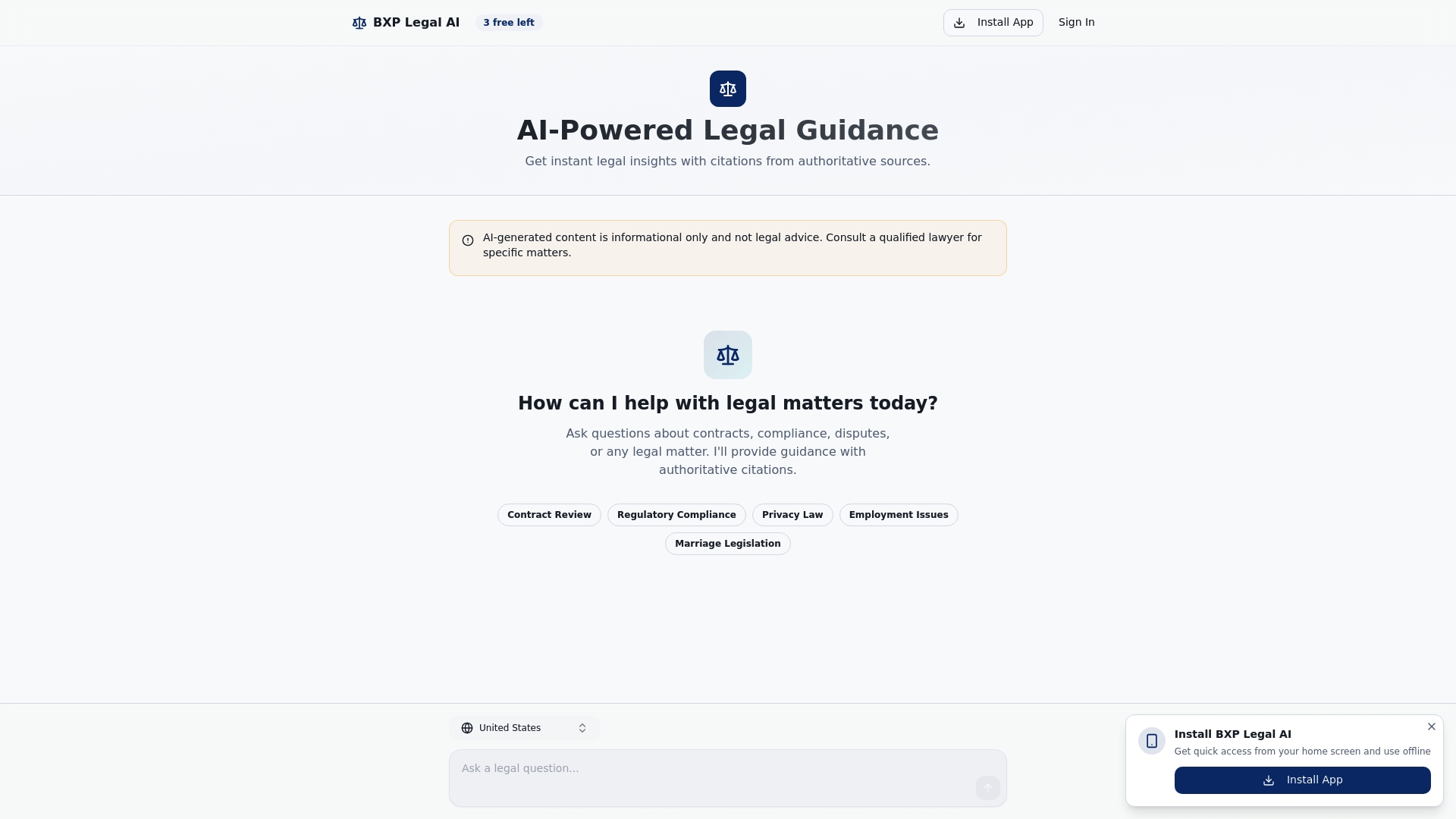
BXPLegal.com brings AI-powered legal guidance directly to business owners and contract managers who need fast, reliable answers without waiting for a law firm appointment. The platform's AI-powered contract features help you identify missing clauses, flag conflicting provisions, and understand exactly what you are signing before it is too late. Whether you need to review indemnity language, check boilerplate alignment, or research governing law requirements for a specific jurisdiction, the BXP Legal AI platform delivers instant, citation-backed guidance designed for SMEs managing real contracts in real time.
Frequently asked questions
What happens if a key clause is missing from my contract?
Missing key clauses can lead to costly disputes, unclear obligations, and a loss of protection if the matter reaches court. Boilerplate clauses alone can be outcome-determinative, meaning their absence can decide who wins a dispute.
Can SMEs negotiate all must-have clauses or are some non-negotiable?
Most clauses are negotiable, but some provisions follow fixed company policy or local law requirements. Governing law and venue selections, for instance, may be a firm condition for larger counterparties unwilling to litigate outside their home jurisdiction.
How does indemnity differ from limitation of liability?
Indemnity shifts financial responsibility for specific losses from one party to another, while limitation of liability sets a ceiling on the total amount a party can be required to pay. Indemnification allocates risk while limitation caps exposure, and the two clauses must explicitly address whether the cap applies to indemnity obligations.
Are template contracts enough for SMEs?
Templates are a useful starting point, but they rarely reflect your specific business risks, jurisdiction, or industry requirements. Always tailor clause language and verify that all provisions align before signing.
Which clause do most SMEs overlook?
Survival and notice mechanics within boilerplate sections are among the most overlooked provisions in SME contracts. These clauses can be outcome-determinative when a dispute reaches court, yet most business owners never read them carefully.