
TL;DR:
- Continuous contract management is essential to prevent liabilities and compliance gaps.
- SMEs face challenges like scattered storage, overlooked risk clauses, and delayed approvals.
- Combining technology with disciplined workflows and regular reviews improves oversight and reduces risk.
Plenty of contract managers at small to medium-sized enterprises believe their job is essentially done once a deal is signed. That belief is expensive. Contracts that go unmonitored after execution create hidden liabilities, missed renewal windows, and compliance gaps that quietly drain resources. True contract management is a continuous discipline that covers every stage from initial drafting through final close-out, and organizations that treat it as a one-time administrative event consistently face higher legal costs and greater regulatory exposure than those that don't.
Table of Contents
- Understanding contract management: Beyond signatures
- Key challenges in contract management for SMEs
- How technology transforms contract management
- Practical steps to improve your contract management workflow
- Why "set it and forget it" fails in contract management
- Streamline contract management with AI-powered solutions
- Frequently asked questions
Key Takeaways
| Point | Details |
|---|---|
| Contract lifecycle focus | Contract management is an ongoing process that protects your organization from missed risks and compliance gaps. |
| Human plus AI advantage | Combining AI's speed with expert oversight ensures safer, more reliable contract review. |
| Address common challenges | Systematic processes and tailored technology address error-prone areas like compliance and document tracking. |
| Practical improvement steps | Centralizing documents and adopting automation are quick wins for tightening your workflow. |
Understanding contract management: Beyond signatures
Now that we've set the stage, let's clarify what contract management actually covers and why it matters.
Contract management is the process of systematically creating, executing, and evaluating contracts to maximize operational and financial performance while reducing risk. The main goal is control: making sure every party meets their obligations, every deadline is tracked, and every compliance requirement is met throughout the life of an agreement. As one detailed review of common errors notes, contract management involves oversight, risk tracking, and compliance through the entire contract lifecycle, not just at the signing table.
For SMEs, this means treating every contract as a living document, not a filed artifact. The core stages of a complete contract lifecycle include:
- Drafting: Building a clear, enforceable document that reflects agreed terms and legal requirements.
- Negotiation: Reviewing, redlining (marking proposed changes), and aligning language between parties.
- Approval: Routing the contract through the right internal stakeholders for authorization.
- Execution: Formal signing and record-keeping.
- Monitoring: Tracking obligations, deadlines, payments, and compliance commitments.
- Renewal or close-out: Deciding whether to renew, renegotiate, or terminate the agreement and documenting the outcome.
Most SMEs handle drafting and execution reasonably well. The breakdown almost always happens in monitoring. Without a structured approach, key dates vanish into inboxes, obligations get forgotten, and what started as a protective agreement becomes a source of unexpected liability. Using a solid contract review checklist at each stage is one practical way to prevent these gaps from forming.
The lifecycle perspective is what separates effective contract managers from reactive ones. Every obligation embedded in a contract needs a responsible owner, a tracking mechanism, and a review trigger. That requires process, not just good intentions.
Key challenges in contract management for SMEs
Once you grasp the basics, it's vital to understand the hurdles that SMEs encounter when processes and details slip through the cracks.
Small and mid-sized organizations face a specific combination of pressures that larger enterprises can absorb more easily. Resource constraints mean that one compliance officer may be managing dozens of active contracts simultaneously. That volume, combined with complex regulatory demands, creates fertile ground for serious mistakes.
The most common challenges SMEs run into include:
- Scattered document storage: Contracts live in email threads, shared drives, and sometimes physical files. There's no single source of truth, which makes tracking obligations nearly impossible.
- Compliance overload: Regulations change. A contract that was compliant when signed may need updating as new privacy laws, labor requirements, or industry standards take effect.
- Overlooked risk provisions: Limitation of liability clauses, indemnification traps, and auto-renewal terms often go unnoticed until they're triggered.
- Delayed approvals: Without a defined workflow, contracts sit in queues while deals stall and counterparties grow impatient.
- Cognitive fatigue in review: Humans reviewing long, dense contracts miss errors at surprisingly high rates, especially late in a workday or under deadline pressure.
That last point deserves emphasis. AI-assisted review research confirms that AI excels at spotting buried risks humans miss due to cognitive fatigue, but it still requires playbook training (teaching the AI what your organization's standards are) and human oversight for context. In other words, the human factor doesn't disappear with technology, it evolves.
"The contracts that hurt companies most aren't the ones that were negotiated badly. They're the ones that were never properly tracked after signing." This reality hits SMEs harder than large enterprises simply because there are fewer people to catch problems before they escalate.
The financial consequences are real. Missed renewal windows lock organizations into unfavorable terms or result in automatic rollover contracts at rates that no longer reflect the market. Compliance failures trigger regulatory fines. Undetected indemnification clauses shift liability in ways that can be catastrophic for a business without deep legal reserves. Investing in solid contract drafting strategies from the start is one way to reduce the number of ticking time bombs in your contract portfolio.

How technology transforms contract management
With these challenges in mind, many SMEs turn to technology to gain control. Here's what tech solutions can and can't do.
AI-powered contract management tools have moved well beyond simple keyword search. Modern platforms can scan entire agreements to flag non-standard clauses, identify missing provisions, cross-reference language against your internal playbook (your organization's preferred contract standards), and alert teams to upcoming deadlines. AI tools can systematically spot contract errors and streamline compliance, but they require human context and playbook training to be genuinely effective. The tool is only as good as the rules you teach it.
Understanding AI legal tools explained in plain terms helps compliance officers set realistic expectations. AI doesn't replace legal judgment; it amplifies the capacity of the people exercising that judgment.
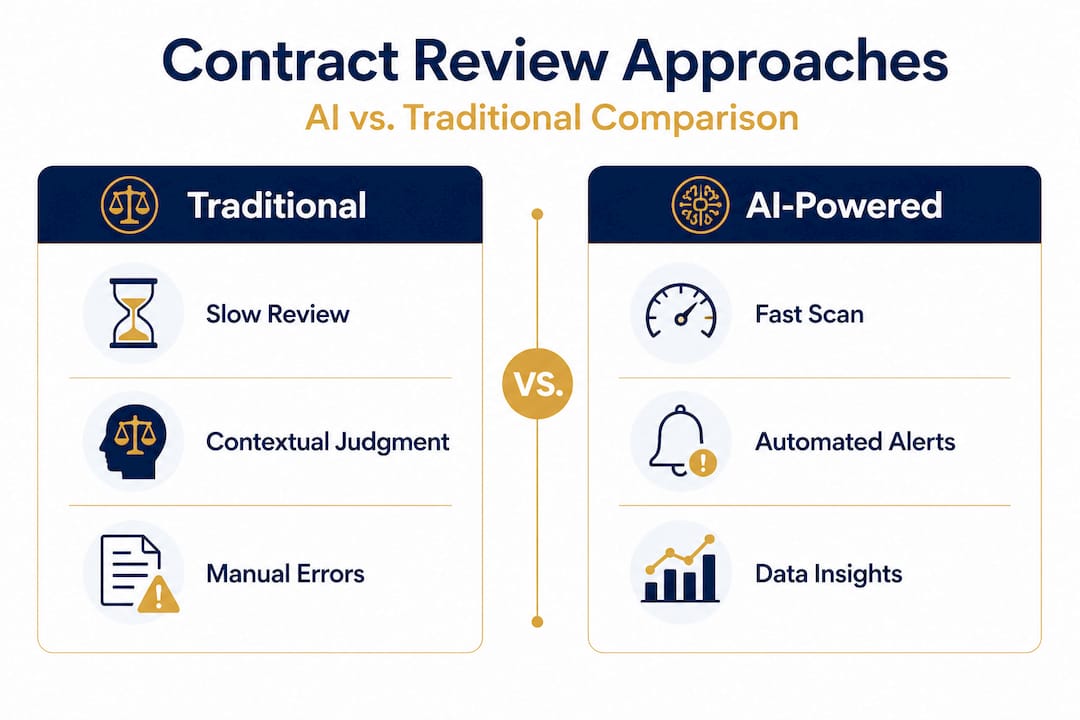
Here's a practical comparison of traditional review versus AI-assisted management:
| Feature | Traditional human review | AI-assisted management |
|---|---|---|
| Speed | Slow; hours per contract | Fast; minutes per contract |
| Consistency | Variable; depends on reviewer | High; applies same rules every time |
| Error detection | Limited by fatigue and volume | Systematically flags known risk patterns |
| Cost | High per-contract cost | Lower per-contract cost at scale |
| Context and judgment | Strong | Requires human validation |
| Compliance tracking | Manual; easy to miss updates | Automated alerts and audit trails |
| Scalability | Difficult with limited staff | Scales with contract volume |
The comparison makes it clear that neither approach alone is ideal. Traditional review provides context and legal judgment that AI can't replicate. AI provides speed, consistency, and pattern recognition that humans simply can't sustain at volume. The strongest contract management programs combine both. Exploring AI in document drafting can give you a clearer picture of where automation adds the most immediate value.
Pro Tip: Never treat an AI-flagged finding as a final answer. Use it as a starting point for human review. The "human-in-the-loop" model, where a qualified person validates every automated finding before action, prevents the AI's limitations from becoming your liability.
Practical steps to improve your contract management workflow
Technology is powerful, but workflow discipline and stepwise improvements drive lasting change.
The organizations that get the most out of contract management aren't necessarily the ones with the most expensive software. They're the ones with the clearest processes. Here's where to focus:
- Centralize your document storage: Move all contracts into a single, searchable repository. This alone eliminates a significant percentage of tracking failures.
- Build and use checklists: A pre-execution checklist catches missing clauses, incorrect party names, and compliance gaps before they become problems. A post-execution checklist confirms obligations are logged and tracked.
- Enable automated alerts: Set reminders for renewal dates, compliance deadlines, and review triggers at least 90 days in advance. Surprises in contract management are almost always bad.
- Assign obligation owners: Every commitment in a contract should have a named person responsible for fulfilling it. Ambiguous ownership is how obligations get dropped.
- Train your team regularly: Legal requirements change. Staff handling contracts need periodic updates on new compliance requirements, common risk patterns, and how to use any technology tools in the workflow.
- Leverage technology at the right points: Use AI for first-pass review and compliance flagging; use experienced judgment for negotiation strategy and final approval.
Systematic approaches like automation and checklists reduce risk and free managers to focus on negotiation and compliance rather than administrative scrambling. The data supports this consistently across organizations of different sizes.
Here's a simplified look at workflow improvements and their typical impact:
| Workflow improvement | Estimated time saving | Risk reduction benefit |
|---|---|---|
| Centralized document storage | 20% reduction in search time | Fewer missed obligations |
| Automated renewal alerts | 15% fewer missed deadlines | Avoids auto-renewal traps |
| Standardized clause library | 30% faster drafting | Fewer non-standard risk terms |
| AI-assisted first-pass review | 40% faster initial review | More errors caught earlier |
| Obligation tracking system | 25% fewer compliance gaps | Lower regulatory exposure |
These numbers represent common outcomes reported across contract management implementations, not guarantees, but the direction is consistent. Efficiency and risk reduction move together when process discipline improves. Exploring document automation workflows in detail can help you identify which improvements to prioritize based on your current bottlenecks.
Pro Tip: Don't try to overhaul everything at once. Pick the single biggest bottleneck in your current workflow, implement a targeted fix, and measure the result before moving on. Quick wins build momentum and demonstrate ROI to stakeholders who control budget decisions.
Why "set it and forget it" fails in contract management
The practical steps above lay the foundation, but true mastery means challenging outdated approaches to contract management.
Here's an uncomfortable truth many experienced contract managers already know but rarely say out loud: the vast majority of organizations treat contract management like a project with a finish line, when it's actually an ongoing operational function with no end date. The signature is a milestone, not a conclusion.
Most risky provisions are only uncovered through continued review, not just at signing. This means that a contract portfolio you reviewed thoroughly last year may already contain provisions that have become problematic due to regulatory changes, shifts in your business model, or changes in the counterparty's circumstances. Static reviews create a false sense of security.
What we see consistently is that the lowest-risk organizations don't just have better contracts. They have better habits. They schedule periodic portfolio reviews, not just pre-execution reviews. They update their playbooks when regulations change. They ask "what has changed?" regularly rather than assuming yesterday's template solves today's risk landscape. That mindset is what separates organizations that manage contracts from organizations that are managed by them.
The other pattern worth challenging is over-reliance on templates. Templates are useful tools for speed and consistency, but they reflect the conditions that existed when they were written. A vendor contract template from two years ago may not account for current data privacy requirements, supply chain liability shifts, or changes in your industry's standard indemnification norms. Pulling that template off the shelf without re-evaluating it against current contract review best practices is a quiet but real risk.
The organizations that get this right build a culture where contract oversight is everyone's responsibility, not just the legal or compliance team's problem. When department heads understand what their contracts require of them, and when those obligations are tracked systematically, the entire organization moves with less legal friction and greater confidence.
Streamline contract management with AI-powered solutions
Ready to move from theory to action? Here's how you can put these ideas to work with a proven solution.
Managing contracts across multiple agreements, jurisdictions, and compliance requirements is exactly the kind of challenge that AI contract management features at BXP Legal AI are built to address. Whether you need faster first-pass review, obligation tracking, or instant guidance on specific contract questions, BXP Legal AI gives your team the tools to work smarter without adding headcount.
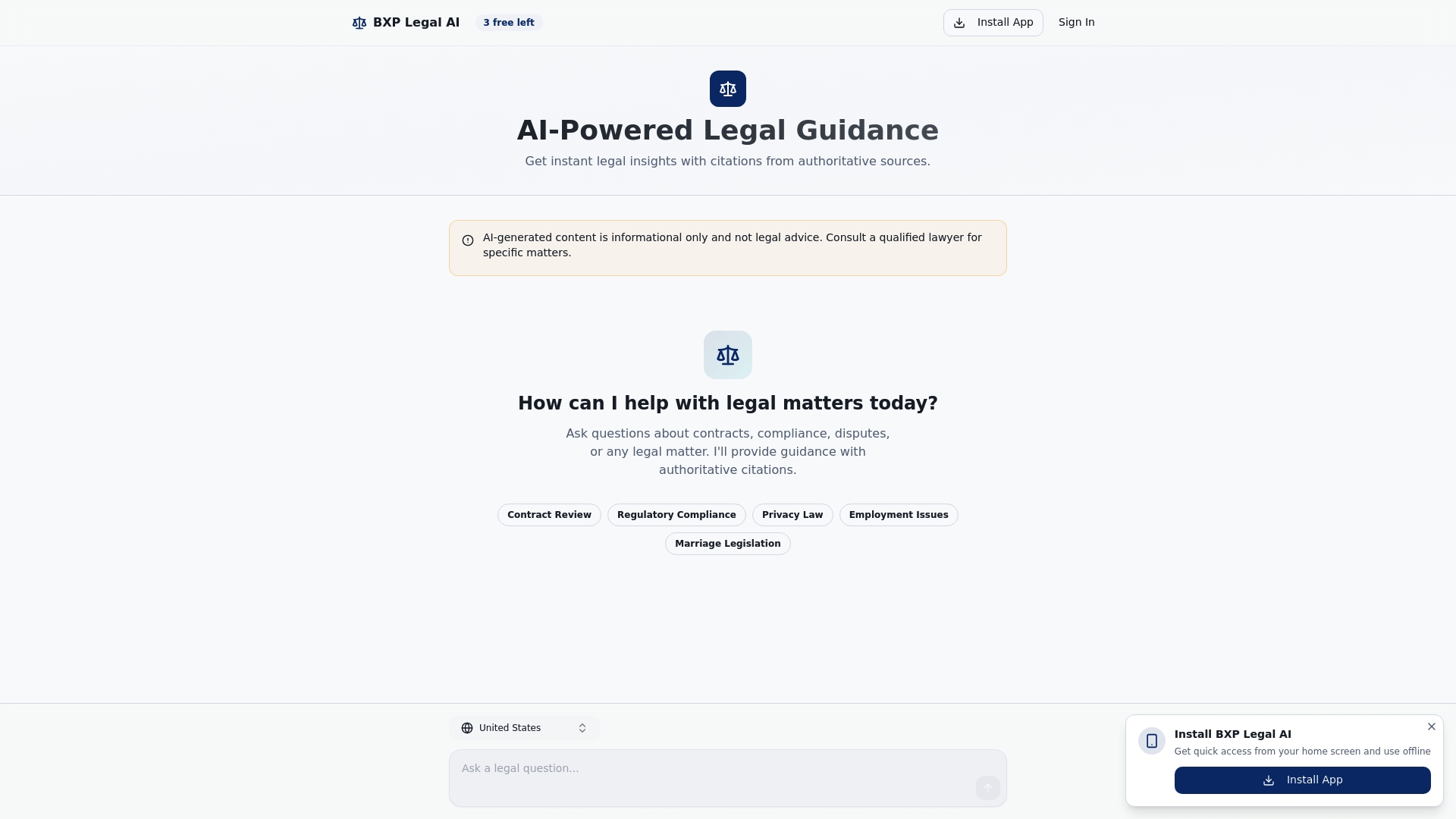
The platform's document comparison tool lets you identify changes between contract versions instantly, a task that can take hours manually and is prone to human error. Multi-jurisdiction support means you can get reliable guidance across different legal frameworks without coordinating multiple external advisors for every question. If you're ready to reduce friction and increase oversight across your contract portfolio, get started with BXP Legal AI today and see how AI-powered guidance translates into real workflow gains for your team.
Frequently asked questions
What are the main stages of contract management?
The main stages are drafting, negotiation, approval, execution, ongoing monitoring, and contract closure or renewal. Each stage requires distinct oversight because contract management involves risk tracking and compliance through the full contract lifecycle.
How does AI help with contract management?
AI automates error detection, flags risky clauses, and can significantly speed up compliance review across large contract volumes. However, AI requires human oversight for context and playbook training to produce reliable results.
What is a contract management workflow?
A workflow is a defined, repeatable process for creating, reviewing, approving, and monitoring contracts to ensure compliance and minimize risk. Systematic approaches like automation and checklists reduce risk and free managers to focus on higher-value tasks.
Why is ongoing contract review critical?
Most hidden risks appear after signing, so relying solely on the initial review leaves serious gaps. Regular oversight prevents risky provisions from going unnoticed until they cause costly compliance failures or litigation.