
Legal teams operating across multiple countries face a daily collision of conflicting regulations, incompatible technology systems, and reporting deadlines that never align. One missed data privacy requirement in a single jurisdiction can trigger penalties that ripple across an entire contract portfolio. Harmonized compliance frameworks achieve 85-90% compliance rates while cutting costs by 25% and legal risks by 30%, yet most teams still rely on fragmented, manual processes. This guide walks you through a proven, step-by-step workflow to close those gaps and build a compliance operation that actually scales.
Table of Contents
- Identify workflow challenges and requirements
- Prepare your multi-jurisdictional legal workflow
- Execute steps for harmonized compliance
- Verify and monitor ongoing compliance
- Enhance your legal workflows with AI solutions
- Frequently asked questions
Key Takeaways
| Point | Details |
|---|---|
| Map requirements early | Identifying legal and compliance needs per jurisdiction prevents workflow errors from the start. |
| Harness legal technology | Using tech-enabled solutions improves compliance rates and cuts legal risk significantly across borders. |
| Verify and update | Continuous monitoring and updating practices ensures ongoing compliance with changing regulations. |
| Avoid common pitfalls | Watch for reporting gaps, outdated procedures, and neglected automation for better outcomes. |
Identify workflow challenges and requirements
Before you can fix a broken workflow, you need to see exactly where it breaks. Cross-border legal operations fail for predictable reasons, and recognizing them early saves significant time and money.
Regulatory fragmentation affects 70% of cross-border legal workflows, while technology disparities impact 50%. That means the majority of legal teams are already working against structural disadvantages before a single contract is drafted. The problem compounds when each jurisdiction adds its own data privacy rules, contract execution standards, and reporting cycles.
Here is a quick overview of the three core requirement categories you will encounter:
| Requirement category | Common examples | Risk if ignored |
|---|---|---|
| Regulatory compliance | GDPR, CCPA, local data laws | Fines, contract voidance |
| Contract standards | Governing law clauses, signature rules | Unenforceable agreements |
| Reporting obligations | Tax filings, audit trails, disclosures | Regulatory penalties |
| Technology compatibility | E-signature validity, document formats | Workflow delays |
For a deeper breakdown of how these categories interact, the guide for SMBs covers jurisdiction-specific nuances that apply to smaller legal teams as well. You should also keep a compliance checklist and a contract checklist on hand as living reference documents.
Key obstacles to document at this stage include:
- Conflicting data localization rules across jurisdictions that affect where documents can be stored
- Inconsistent contract execution requirements, such as notarization or witness rules
- Misaligned reporting deadlines that create bottlenecks for distributed teams
- Technology gaps where one jurisdiction requires specific e-signature standards another does not recognize
Pro Tip: Build a jurisdiction matrix before you start any workflow. List every active jurisdiction in one column, then map its key regulatory requirements, contract standards, and reporting deadlines across the row. This single document becomes your team's source of truth.
Prepare your multi-jurisdictional legal workflow
After mapping your requirements, you will need to prepare your team and tools. Preparation is where most legal teams underinvest, and it shows up later as rework, missed deadlines, and compliance gaps.

A harmonized compliance framework can reduce legal risk by 30% and cut costs by 25%, but only if the foundation is solid. That foundation starts with three parallel workstreams: gathering regulatory inputs, evaluating technology, and clarifying team roles.
Follow this preparation sequence:
- Collect all applicable regulations for each jurisdiction, including recent amendments. Assign a team member to own each jurisdiction's regulatory profile.
- Evaluate legal technology tools for workflow automation, document management, and compliance tracking. Prioritize platforms that support multi-jurisdiction configurations natively. Reviewing an AI legal workflow guide at this stage helps you identify the right automation layer.
- Define roles clearly. Who approves contracts in each jurisdiction? Who monitors regulatory updates? Who escalates compliance flags? Ambiguity here is expensive.
- Build your communication plan. Distributed teams need structured check-in cadences, shared document repositories, and clear escalation paths.
- Set up document automation workflows for standard contract types. Templated drafting reduces errors and speeds review cycles. The document automation workflows resource covers how to structure these efficiently.
Warning: Teams consistently underestimate reporting obligations. A contract that looks straightforward in one jurisdiction may trigger disclosure requirements, beneficial ownership filings, or tax reporting in another. Build a reporting obligation audit into your preparation phase, not your execution phase.
Pro Tip: Use structured checklists for every preparation task, not just the final compliance review. Checklists reduce cognitive load, create audit trails, and make onboarding new team members significantly faster.
Execute steps for harmonized compliance
With preparations completed, it is time to execute and monitor workflow steps. Execution is where your planning either pays off or exposes its gaps.
A well-run harmonized workflow follows a clear sequence. Here is the core execution process:
- Assign tasks by jurisdiction. Each team member should have a defined scope, a deadline, and a clear handoff point.
- Synchronize document review cycles. Use a shared review calendar so that contract redlines, compliance sign-offs, and regulatory checks happen in parallel rather than sequentially.
- Automate contract drafting for standard agreement types using pre-approved templates. This is where a solid legal technology guide helps you choose the right tools for your volume and complexity.
- Run jurisdiction-specific compliance checks before any document is finalized. Flag conflicts between jurisdictions early.
- Centralize deadline tracking. One missed reporting deadline in a secondary jurisdiction can invalidate work done across the entire portfolio.
The performance difference between manual and technology-enabled workflows is significant:
| Workflow type | Average compliance rate | Cost efficiency | Error rate |
|---|---|---|---|
| Manual, fragmented | 55-65% | Low | High |
| Partially automated | 70-78% | Moderate | Moderate |
| Harmonized, tech-enabled | 85-90% | High | Low |
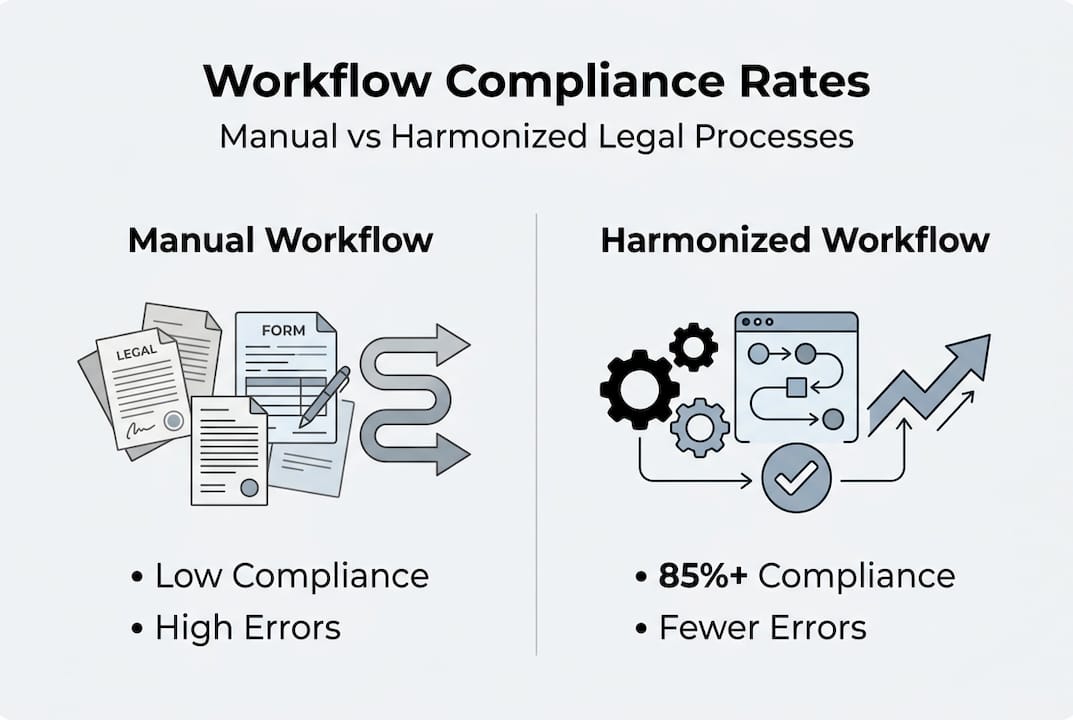
Harmonized cross-border workflows achieve 85-90% compliance rates. That gap between manual and harmonized execution is not marginal. It represents real exposure: contracts that may not hold up, penalties that accumulate, and reputational risk that is hard to quantify.
For teams handling high document volumes, AI document drafting tools can cut drafting time significantly while maintaining jurisdiction-specific accuracy. The key is configuring templates to reflect each jurisdiction's requirements, not using a one-size-fits-all approach.
Verify and monitor ongoing compliance
Once workflows are running, you must actively verify and maintain compliance. A workflow that was compliant at launch can drift out of compliance within months as regulations change.
Legal risk drops by 30% when harmonized compliance frameworks are consistently monitored. Consistent monitoring is the operative phrase. Sporadic audits catch problems late. Systematic monitoring catches them early, when they are still fixable.
Your ongoing verification process should cover:
- Contract validation reviews at defined intervals, not just at execution
- Regulatory update monitoring for each active jurisdiction, with a clear owner responsible for flagging changes
- Workflow audit trails that document who approved what, when, and under which regulatory version
- Error reporting protocols so that compliance flags are escalated quickly rather than buried in email threads
- Technology performance checks to confirm that automation tools are applying the correct jurisdiction-specific rules
Critical note: Compliance practices that are not updated when regulations change are not just ineffective. They create a false sense of security. Schedule a formal compliance review whenever a jurisdiction you operate in passes new legislation, not just at your annual audit cycle.
Common mistakes at this stage include skipping contract re-validation after regulatory changes, relying on outdated templates, and failing to document the rationale behind compliance decisions. Each of these creates audit exposure.
For teams managing multiple jurisdictions simultaneously, multi-jurisdiction support tools that provide real-time regulatory alerts are worth the investment. When you need a human perspective on a specific compliance question, knowing when to consult legal experts alongside your technology stack is equally important.
Pro Tip: Schedule automated compliance audits at regular intervals using your legal technology platform. Set up alerts for regulatory changes in each jurisdiction so your team receives notifications before deadlines, not after.
Enhance your legal workflows with AI solutions
For teams ready to move beyond manual steps, AI-powered legal technology offers a meaningful upgrade to everything covered in this guide. Automating document comparison, generating jurisdiction-specific contract templates, and running compliance checks at scale are no longer capabilities reserved for large law firms.
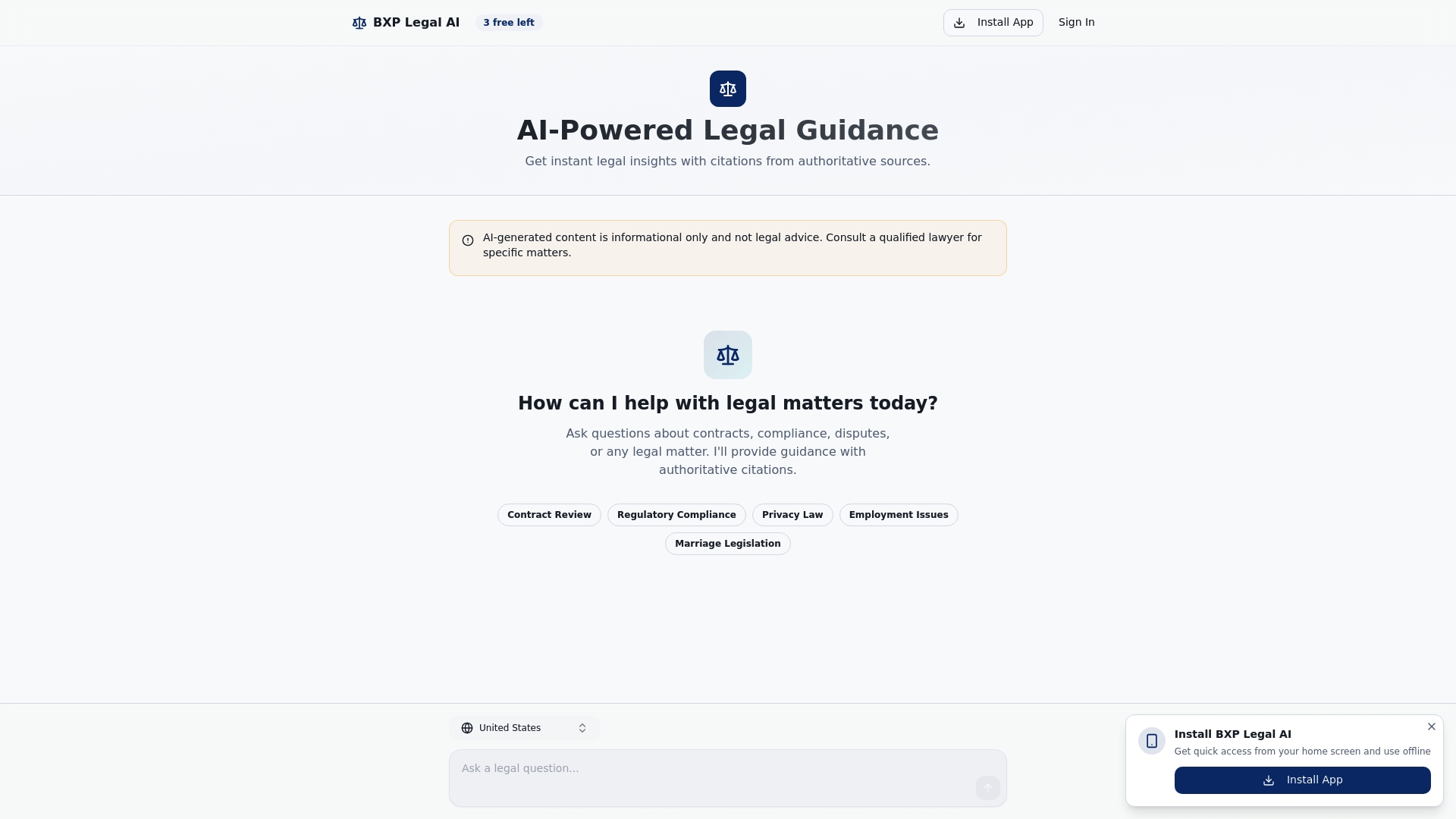
BXPLegal.com provides AI-powered legal tools built specifically for the kind of multi-jurisdictional complexity this guide addresses. The document comparison feature lets your team identify regulatory conflicts across contract versions instantly, while the library of contract templates gives you pre-built, jurisdiction-aware starting points for standard agreements. Whether you are managing compliance across three countries or thirty, these tools reduce the manual burden and help your team focus on the decisions that actually require legal judgment.
Frequently asked questions
What is a multi-jurisdictional legal workflow?
A multi-jurisdictional legal workflow manages legal processes across different countries or regions, ensuring each jurisdiction's regulations are properly followed. Regulatory fragmentation is the core challenge these workflows are designed to address.
How do harmonized frameworks improve compliance rates?
They reduce fragmentation, streamline reporting, and create consistent processes across jurisdictions, which is why harmonized frameworks consistently achieve 85-90% compliance rates while cutting legal risks and costs.
What are the biggest mistakes in multi-jurisdictional legal workflows?
The most common pitfalls are ignoring reporting obligations, failing to update compliance practices when regulations change, and underusing workflow automation. Technology disparities compound these mistakes when teams rely on incompatible tools.
Can AI tools really help with cross-border workflow automation?
Yes. AI-powered legal technology streamlines document review, task assignment, and compliance audits, reducing manual errors significantly. Legal technology is specifically effective at reducing the fragmentation that slows cross-border workflows.