
Most small and medium-sized businesses treat document retention like a chore they'll get to eventually. Then an audit arrives, a lawsuit surfaces, or a key contract goes missing, and that back-burner habit becomes a front-page crisis. Proper retention supports audits, litigation defense, and operational continuity for SMBs of every size. The good news is that building a solid retention strategy is not complicated. This guide walks you through what document retention actually means, what's legally at stake, and how to build a practical policy that protects your business without drowning you in paperwork.
Table of Contents
- The essentials: What is document retention and why does it matter?
- Legal risks: What happens if you get retention wrong?
- Building a document retention policy: Step-by-step framework
- Retention done right: Operational efficiency, cost savings, and digital tools
- The hidden costs of 'keep everything': A smarter approach for SMBs
- How BXP Legal AI empowers compliance and retention success
- Frequently asked questions
Key Takeaways
| Point | Details |
|---|---|
| Legal compliance | Retention keeps your business compliant and ready for audits or legal disputes. |
| Operational efficiency | Structured retention saves time, cuts costs, and streamlines data retrieval. |
| Strategic deletion | Deleting unneeded files safely is safer and cheaper than hoarding everything. |
| Digital automation | Smart tools simplify and automate effective, defensible document retention. |
The essentials: What is document retention and why does it matter?
Document retention is the practice of keeping business records for a defined period of time, then securely disposing of them when that period ends. It's not just about storing files. It's about knowing what you have, where it lives, and how long you're legally required to keep it.
For SMBs, key records typically include:
- Tax filings and supporting financial documents
- Employee records and payroll data
- Contracts and vendor agreements
- Corporate formation documents
- Permits, licenses, and regulatory filings
- Insurance policies and claims
A common myth is that keeping more files means you're safer. In reality, retention policies reduce storage costs, cut clutter, and improve how quickly you can retrieve the right document when you need it. Hoarding every email and invoice from 2009 doesn't protect you. It buries the documents that actually matter and creates new security exposure.
"A well-structured retention policy isn't just about compliance. It's about making your business run faster and smarter by knowing exactly what you have and what you don't."
Understanding legal documentation importance is the first step toward building a retention system that works under pressure, not just on paper.
Pro Tip: Start by identifying your three most critical document categories: tax records, contracts, and employee files. Get those organized and properly scheduled before tackling everything else.
Legal risks: What happens if you get retention wrong?
Ignoring document retention doesn't just create disorganization. It creates legal exposure that can cost your business real money and real time. Here are four specific risks SMBs face when retention goes wrong:
- Failed audits. The IRS or a state agency requests supporting documentation for a tax year. If those records were deleted too early or were never organized, you have no defense. Penalties can stack up fast.
- Lost litigation. A former employee files a wrongful termination claim. Without properly retained HR records, performance reviews, or disciplinary notes, your case weakens significantly. Courts can draw negative inferences from missing records.
- Regulatory fines. Industries like healthcare, finance, and professional services face specific retention mandates. Violating them, even unintentionally, can trigger fines from regulators.
- Data breach liability. Keeping records longer than required increases the volume of sensitive data you're responsible for protecting. A breach involving outdated, unnecessary files can expose you to privacy compliance violations and customer lawsuits.
"Retention supports audits, litigation defense, and operational continuity for SMBs, making it one of the highest-leverage compliance investments a business can make."
Operational risk is just as real. When documents are disorganized or missing, staff waste hours searching for files, contracts get missed, and renewal deadlines slip. Reviewing your business compliance guide can help you spot gaps before they become problems. If your business operates across state lines, multi-jurisdictional compliance adds another layer of complexity that a clear retention policy helps manage.
Building a document retention policy: Step-by-step framework
A retention policy doesn't need to be a 40-page legal manual. It needs to be clear, actionable, and consistently followed. Here's how to build one:
- Assess what you have. Conduct a document inventory. Know what records exist, in what format, and where they're stored.
- Categorize your documents. Group records by type: financial, legal, HR, operational, and regulatory.
- Set retention periods. Match each category to the applicable legal requirement. IRS rules require tax records to be kept for three to seven years depending on the filing type.
- Designate a responsible person. Assign ownership of the policy to a specific role, whether that's your office manager, CFO, or outside counsel.
- Implement the policy. Document the rules, communicate them to staff, and set up systems (folders, software, or cloud storage) to support them.
- Train your team. A policy no one knows about is a policy that doesn't exist. Short, annual training sessions make a real difference.
- Review annually. Laws change. Your business changes. Your retention schedule should reflect both.
| Document type | Recommended retention period |
|---|---|
| Tax returns and supporting docs | 7 years |
| Employee payroll records | 4 years |
| Contracts and agreements | 7 years after expiration |
| Corporate formation documents | Permanent |
| Insurance policies | 10 years after expiration |
| General correspondence | 3 years |
Pro Tip: Explore types of legal documents your business generates before finalizing your retention schedule. You may be managing more legally significant records than you realize.
Retention done right: Operational efficiency, cost savings, and digital tools
Once your policy is in place, the next goal is making it work without adding hours to your week. Smart retention isn't just about compliance. It's a genuine efficiency driver.
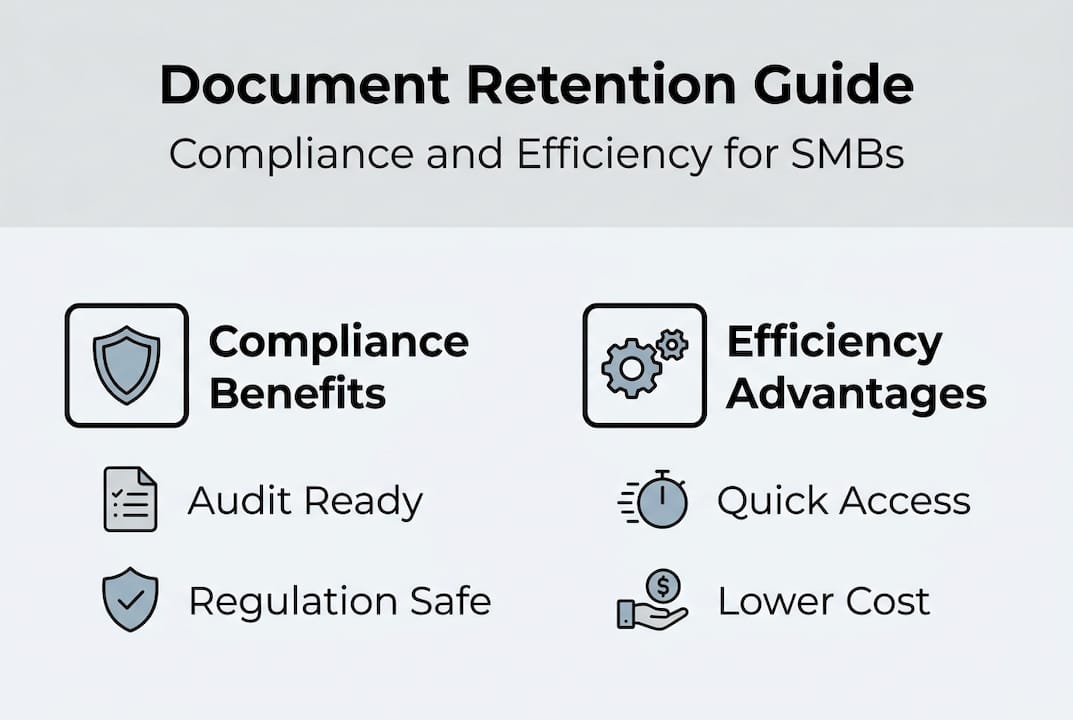
Retention policies reduce storage costs by eliminating the clutter of files you no longer need to keep. Defensible deletion, the practice of destroying records according to a documented schedule, is far safer than hoarding everything indefinitely. Here's why it matters operationally:
- Faster retrieval. When your archive is clean and categorized, finding the right document takes minutes, not hours.
- Lower storage costs. Physical and cloud storage both cost money. Trimming unnecessary records reduces that overhead directly.
- Reduced breach exposure. Every file you don't need is a file that can't be stolen, leaked, or misused.
| Approach | Storage cost | Retrieval speed | Compliance risk | Security exposure |
|---|---|---|---|---|
| Traditional paper/manual | High | Slow | High | High |
| Digital with no policy | Medium | Moderate | Medium | Medium |
| Digital with AI-driven retention | Low | Fast | Low | Low |
Digital tools and document automation workflows make it practical for SMBs to manage retention without a dedicated legal team. Platforms that offer AI-powered drafting and automated scheduling can flag documents approaching their deletion date, enforce consistent categorization, and generate audit trails that prove your process was followed.
The hidden costs of 'keep everything': A smarter approach for SMBs
Here's a perspective most retention guides won't give you: the instinct to keep everything is not caution. It's risk in disguise.

We've seen SMBs face data breach investigations where the most damaging exposed records were files they had no legal reason to keep. Old customer data from a campaign years ago. Outdated employee records from staff who left the company long before the incident. These weren't records they needed. They were records they forgot to delete.
Experts consistently recommend defensible deletion over hoarding, and keeping everything increases risks including breach exposure and unnecessary costs. The smarter approach is a curated, automated retention system that keeps what's required and removes what isn't, on a documented schedule.
Think of it like inventory management. A retailer who never throws away expired stock doesn't have a safety net. They have a liability. Your document archive works the same way.
Review your compliance checklist for SMBs and add a quarterly audit of your oldest records to the list. Defensible deletion is a discipline, and the businesses that practice it consistently are the ones that come out ahead when scrutiny arrives.
Pro Tip: Set a calendar reminder every quarter to review records older than five years. Ask one question: are we legally required to keep this? If not, schedule it for deletion.
How BXP Legal AI empowers compliance and retention success
Building a retention policy from scratch can feel overwhelming, especially when legal requirements vary by industry, state, and document type. That's exactly where AI-powered legal guidance makes a practical difference for SMBs.
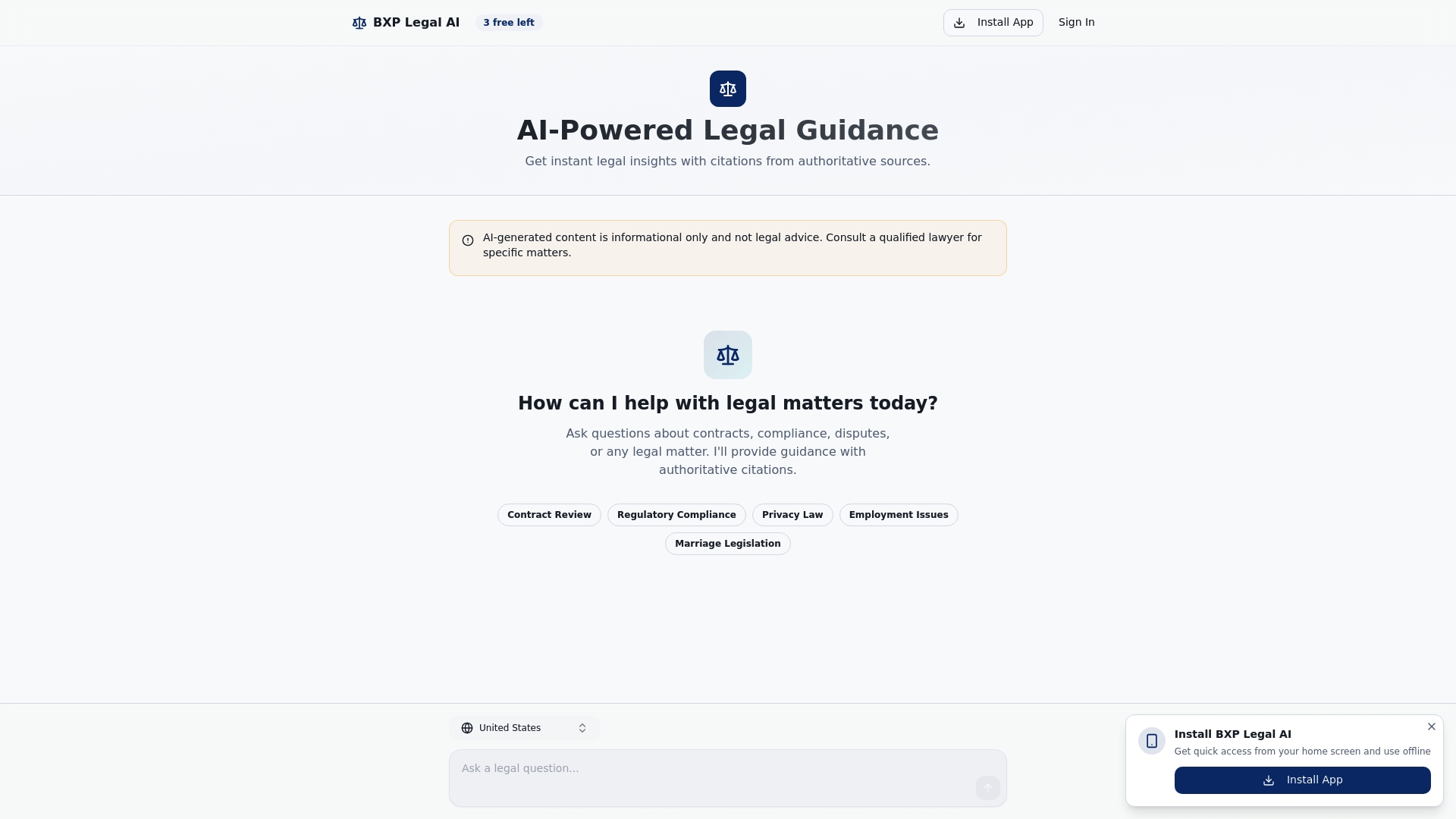
BXP Legal AI helps you create retention schedules tailored to your business type, jurisdiction, and document categories. The platform's document comparison features let you review existing policies against current legal standards, while ready-to-use document templates give you a compliant starting point without starting from zero. Whether you're preparing for an audit, updating an outdated policy, or building your first retention framework, BXP Legal AI provides instant, citation-backed guidance that keeps your business protected and your team moving forward.
Frequently asked questions
What is a legally required document retention period for tax records?
The IRS requires most SMBs to keep tax-related documents for three to seven years, depending on the type of filing and any actions taken on that return.
What are the operational risks of poor document retention?
Loss of key documents can disrupt daily operations, trigger failed audits, and result in costly regulatory penalties that are entirely avoidable with a proper retention schedule.
How can small businesses simplify retention policy creation?
Using digital automation tools or legal tech platforms lets you customize retention schedules, automate deletion reminders, and manage compliance without a full-time legal team.
Is it safer to keep every file than risk deleting something important?
No. Keeping everything increases risks including data breach exposure and storage costs. Experts consistently recommend defensible deletion over indefinite file hoarding.
Recommended
- Why legal documentation matters: protect your business in 2026
- Document drafting guide for small businesses: compliance
- Optimize multi-jurisdictional legal workflows: 85% compliance
- Types of legal documents: your 2026 guide
- Types of Documents to Notarize – Why Compliance Matters - My Mobile Notary
- Privacy Policies for Law Firm Websites: Building Trust and Staying Compliant