
Poor documentation quietly drains small businesses every year. 68% of small businesses lack proper documentation, and the average dispute costs $12,000 to resolve. That is not just a legal problem. It is a cash flow problem, a relationship problem, and sometimes a business-ending problem. This guide walks you through everything you need to know about legal document drafting: what it covers, how to prepare, how to execute each step, and how to verify your work before anyone signs. Whether you are writing your first vendor contract or updating your employment agreements, you will leave with a clear, practical process.
Table of Contents
- Understanding document drafting fundamentals
- What you need before you draft: preparation and requirements
- Step-by-step drafting: creating a compliant legal document
- Common mistakes and how to verify your draft
- How BXP Legal AI can simplify and strengthen your document process
- Frequently asked questions
Key Takeaways
| Point | Details |
|---|---|
| Strong contracts prevent disputes | Well-drafted documents can prevent most business conflicts before they start. |
| Preparation improves compliance | Gathering the right information and tools beforehand ensures legal and operational accuracy. |
| AI drafting needs oversight | AI speeds up and standardizes drafts but complex deals still require human review. |
| Review avoids costly mistakes | Final checks for clarity, enforceability, and compliance reduce the risk of problems after signing. |
Understanding document drafting fundamentals
Legal document drafting is the process of creating written agreements and formal records that define rights, responsibilities, and expectations between parties. For small businesses, this covers a wide range of documents you likely deal with every week.
The most common types include:
- Service and vendor contracts that define deliverables, timelines, and payment terms
- Non-disclosure agreements (NDAs) that protect confidential business information
- Employment agreements that set out roles, compensation, and termination conditions
- Terms of service and privacy policies for customer-facing operations
- Partnership and shareholder agreements that govern business relationships
Every enforceable contract shares a few core components: offer, acceptance, consideration (something of value exchanged), mutual intent, and legal capacity of all parties. Miss one of these, and a court may refuse to enforce the agreement entirely. Well-drafted contracts prevent 90% of disputes before they escalate, which is why precision in drafting pays off far more than it costs.
One legal concept every business owner should know is contra proferentem. It means that when a contract contains ambiguous language, courts interpret that ambiguity against the party who wrote the document. In plain terms: if you draft it poorly, you lose. That single rule is reason enough to take drafting seriously.
"A contract is only as strong as its least precise clause." Vague language does not just create confusion. It creates liability.
Pro Tip: Review your common legal documents at least once a year. Laws change, your business evolves, and outdated language can leave you exposed.
Strong contract drafting strategies also include defining every key term explicitly, using numbered sections for easy reference, and including a dispute resolution clause so both parties know what happens if things go wrong.
What you need before you draft: preparation and requirements
Rushing into a draft without the right information is one of the most common mistakes small business owners make. Before you open a template, gather everything you need.
Essential information to collect:
- Full legal names and contact details for all parties
- Scope of work or services, with specific deliverables listed
- Payment terms, amounts, and schedules
- Start and end dates, or renewal conditions
- Applicable laws or regulations for your industry and jurisdiction
- Any prior agreements or communications that define the relationship
Once you have that information, choose your drafting tools. Your options range from basic word processors with manual templates to AI-powered drafting platforms that generate clause-level suggestions in seconds. Using AI tools can dramatically cut drafting time, but they work best when you feed them accurate, complete information upfront.

| Tool type | Best for | Limitation |
|---|---|---|
| Word processor + template | Simple, low-risk agreements | Manual updates required |
| Clause library software | Consistent multi-document drafting | Requires legal knowledge to select clauses |
| AI drafting platform | Speed, first drafts, routine contracts | Needs human review for complex deals |
| Attorney review | High-value or custom agreements | Higher cost, longer turnaround |
AI drafting reliability now matches or exceeds average human performance on standard contracts, but human oversight remains essential for anything complex or high-stakes. For deals over $10,000, or any agreement with unfamiliar terms, lawyer review for high-value deals is a smart investment, not an optional extra.
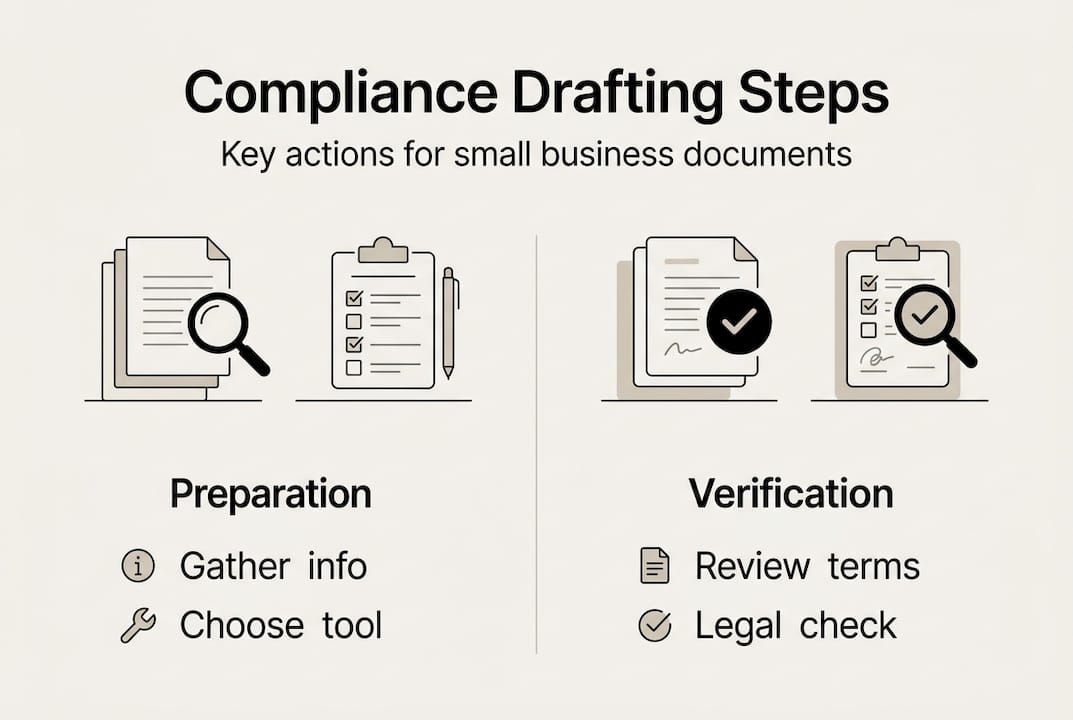
Pro Tip: Build a clause library for your most common contract types. Reusing pre-approved language saves time and reduces the risk of introducing new errors. Pair this with document automation workflows to scale your drafting without scaling your workload.
Step-by-step drafting: creating a compliant legal document
With your information gathered and tools selected, here is how to move from blank page to signed agreement.
- Choose a reliable template that matches your document type and jurisdiction. Avoid generic templates that ignore local law.
- Insert all party details accurately. A wrong name or missing entity type can invalidate the agreement.
- Define the scope clearly. Write out exactly what is included and, just as importantly, what is not.
- Add payment and timeline terms with specific numbers and dates. Avoid phrases like "reasonable time" or "fair compensation."
- Include required compliance clauses. Depending on your industry, this may mean GDPR and Statute of Frauds provisions, data handling terms, or sector-specific disclosures.
- Add a dispute resolution clause that specifies mediation, arbitration, or litigation, and names the governing jurisdiction.
- Run a clarity check. Read every clause aloud. If you stumble, rewrite it.
- Build in a "read and acknowledge" step where all parties confirm they have reviewed the document before signing. This protects you if a dispute arises later.
- Use AI document drafting tools to flag missing clauses or inconsistent language before the document goes out.
- Finalize and execute with proper signatures, dates, and any required witnesses or notarization.
| Approach | Speed | Consistency | Risk level | Cost |
|---|---|---|---|---|
| Manual drafting | Slow | Variable | Higher | Low upfront |
| Template-based | Moderate | Good | Moderate | Low |
| AI-assisted drafting | Fast | High | Lower | Moderate |
| Attorney-drafted | Slow | Excellent | Lowest | High |
The contra proferentem rule is a real risk at every stage of this process. Courts apply it regularly, and it consistently punishes sloppy drafting. Following expert drafting strategies at each step is the most reliable way to keep ambiguity out of your documents.
Common mistakes and how to verify your draft
Even experienced drafters make mistakes. Knowing the most common ones helps you catch them before they become expensive.
Watch out for these pitfalls:
- Vague terms like "timely delivery" or "reasonable effort" that mean different things to different people
- Missing signatures or incorrect signatory authority (make sure the person signing actually has the legal right to bind the company)
- Outdated templates that reference old laws or regulations no longer in effect
- Poor version control that leads to confusion about which draft is final
- No termination clause leaving parties unclear on how to exit the agreement
Once your draft is complete, run it through this verification checklist:
- Are all party names and entity types correct?
- Is the scope of work specific and measurable?
- Are payment terms, amounts, and due dates explicit?
- Does the document comply with current applicable laws?
- Is there a clear dispute resolution process?
- Have all parties been given time to review before signing?
Automated document comparison tools can catch version discrepancies and flag language changes between drafts, which is especially useful when multiple parties have made edits. For anything above routine complexity, consulting legal experts adds a final layer of assurance that no automated tool can fully replicate.
Courts have consistently applied the contra proferentem rule to interpret ambiguous contract language against the drafter. Clear writing is not just good practice. It is legal protection.
Pro Tip: Never send a final document without doing one last read-through from the other party's perspective. Ask yourself: could they interpret any clause differently than you intend? If yes, rewrite it.
How BXP Legal AI can simplify and strengthen your document process
You now have a solid framework for drafting compliant, enforceable business documents. The next step is putting that framework into practice without spending hours on every agreement.
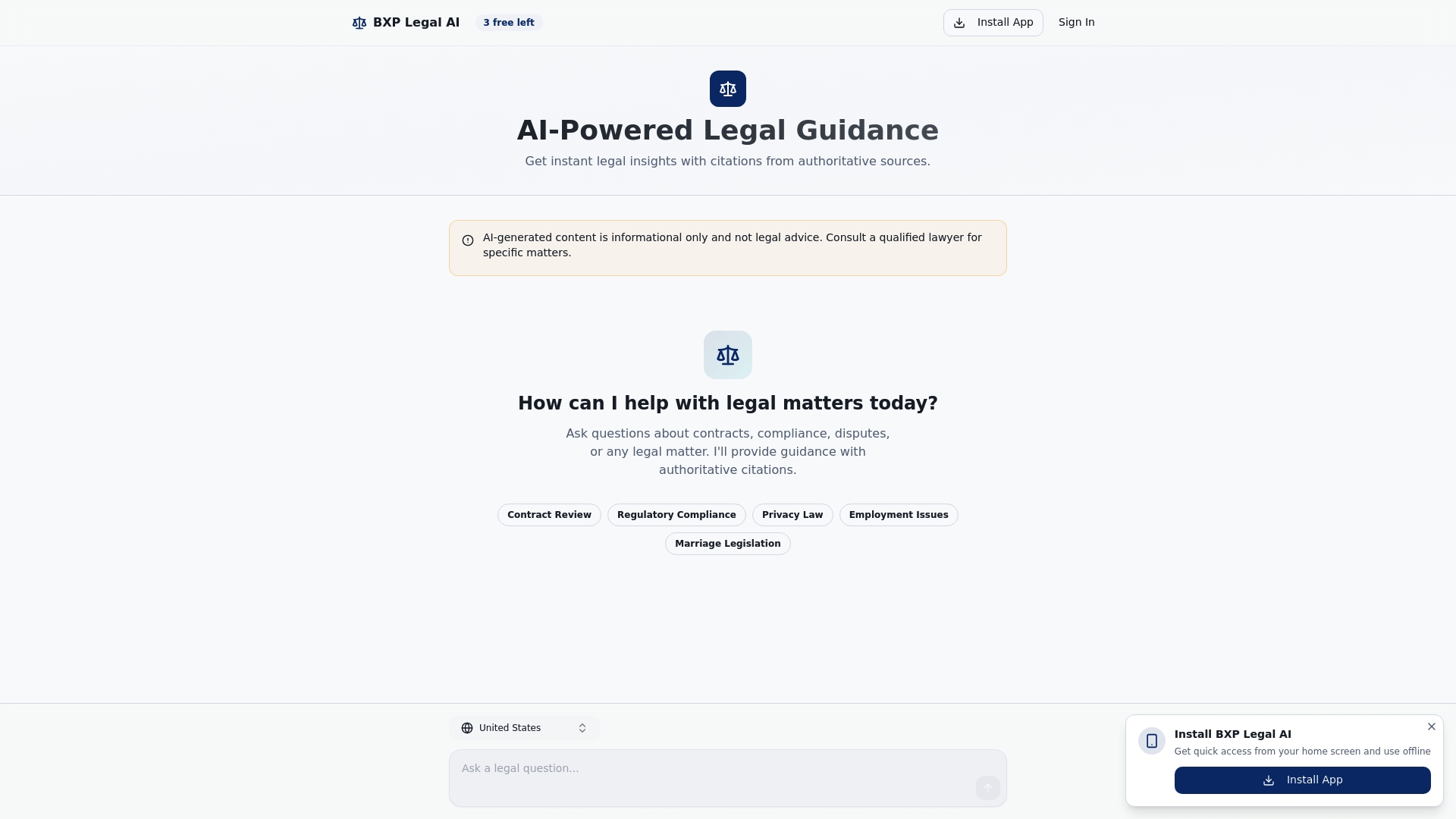
The BXP Legal AI platform is built specifically for small and medium-sized businesses that need fast, reliable legal document support without the overhead of a full legal team. You can generate first drafts, review existing agreements, and access a library of ready-to-use templates tailored to common business scenarios. The platform's document comparison feature makes it easy to track changes across versions and catch inconsistencies before they cause problems. BXP Legal AI is designed to complement professional legal review, not replace it, giving you a smarter starting point for every document you create.
Frequently asked questions
What is the simplest way to start drafting a business contract?
Start with a trusted template, customize it for your specific situation, and make sure key contract components like parties, scope, payment terms, and dispute clauses are all present before seeking a legal review.
Do I need a lawyer to draft standard agreements?
For routine, low-value contracts, templates and AI tools often provide a solid foundation. However, lawyer review for high-value deals over $10,000 or involving unfamiliar terms is strongly recommended.
How can I make sure my documents are legally enforceable?
Include clear, specific terms, follow all applicable laws for your jurisdiction and industry, and have all parties sign. Regular compliance audits keep your documents current as laws evolve.
Is AI reliable for drafting legal documents?
AI drafting reliability now matches or exceeds average human performance on standard contracts, but human oversight remains essential for complex or high-value agreements.