
TL;DR:
- Most business owners enter negotiations unprepared, risking unfavorable terms and hidden liabilities. Thorough preparation, clear contract frameworks, and focusing on key risk clauses give negotiators a strategic advantage. Managing negotiation dynamics and planning dispute resolution methods ensure long-term success and legal protection.
Most business owners enter contract negotiations underprepared, and the cost of that is real: unfavorable liability terms, no exit rights, and payment clauses written entirely in the other party's favor. Mastering the key contract negotiation tips covered in this article will change that. You will find practical, research-backed strategies covering preparation, contract structure, critical clauses, negotiation dynamics, and dispute resolution. Every section gives you something concrete to act on before your next negotiation.
Table of Contents
- Prepare thoroughly before negotiations
- Use a clear, simple contract framework
- Focus on key contract terms to control risk and cost
- Manage negotiation dynamics for success
- Plan dispute resolution to avoid costly litigation
- Why mastering contract negotiation is a long-term strategic advantage
- Enhance your contract negotiations with BXP Legal AI
- Frequently asked questions
Key Takeaways
| Point | Details |
|---|---|
| Thorough preparation | Define your BATNA, prioritize terms, and research the other party's needs before negotiations. |
| Simple contract framework | Start with a draft term sheet and negotiate in sections for clarity and momentum. |
| Negotiate key terms | Focus on liability caps, SLAs, termination, and pricing to control risk and cost. |
| Build trust and manage emotions | Ask questions, listen actively, and keep discussions positive for better outcomes. |
| Plan dispute resolution | Include mediation and arbitration clauses to resolve conflicts efficiently. |
Prepare thoroughly before negotiations
Preparation is where most deals are won or lost before the first conversation even happens. If you walk in without knowing your limits, your priorities, and what the other party actually cares about, you are negotiating blind.
Start by defining your BATNA (Best Alternative to a Negotiated Agreement). This is what you will do if the deal falls through entirely. Knowing your BATNA gives you a clear walkaway point so you never accept terms worse than your best alternative. Per Ironclad's contract negotiation research, the most effective approach is to identify your BATNA and rank must-have terms while researching the counterparty's specific business challenges before talks begin.
Alongside your BATNA, the PON Harvard negotiation checklist recommends mapping out four key reference points: your target (the best realistic outcome), your reservation point (your absolute minimum), and the ZOPA (Zone of Possible Agreement), which is the overlap between what both sides can actually accept.
Key preparation steps for every negotiation:
- Define your BATNA and walkaway point before any conversation begins
- List your must-have terms separately from your nice-to-have concessions
- Research the other party's business model, recent deals, and likely pain points
- Map the ZOPA so you know where agreement is realistically possible
- Set a time limit for preparation so it actually gets done
Pro Tip: When analyzing legal contracts effectively, look for clauses the other side included by default. These are often the most negotiable because they are there out of habit, not genuine need. Use your contract review checklist to flag them before the first meeting.
Skipping preparation is not a time-saver. It is a cost generator.
Use a clear, simple contract framework
One of the most underused contract negotiation best practices is to start with a term sheet or simple draft before introducing a full contract. When you open with a 40-page agreement, you signal complexity and invite defensive posturing. A one-page outline of the core deal points does the opposite.
Ironclad recommends beginning with a straightforward draft term sheet that captures main points before diving into detailed language. This prevents early misunderstandings that can poison the rest of the discussion.
Once both sides broadly agree on terms, break the full contract into logical sections and negotiate them one at a time. Payment terms, delivery obligations, warranties, and liability sections each have different stakes and different decision-makers involved. Treating them separately keeps conversations focused.
A few practical rules for your contract framework:
- Use plain language wherever possible. "You may end this agreement with 30 days' notice" is clearer than "termination may be effected upon provision of written notice."
- Number every negotiated revision so both parties are always working from the same version
- Keep a running issues list so unresolved points do not get buried
- Agree on the format (Word, PDF, shared document) before drafting begins to avoid version confusion
For guidance on building well-structured documents, the section on mastering contract drafting covers this in depth. You can also review essential contract clauses to know which sections carry the most risk.
Focus on key contract terms to control risk and cost
This is where contract negotiation checklist thinking pays off. Not all contract terms carry equal weight. A handful of clauses determine the majority of your risk exposure and financial outcome. Know which ones to fight for.

Per Promise Legal's vendor contract guidance, you should negotiate liability caps at 12 to 24 months of contract fees, with specific carve-outs for data breaches and willful misconduct. Without a cap, a single incident can expose your business to uncapped damages. With the right carve-outs, you are protected where the real risk lives.
For technology contracts specifically, target SLA uptime commitments of 99.5% to 99.9% with financial service credits for failures and a right to terminate after repeated missed targets.
| Contract term | What to negotiate | Why it matters |
|---|---|---|
| Liability cap | 12 to 24 months of fees paid | Limits your total financial exposure |
| SLA uptime | 99.5% to 99.9% with service credits | Ensures vendor accountability |
| Termination rights | 30 to 90 day notice, for cause and for convenience | Gives you exit flexibility |
| Payment terms | Net 30 to 60, late payment penalties | Protects your cash flow |
| Indemnification | Mutual and limited to direct damages | Prevents one-sided liability |
Other crucial negotiation techniques for contract terms include:
- Push for bilateral indemnification clauses, not one-sided ones
- Specify auto-renewal notice periods so you are never locked in by silence
- Define what constitutes a material breach so termination rights are clear and enforceable
- Include price adjustment limits tied to inflation indices if the contract runs longer than 12 months
Learning the basics through contract law fundamentals will help you understand why these terms matter legally, not just commercially.
Manage negotiation dynamics for success
Knowing how to negotiate contracts is not just about the terms. It is about how you show up in the room. Negotiators who build trust close faster, concede less, and create agreements that actually hold up after signing.
Forbes research on trust found that skilled negotiators ask 10 to 20 times more questions than average negotiators, which builds trust and dramatically reduces friction. Most people under-ask because they think it reveals weakness. The opposite is true.
"Effective negotiation is about creating value in the ZOPA rather than outmaneuvering the other side. Emotions and fatigue, if unmanaged, can derail even the most well-prepared discussions." — Harvard Business School Online
Tips for managing negotiation dynamics effectively:
- Ask open-ended questions like "What does a successful outcome look like for your team?" before presenting your position
- Summarize what you hear to show you are listening and to confirm alignment
- Pause before responding to emotionally charged statements. Silence is underrated.
- Schedule negotiations in the morning when decision fatigue is lowest
- Avoid multi-issue concessions under pressure. Make one trade at a time and attach conditions to every concession
Managing the relationship matters as much as managing the document. Reference contract analysis and negotiation resources to sharpen both sides of that equation. Putting good contract management principles in place after signing is just as important as the negotiation itself.
Plan dispute resolution to avoid costly litigation
Most contracts get signed with zero thought given to what happens when things go wrong. That is a mistake. The time to agree on how you will handle disagreements is before a dispute exists, not after.
PON Harvard advises including liquidated damages clauses that define pre-agreed monetary penalties for specific breaches, because courts award damages, not specific performance. Specifying amounts in advance removes ambiguity and speeds up resolution.
Build a dispute escalation ladder into every significant contract:
- Direct negotiation: Designated representatives from each company attempt informal resolution within 15 to 30 days
- Mediation: A neutral third-party mediator facilitates structured discussion before any legal process begins
- Binding arbitration: A private arbitrator makes a final, enforceable decision without going to court
- Litigation: Reserved as an absolute last resort for the most serious, unresolvable disputes
Per PON Harvard's guidance on dispute resolution, negotiating a dispute escalation clause with mediation first and binding arbitration second keeps conflicts private, faster, and far cheaper than litigation.
Key clause provisions to include:
- Specify the governing law and jurisdiction clearly
- Name the arbitration body (for example, AAA or JAMS) and the number of arbitrators
- Define time limits for each escalation step to prevent stalling
- Include a confidentiality clause that covers the dispute resolution process itself
For more on technology-assisted approaches to efficient dispute resolution, there are resources that show how to document and track disputes before they escalate.
Why mastering contract negotiation is a long-term strategic advantage
Here is what most articles on this topic will not tell you: the negotiators who consistently get the best outcomes are not the most aggressive. They are the most patient.
The biggest mistake business owners make is treating every negotiation as a zero-sum contest. That mindset pushes the other side into defense mode and kills the collaboration needed to reach terms that actually work long-term. As Harvard Business School Professor Mike Wheeler notes, effective negotiation creates value within the ZOPA rather than trying to outmaneuver. Emotions and fatigue are the biggest saboteurs of that process.
The second insight worth internalizing: negotiation fatigue is real and exploitable. Counterparts who push lengthy sessions late in the day are often doing it deliberately. Recognizing that tactic and calling it out politely ("Let's pick this up fresh tomorrow") is itself a crucial negotiation technique.
Build a reusable playbook for your business. Document which clauses you fought for in past contracts, what you gave up, and what you wish you had held firm on. A written record turns every deal into a learning experience for the next one. Combine that with sound guidance on expert contract drafting strategies and you are compounding your negotiation skill over time, not starting from zero every cycle.
The businesses that negotiate well year over year are not using secret tactics. They are just more prepared, more disciplined about emotion management, and more focused on creating agreements both sides actually want to keep.
Enhance your contract negotiations with BXP Legal AI
Applying these tips is far easier when you have the right tools backing you up. BXP Legal AI gives business owners and managers instant access to AI-powered contract review, clause explanations, and document drafting support, all designed to reduce the time you spend decoding legal language and increase the time you spend making smart decisions.
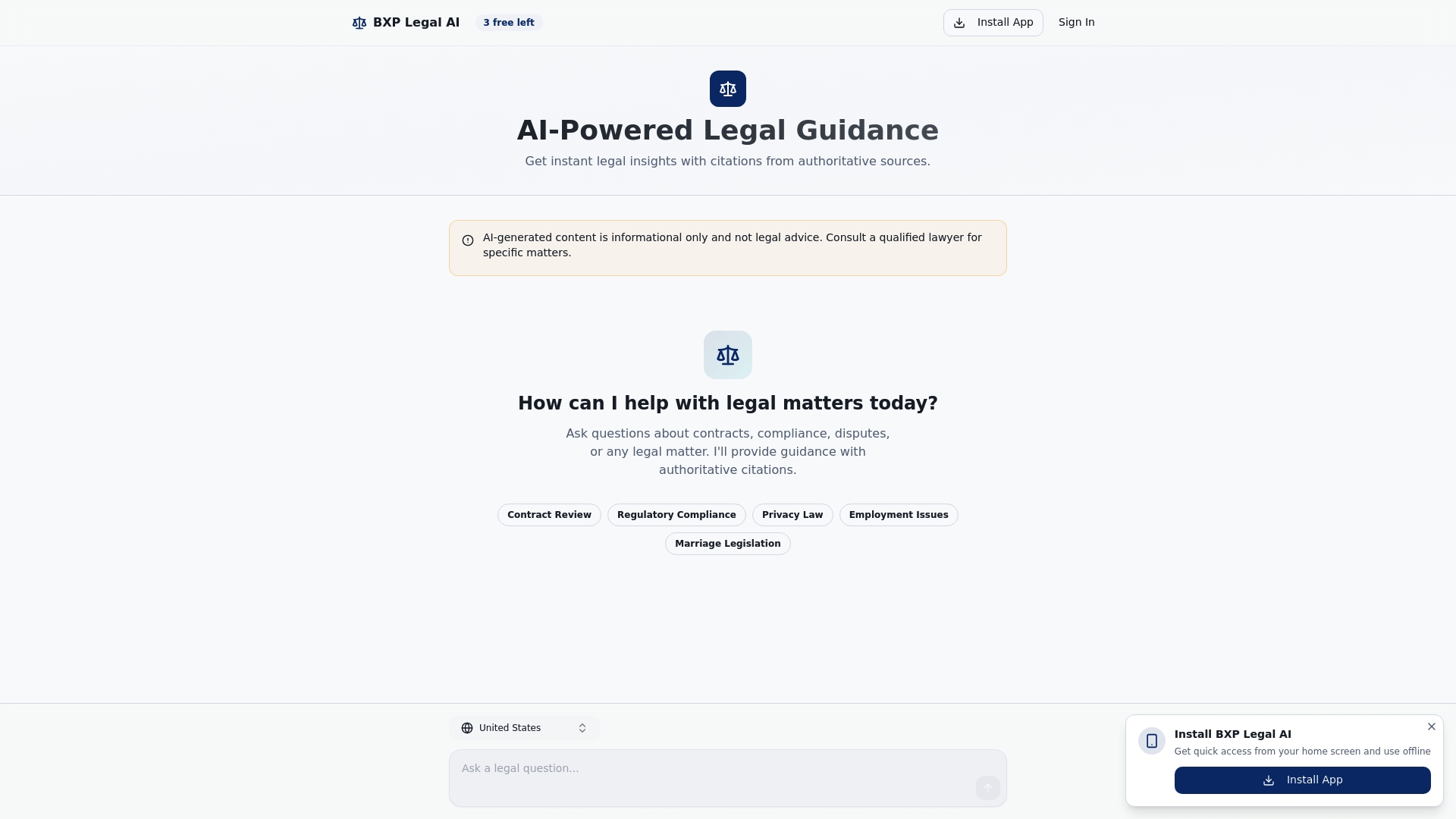
Whether you need to flag risky liability terms before a negotiation, generate a first-draft term sheet, or understand what a specific clause actually means in plain English, BXP Legal's AI features are built to handle exactly that. You can work faster, walk into negotiations more prepared, and avoid the costly surprises that come from missing what is buried in the fine print. Visit BXP Legal to explore how AI-powered legal guidance can support your next contract discussion.
Frequently asked questions
What is the best way to prepare before a contract negotiation?
The best preparation involves defining your BATNA and ranking must-have terms while researching the other party's priorities and business challenges before talks begin. Going in without these defined is the single most common reason negotiations end in unfavorable terms.
Which contract terms are most important to negotiate?
Liability caps, SLA commitments, termination rights, pricing, and dispute resolution clauses carry the most financial and legal risk. Per Promise Legal's guidance, liability caps should target 12 to 24 months of fees with carve-outs for data breaches and willful misconduct.
How can I build trust during contract negotiations?
Ask open-ended questions often, listen without interrupting, and respond with summaries to confirm understanding. Skilled negotiators ask 10 to 20 times more questions than average, which consistently reduces friction and builds productive working relationships.
What dispute resolution methods should be included in contracts?
Include mediation as a required first step and binding arbitration as the second escalation tier before any litigation. Dispute escalation clauses keep conflicts private, faster to resolve, and significantly cheaper than going to court.