
TL;DR:
- Precise legal citation is essential for credibility, traceability, and legal defensibility in documents.
- Bluebook and ALWD are the main citation systems, with distinct use cases and industry preferences.
- Combining automation with human review ensures citation accuracy, reducing legal and compliance risks.
A single misplaced citation has overturned appellate decisions. A missing statutory reference has triggered six-figure regulatory fines. For legal professionals and compliance officers, citation is not a formatting exercise — it is the backbone of credibility, traceability, and defensibility. This article breaks down what legal citation actually does, which systems govern it, how to build a reliable citation workflow, and why precision consistently outperforms speed. By the end, you will have a practical framework to raise citation quality across every document your team produces.
Table of Contents
- Understanding the core role of legal citation
- Major systems and standards: Bluebook vs. ALWD
- How to build effective citations: Methodologies and workflow tips
- The impact of citations on legal outcomes and risk mitigation
- AI, automation, and the human element in citation verification
- What most legal writers miss about citation: Quality beats speed every time
- Streamline your legal documentation with BXP Legal AI
- Frequently asked questions
Key Takeaways
| Point | Details |
|---|---|
| Foundations matter | Legal citations enable any reader to track, verify, and trust sources in legal documents. |
| Choose standards wisely | The right citation guide depends on your jurisdiction, context, and clarity requirements. |
| Manual review is essential | Even with AI, human verification prevents costly compliance or accuracy failures. |
| Impact is tangible | Citation precision can influence court outcomes and minimize risk for institutions. |
| Technology is a tool | Leverage automation to save time but never neglect manual quality control in legal citation. |
Understanding the core role of legal citation
Legal citation is the system by which legal writers point readers to authoritative sources. It tells your audience what source you relied on, where to find it, and which part of it supports your argument. That sounds simple. In practice, it is one of the most consequential skills in legal writing.
Legal citations provide standardized references to legal authorities such as cases, statutes, and secondary sources, enabling readers to identify, locate, and verify exact sources. Without that standardization, a compliance audit becomes guesswork, and a court brief loses its persuasive foundation.
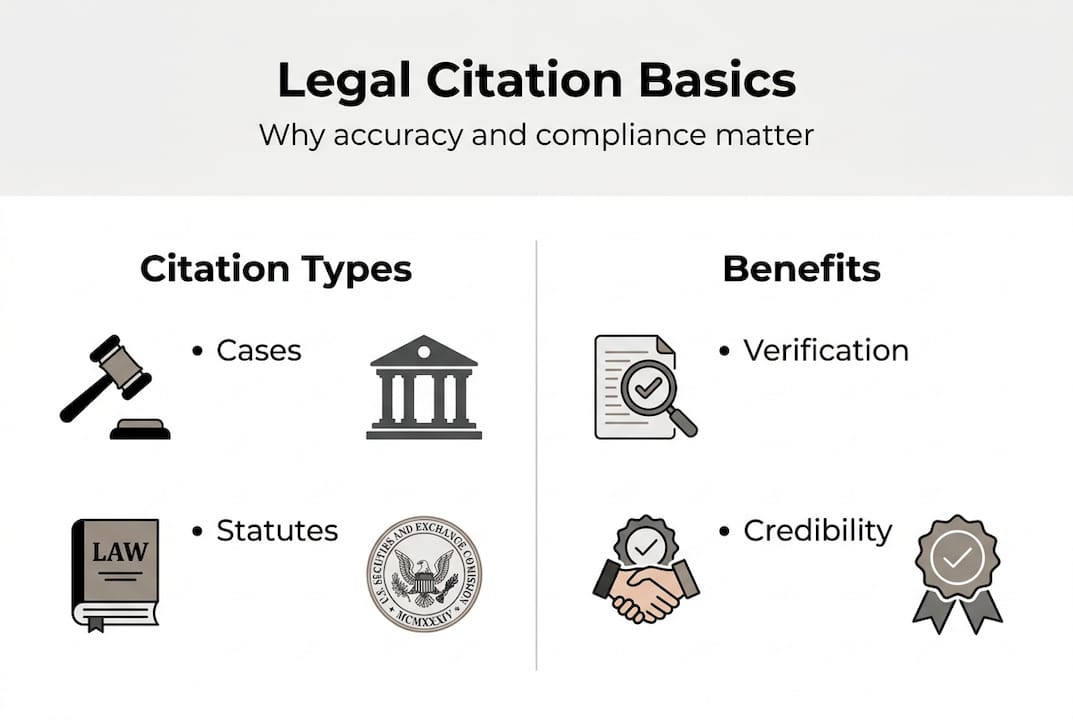
For compliance officers specifically, citation rigor is the difference between a clean audit and a remediation order. When regulators review internal policies, contracts, or risk assessments, they check whether the legal authorities cited actually say what the document claims. A citation that is wrong, outdated, or vague signals either incompetence or bad faith. Neither is acceptable.
Here is what a well-constructed citation answers in every legal document:
- What source? The case name, statute title, regulation number, or secondary authority.
- Where is it found? The reporter, volume, page, or official code section.
- Which part? The specific paragraph, subsection, or pinpoint page.
- How current is it? The date, edition, or amendment status.
Think of citations as the audit trail of legal reasoning. Every claim you make in a contract, memo, or compliance report should be traceable back to a primary authority. Without that trail, your document is opinion, not law.
"A citation is not decoration. It is the mechanism by which legal argument becomes verifiable fact. Strip it away, and you strip away accountability." — Legal writing educators consistently emphasize this point when training practitioners on legal research basics.
For teams managing multi-jurisdictional compliance, this becomes even more critical. A citation valid in one state may be superseded in another. A federal regulation may conflict with a state statute. Accurate citation is how you navigate those tensions without exposing your organization to liability.
Major systems and standards: Bluebook vs. ALWD
Once you understand why citation matters, the next question is which system to use. In U.S. legal practice, two systems dominate: the Bluebook and the ALWD Guide to Legal Citation.
The Bluebook has been the practitioner standard since 1926, now in its 22nd edition as of 2025. It governs citation in most federal and state courts, major law reviews, and law firm practice. ALWD, developed in 1996, was designed to be cleaner and more intuitive, making it popular in law school classrooms and academic legal writing.
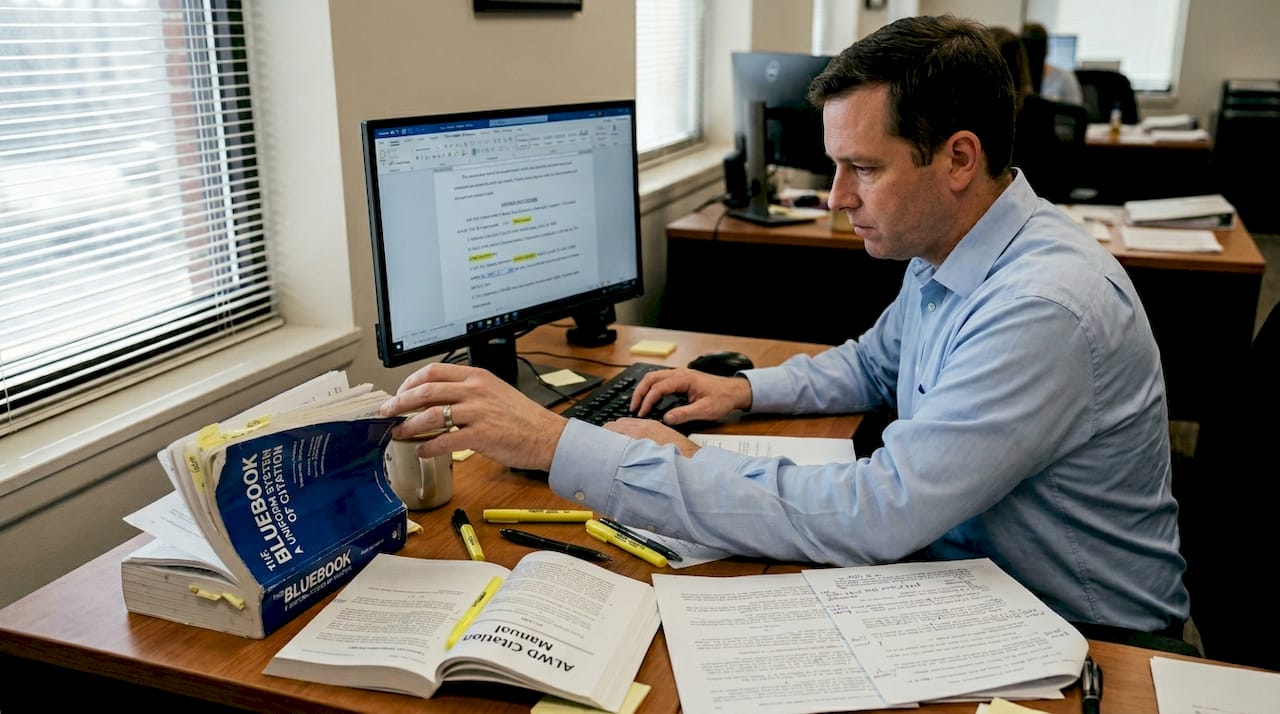
Here is a direct comparison to help you choose:
| Feature | Bluebook | ALWD |
|---|---|---|
| Primary audience | Practitioners, courts, journals | Students, academics |
| Complexity | High, nuanced rules | Streamlined, clearer rules |
| Common use | Court briefs, law review articles | Legal memos, coursework |
| Rule organization | Divided by document type | Unified structure |
| Industry adoption | Dominant in U.S. practice | Growing in academic settings |
When should you use each system? Follow this order of priority:
- Check court rules first. Many federal and state courts specify which system they require. Ignore this and your brief may be rejected outright.
- Use Bluebook for client-facing documents. Contracts, opinion letters, and litigation filings default to Bluebook in most U.S. jurisdictions.
- Use ALWD for internal training materials. Its cleaner structure makes it easier for junior staff to learn citation fundamentals.
- Follow your firm or organization's style guide. Some large firms maintain their own citation standards that blend both systems.
- Never mix systems in a single document. Inconsistency signals carelessness and can confuse readers about which authority governs.
Mixing systems is one of the most common citation errors in practice. It typically happens when multiple authors contribute to a single document without a unified review process. The fix is simple: assign one person as the citation reviewer before any document goes out.
For teams looking to build deeper proficiency, exploring advanced research techniques can sharpen how you locate and verify primary sources before citing them.
How to build effective citations: Methodologies and workflow tips
Choosing a system is step one. Applying it correctly under deadline pressure is where most errors occur. A reliable citation workflow protects against those errors.
Effective citation methodology means placing references in footnotes immediately after the principle or statute they support, using signals such as "see" or "contrast" to clarify the relationship between authority and argument, and using full citation forms on first reference before switching to short forms. Primary sources always take priority over secondary ones.
Here is a practical workflow for preparing a legal memo with accurate citations:
- Draft the argument first. Write your analysis without stopping to format citations. Focus on substance.
- Flag every claim. Go back through the draft and mark every assertion that requires a legal authority.
- Locate primary sources. Find the actual case, statute, or regulation. Do not rely on secondary summaries.
- Apply the citation format. Use your chosen system (Bluebook or ALWD) to format each citation precisely.
- Use signals deliberately. "See" means the source supports but does not directly state the proposition. "Contra" means it conflicts. These signals carry legal meaning.
- Run a pinpoint check. Verify that every page number, section number, and date is accurate.
- Have a second reviewer check citations. Fresh eyes catch errors that authors miss.
Pro Tip: Build a citation checklist specific to your most common document types. A checklist for a compliance memo differs from one for a court brief. Standardizing this process reduces errors and speeds up review cycles, which directly supports traceability during audits.
The temptation to rely entirely on auto-citation generators is real, especially under time pressure. But these tools frequently misformat pinpoint citations, miss superseded authorities, and fail to apply signal usage correctly. Manual review is not optional — it is the quality control layer that keeps your documents defensible.
For teams focused on faster legal workflows, the goal is not to eliminate manual review but to structure it so it takes less time without sacrificing accuracy.
The impact of citations on legal outcomes and risk mitigation
Does citation precision actually change outcomes? The data says yes, clearly.
Empirical benchmarks confirm that citation precision plays a measurable role in legal outcomes, and that AI-assisted citation still requires human verification to avoid sanctions. Courts have dismissed motions, imposed sanctions, and questioned attorney competence based solely on citation errors.
The consequences of poor citation practice are not abstract. They are concrete and costly:
- Lost motions and appeals due to citing overruled or inapplicable precedent.
- Regulatory sanctions when compliance documents cite outdated or incorrect statutory authority.
- Credibility damage with judges, regulators, and opposing counsel who notice citation errors.
- Malpractice exposure when a client suffers harm traceable to a faulty legal authority.
- Failed audits when internal policies cannot be verified against current law.
Consider a compliance scenario: a company's data privacy policy cites a regulation that was amended two years prior. During a regulatory audit, the examiner flags the discrepancy. The company now faces not just a citation correction but a full policy review, potential fines, and reputational risk. The original error cost minutes to make and months to fix.
On the positive side, verifiable citations build institutional trust. When a court brief cites precisely and accurately, it signals that the attorney has done the work. Judges notice. Regulators notice. Opposing counsel notices. That credibility compounds over time and directly influences how your arguments are received.
For organizations managing large document libraries, automated document comparison tools can help identify outdated citations before they become compliance liabilities.
AI, automation, and the human element in citation verification
AI-powered citation tools have genuinely improved speed and reduced mechanical errors. Platforms can now auto-format case citations, flag missing pinpoints, and cross-reference statutes against current databases in seconds. For high-volume document environments, this is a real productivity gain.
But AI aids citation work while humans must verify to avoid sanctions. That distinction matters enormously. AI tools are trained on historical data and may not reflect the most recent amendments, circuit splits, or jurisdiction-specific rules. They also cannot exercise judgment about which authority is most persuasive in a given context.
The top compliance risks with unchecked AI citation output include:
- Hallucinated citations: AI generating plausible-sounding but nonexistent case names or statute numbers.
- Outdated authority: Citing a statute that has since been amended or repealed.
- Wrong jurisdiction: Applying federal precedent where state law controls.
- Signal errors: Misclassifying the relationship between authority and argument.
Pro Tip: Treat AI citation tools as a first-pass assistant, not a final reviewer. Use them to generate draft citations quickly, then run every citation through a manual verification step before the document leaves your desk. This hybrid approach captures the speed benefit without accepting the accuracy risk.
For teams integrating technology into their practice, AI in document drafting offers a useful framework for responsible automation. And when the stakes are high, consulting legal experts remains the most reliable safeguard against citation-driven liability.
What most legal writers miss about citation: Quality beats speed every time
Here is the uncomfortable truth most citation guides skip: the pressure to produce documents faster has created a culture where citation is treated as a box to check rather than a skill to master. Teams default to auto-generators, assume the software caught everything, and move on. That assumption is costing firms and compliance departments more than they realize.
The best legal writers we have observed share one habit. They slow down at the citation stage. They treat each citation as a mini-argument: does this source actually say what I claim it says? Does it say it in the jurisdiction that matters? Is it still good law?
That deliberate approach is not slower in the long run. Documents that pass review the first time, survive audits, and hold up in court are faster overall than documents that require rework. Legal research mastery is not about finding sources faster. It is about trusting the sources you find. Quality citations do not just protect you from liability. They make your arguments more persuasive, your documents more credible, and your professional reputation more durable.
Streamline your legal documentation with BXP Legal AI
Applying rigorous citation standards across every document is demanding work. The BXP Legal AI platform is built to support that work without replacing the human judgment that makes citations trustworthy. From instant guidance on statutory references to document drafting tools that flag citation gaps, BXP Legal gives legal professionals and compliance teams a faster starting point without sacrificing accuracy.
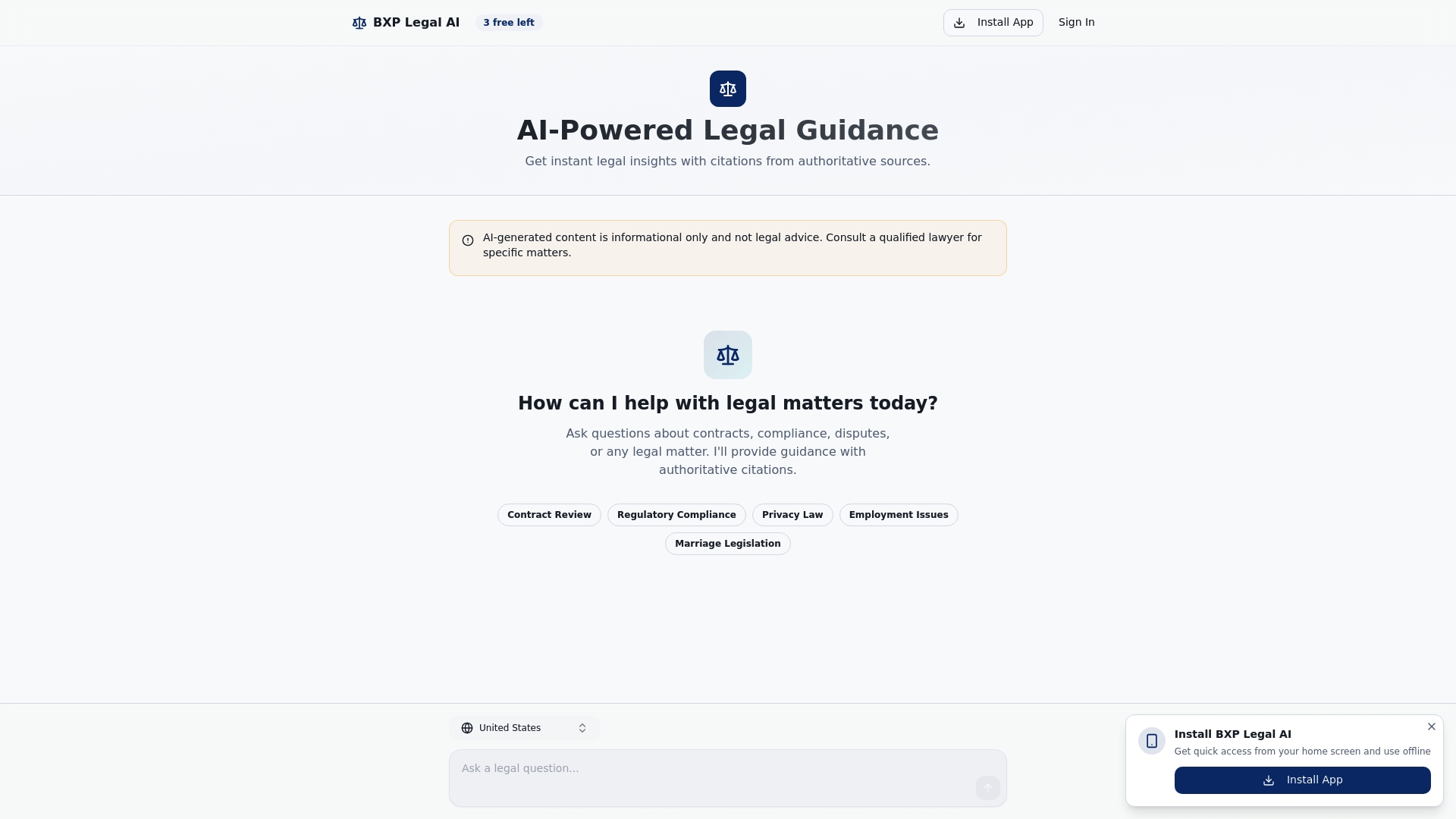
Explore ready-to-use legal templates designed with citation accuracy in mind, and use the platform's document comparison features to catch outdated authorities before they become compliance problems. BXP Legal is the support layer that lets your team focus on analysis while the platform handles the mechanical groundwork.
Frequently asked questions
What is the main purpose of legal citation?
Legal citations provide standardized references to cases, statutes, and secondary sources so readers can identify and verify every authority a document relies on. Without that traceability, legal arguments cannot be independently confirmed.
How do the Bluebook and ALWD citation systems differ?
The Bluebook dominates U.S. practice in courts and law firms, while ALWD offers a simpler structure better suited to legal education and academic writing. Always check jurisdiction-specific court rules before choosing.
Why is manual citation still important with AI tools?
AI aids but humans must verify because automated tools can generate hallucinated citations, apply outdated authorities, or misuse citation signals in ways that expose documents to sanctions.
What are citation signals and why are they used?
Citation signals like "see" or "contrast" tell readers exactly how a cited authority relates to the proposition being made, whether it directly supports, implies, or contradicts the argument.