
TL;DR:
- Treating compliance as a strategic business tool improves revenue, reputation, and efficiency for SMEs.
- Strong compliance reduces risk, enhances credibility with customers and investors, and lowers operational costs.
- A tailored, proportionate compliance approach boosts internal safety, staff retention, and financial performance.
Most small and medium-sized businesses treat compliance as an afterthought, something to fix after a problem surfaces. That instinct is costly. Across industries, the SMEs that treat compliance as a business tool rather than a legal checkbox consistently outperform competitors in revenue, reputation, and operational efficiency. This article unpacks five concrete, evidence-based advantages of building strong legal compliance into your business operations, from cutting financial risk to winning better contracts and accessing cheaper capital. If you have been putting compliance on the back burner, this is your case for making it a front-burner priority.
Table of Contents
- Manage risk and avoid costly pitfalls
- Enhance reputation and win customer trust
- Improve operations, safety, and staff retention
- Drive financial performance and ROI
- How SMEs can maximize compliance benefits
- Why a 'right-sized' compliance strategy wins for SMEs
- Get expert legal compliance support tailored to your SME
- Frequently asked questions
Key Takeaways
| Point | Details |
|---|---|
| Compliance builds trust | Legal compliance gives SMEs a reputation edge and greater customer loyalty. |
| Reduces risks and costs | Following regulations lowers your exposure to fines, lawsuits, and insurance expenses. |
| Drives operational efficiency | A compliant workplace enjoys better staff morale, streamlined processes, and higher retention. |
| Boosts ROI | Smart compliance programs often deliver more than triple return on investment for SMEs. |
| Right-size your approach | Proportionate, risk-based compliance delivers the highest value without stifling innovation. |
Manage risk and avoid costly pitfalls
Legal compliance is, at its core, a risk management tool. When your business operates within the rules, you remove the most common triggers for financial loss and operational disruption. Fines, lawsuits, and regulatory sanctions are not just a concern for large corporations. They can cripple a small business in months.
Consider the numbers. 87% of organizations face negative outcomes from low compliance maturity. That means penalties, lost contracts, legal costs, or public embarrassment. For an SME operating on tight margins, any one of those outcomes can be devastating.
The most common compliance failures for SMEs include:
- Missing regulatory changes in your industry or jurisdiction
- Poor documentation of contracts, policies, and employee records
- Data breaches caused by weak privacy and security practices
- Incomplete licensing or permit renewals
- Failure to track employment law updates
Each of these failures carries a price. A single data breach can result in regulatory fines under laws like GDPR or state-level privacy acts, plus direct costs of notification and remediation. A missed employment law update can expose your business to discrimination or wage claims. The importance of compliance is not abstract. It is measurable in dollars and reputational damage.
"Non-compliance is never actually cheaper. The deferred cost of getting it wrong almost always exceeds the upfront cost of getting it right."
Pro Tip: Assign one person, or even a role within a shared platform, ownership of tracking regulatory updates in your sector. Pair that with a centralized record system so contracts, policies, and filings are always findable. Tools like the SMB compliance steps framework can help you build this habit without a large legal department.
Building a proactive compliance culture pays dividends. Once your team understands what the rules are and why they matter, the risk of costly surprises drops sharply.
Enhance reputation and win customer trust
Compliance is not just about staying out of trouble. It is a credibility signal. When your business can demonstrate that it follows data protection laws, treats employees fairly, and operates transparently, that reputation opens doors.

Customers, particularly in B2B markets, do their due diligence before signing contracts. Procurement teams regularly ask suppliers for evidence of compliance with privacy regulations, anti-bribery laws, and employment standards. If your competitors can provide that documentation and you cannot, you lose the deal. It is that simple.
Compliance enhances reputation, builds customer trust, and provides a competitive market advantage. That is not a soft benefit. It translates into contract wins, referrals, and long-term client relationships.
Here is where compliant SMEs gain a concrete edge:
- Clear privacy policies reduce customer anxiety about how their data is used, increasing conversion and retention
- Ethical conduct standards make your business a preferred partner for larger companies with their own compliance obligations
- Supplier vetting criteria in enterprise procurement now routinely screen for compliance documentation
- Investor and lender confidence increases when your risk profile is demonstrably managed
There is also a hidden financial benefit. Compliant SMEs often pay lower insurance premiums. Insurers price risk. A business with documented policies, proper training records, and clean regulatory history is simply a better risk to underwrite. That saving goes straight to your bottom line.
To capture these advantages, your compliance documentation must be both current and accessible. Investing time in document drafting for compliance ensures your privacy notices, employment agreements, and contractor terms are legally sound and ready to share when a prospect asks.
Reputation takes years to build and minutes to lose. Compliance is one of the most durable ways to protect it.
Improve operations, safety, and staff retention
Compliance does not just protect you from external threats. It also shapes how well your business functions internally. When policies are documented, roles are clear, and processes are repeatable, operations run more smoothly and employees feel more confident in their work.
Workplaces with strong compliance programs report measurably better outcomes for their teams. Compliance boosts employee safety, morale, and retention. That is backed by data across industries. When employees know the rules, understand their rights, and trust that the business is operating fairly, engagement goes up and turnover goes down.
Lower turnover is a massive, often underestimated financial benefit. The cost of replacing a single employee can range from 50% to 200% of their annual salary, depending on the role. A compliant workplace that retains staff avoids those costs repeatedly.
Operational benefits of strong compliance programs include:
- Standardized onboarding that reduces early-stage departures
- Clear health and safety procedures that cut workplace injuries and liability
- Documented HR policies that reduce internal disputes and grievances
- Consistent training records that satisfy regulatory audits quickly
"Compliance is the infrastructure your team works within. When that infrastructure is solid, people do better work."
Pro Tip: Build compliance checklists directly into your onboarding and training workflows. New hires who complete a structured compliance orientation understand what is expected before a problem can arise. Review SME compliance programs to see how others have structured this.
Efficiency and safety gains from compliance are not one-time wins. They compound. A business that reviews its compliance and efficiency practices annually finds that processes improve, incidents decline, and staff become advocates for the culture rather than critics of it.
Drive financial performance and ROI
Here is where compliance stops feeling like overhead and starts looking like an investment. The financial returns from a structured compliance program are real, quantifiable, and often larger than SME owners expect.
Data governance compliance yields a $3.20 ROI per dollar invested, with 66% improved security and 52% fewer breaches. For context, very few business investments return three dollars for every one spent. Compliance in the data governance space does exactly that, and those gains flow through into reduced insurance claims, fewer legal disputes, and lower operational disruptions.
| Compliance area | Key outcome | Financial impact |
|---|---|---|
| Data governance | 52% fewer breaches | Lower breach costs and fines |
| Security controls | 66% improved security | Reduced insurance premiums |
| Risk documentation | Demonstrable risk profile | Better lending rates |
| Employment compliance | Lower staff turnover | Reduced recruitment costs |
| Regulatory adherence | Fewer fines and penalties | Direct cost avoidance |
Beyond avoiding costs, compliant SMEs also access capital on better terms. Banks and alternative lenders increasingly use compliance indicators as part of credit risk assessments. A business that can show clean regulatory history, documented processes, and current filings is a lower-risk borrower. That often means better interest rates and more flexible terms.
The cost savings from compliance compound across multiple budget lines simultaneously. Insurance, legal fees, regulatory fines, employee replacement, and financing costs all decrease when your compliance program is solid. You can explore how to calculate these returns with resources on ROI from legal compliance.
Treat compliance spend the way you treat marketing or IT investment. It generates measurable returns and those returns grow over time as the program matures.
How SMEs can maximize compliance benefits
Knowing that compliance pays is one thing. Building a program that actually delivers those returns is another. The key is proportionality. The right approach for your business depends on your size, industry, and risk exposure, not on what a Fortune 500 company does.
A risk-based approach means inventorying your obligations, scoring risks by likelihood and severity, implementing controls proportionate to those risks, and monitoring outcomes. It avoids the trap of compliance theater, spending time and money on low-risk areas while genuine exposures go unaddressed.
| Program maturity | Resources used | Typical outcomes | Cost profile |
|---|---|---|---|
| Developed/optimized | Targeted, efficient | Fewer incidents, better ROI | Moderate, well-spent |
| Developing | Reactive, fragmented | Higher incident rate | Often higher total cost |
Only 17% of SMBs have optimized compliance programs. That means the majority of your competitors are operating in reactive mode. A more structured approach gives you a real advantage.
Here are the steps to build a program that works:
- Data mapping: Identify what personal and operational data your business holds and where it lives
- Document obligations: List every regulatory requirement relevant to your industry and geography
- Risk scoring: Rank obligations by potential impact if breached
- Implement controls: Assign ownership and create policies proportionate to each risk level
- Track metrics: Measure incidents, training completion, and audit results quarterly
Review compliance documents essentials to understand which documents belong in your program. Apply compliance best practices to refine how those documents are used. And use a compliance checklist for SMBs to confirm nothing critical is missing.
Why a 'right-sized' compliance strategy wins for SMEs
Conventional wisdom in compliance says more is better. More policies, more audits, more documentation. For large corporations managing thousands of employees across dozens of jurisdictions, that logic holds. For an SME with 20 to 200 staff, it often leads to paralysis.
Compliance burdens SMEs disproportionately and can impede innovation without proportional regulation. Over-engineering your compliance program is a real risk. When staff spend more time completing internal paperwork than serving customers, compliance becomes a drag, not a driver.
The businesses that win with compliance are the ones that focus on what materially reduces their specific risk profile. They do not copy large firm playbooks. They build lean, targeted programs that cover genuine exposures and leave room for the speed and creativity that makes SMEs competitive. A multi-jurisdictional compliance guide can help you scope your obligations without overextending.
Communicate your compliance wins internally too. When your team sees that compliance prevented a problem or won a contract, the culture shifts. Compliance stops being a burden and becomes a source of pride and commercial advantage. Iterate annually, keep it proportionate, and the returns will follow.
Get expert legal compliance support tailored to your SME
Turning compliance from a chore into a competitive advantage takes the right tools and the right guidance. BXP Legal AI is built specifically for businesses like yours, offering instant, AI-powered legal guidance across compliance, contracts, privacy, and employment law.
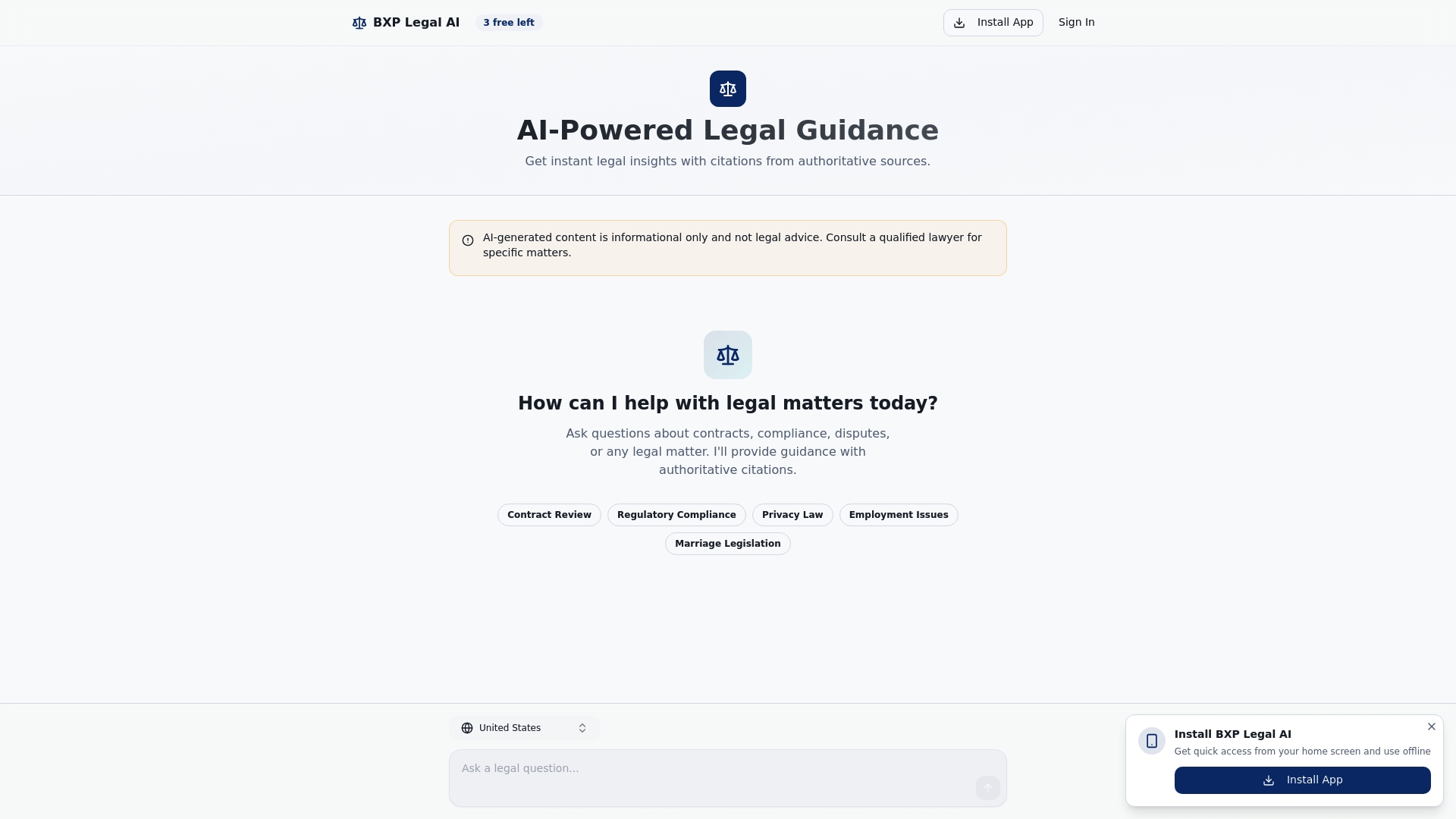
Whether you need ready-to-use legal compliance templates to get your documentation current fast, or you need multi-jurisdiction legal support as your business grows across state or national lines, BXP Legal gives you the resources to act with confidence. You get authoritative, citation-backed answers without the wait time or cost of traditional legal consultation. Start building a compliance program that pays for itself.
Frequently asked questions
What is legal compliance for SMEs?
Legal compliance means following all laws and regulations relevant to your SME's operations and industry. It enhances reputation, builds customer trust, and creates competitive advantage in the market.
How does legal compliance save money for small businesses?
Compliance reduces the chance of costly fines, legal expenses, and operational disruptions. It also lowers insurance premiums and financing costs because lenders and insurers reward demonstrated risk management.
What is a risk-based approach in compliance?
A risk-based approach means focusing your controls and resources on the legal and operational risks with the highest potential impact. The risk-based methodology involves inventorying obligations, scoring risks, implementing proportionate controls, and monitoring results.
Do SMEs need specialized compliance programs for each law?
Most SMEs can centralize core compliance procedures under one program but should tailor specific controls for high-risk regulations like data privacy or employment law. Effective programs include oversight, policies, training, and regular audits structured around the key CMS elements appropriate to your risk level.
What is compliance maturity and why does it matter?
Compliance maturity measures how well your SME's program identifies risks, implements controls, and adapts to new rules. With only 17% of SMBs optimized, improving your maturity level directly reduces negative outcomes and gives you a real edge over competitors still operating reactively.
Recommended
- Legal compliance explained: essential steps for SMBs
- Legal compliance checklist for SMBs: essential 2026 steps
- Regulatory compliance best practices for SMBs 2026
- Document Verification for SMBs: Stay Compliant in 2026
- Korp.ph | Tax and Compliance in the Philippines – Essential Steps for Entrepreneurs