
TL;DR:
- Effective internal controls are essential for SMBs to stay within legal and regulatory boundaries.
- Managing third-party risks involves risk-based due diligence, proper contracts, and ongoing monitoring.
- Embedding compliance into company culture ensures consistent adherence and reduces regulatory vulnerabilities.
Regulatory compliance is one of the most stressful responsibilities a compliance officer or risk manager at a small to medium-sized business can carry. One missed control, one undocumented procedure, one overlooked vendor contract, and you are looking at fines, reputational damage, or worse, personal liability. The pressure is real, and the regulatory environment keeps shifting. This article walks you through the practical strategies that actually work: building internal controls, managing third-party risks, enforcing documentation discipline, and embedding compliance into your company culture so it runs on autopilot.
Table of Contents
- Build strong internal control systems
- Manage third-party risks proactively
- Enforce documentation and audit rigor
- Foster a culture of compliance
- What most SMBs get wrong about compliance best practices
- Get expert compliance support with BXP Legal AI
- Frequently asked questions
Key Takeaways
| Point | Details |
|---|---|
| Internal controls first | Strong internal control mechanisms form the core of compliance in every business. |
| Vet third parties thoroughly | Managing external risks starts with proper vetting and continuous monitoring of partners and vendors. |
| Document everything | Regular, complete documentation is essential for proving compliance and protecting officer liability. |
| Compliance culture matters | A company-wide culture of compliance prevents oversight and drives sustainable success. |
| Expert tools help | Modern AI tools can simplify compliance tasks and reduce risk for SMBs. |
Build strong internal control systems
After setting the stage for the importance of compliance, let's start with the backbone: effective internal controls. For SMBs, internal controls are the structured policies and procedures that ensure your operations stay within legal and regulatory boundaries. They are not just bureaucratic formalities. They are your first line of defense.
The core mechanics of internal controls include segregation of duties, standardized procedures, regular reconciliations, access controls, and technology automation. Each one plays a distinct role in keeping your compliance posture solid.
Here is what each control does for your organization:
- Segregation of duties ensures no single employee controls an entire process from start to finish, which prevents conflicts of interest and reduces fraud risk.
- Standardized procedures create predictability. When every team member follows the same documented steps, audits become far less painful.
- Regular reconciliations catch discrepancies early, before they become regulatory violations or financial losses.
- Access controls restrict sensitive data and systems to authorized personnel only, protecting you from both internal and external threats.
- Technology automation removes the human error factor from repetitive compliance tasks, making your controls faster and more reliable.
For SMBs with lean teams, automation is particularly powerful. When you automate routine checks, approvals, and reporting, your staff can focus on judgment calls that actually require human attention. Exploring document automation workflows can significantly reduce the manual burden on your compliance team.
The role of technology in compliance has also expanded beyond simple task automation. AI legal tools for compliance can now flag regulatory inconsistencies, assist with contract review, and surface potential issues before they escalate.
Pro Tip: Automate every repetitive compliance task you can identify, including approval workflows, access log reviews, and policy acknowledgment tracking. Automation does not replace judgment; it protects it by clearing the noise.
Manage third-party risks proactively
With internal controls in place, the next step is tackling risks that arise from external partnerships. Vendors, contractors, and service providers can introduce compliance vulnerabilities into your organization just as easily as internal processes can. The difference is that you have less direct control over them.
Effective third-party risk management follows a structured approach:
- Identify high-risk third parties. Not every vendor carries the same risk. A cloud storage provider handling customer data is far more sensitive than your office supply company.
- Conduct risk-based due diligence. The depth of your review should match the risk level. High-risk vendors warrant full background checks, security questionnaires, and legal review.
- Classify vendors by risk profile. Create tiers, such as high, medium, and low, and apply corresponding monitoring intensity to each tier.
- Negotiate contracts with compliance requirements. Every vendor contract should include data access limitations, incident notification timelines, and liability clauses.
- Establish ongoing monitoring. Request annual SOC 2 or ISO 27001 attestations from high-risk vendors and review them carefully.
The New York Department of Financial Services guidance on third-party risk management makes clear that risk-based due diligence, vendor classification, contractual protections, and ongoing monitoring including SOC 2 and ISO attestations are all essential components of a defensible program.
Expert caution: Your vendor contracts must explicitly address data access permissions and incident notification obligations. A contract that is silent on these points is a liability waiting to surface during an audit or breach investigation.
For SMBs that are building or updating their vendor agreements, reviewing compliance documents that are specifically designed for regulatory purposes gives you a practical starting point for what to include.
The goal is not to treat every vendor as a threat. It is to have a proportionate, documented process that shows regulators you take third-party risk seriously and act on it consistently.
Enforce documentation and audit rigor
Effective third-party risk management requires accurate and timely documentation to uphold compliance standards. Documentation is not glamorous work, but it is the evidence that proves your compliance program is real and not just theoretical.
| Activity | Recommended frequency | Scope |
|---|---|---|
| Internal compliance audits | Quarterly | Policies, procedures, controls |
| Vendor risk reviews | Annually or upon contract renewal | Risk tier reassessment, attestations |
| Staff training records | Per training session | Attendance, content covered, acknowledgments |
| Policy updates | As regulations change, minimum annually | All affected departments |
| Access control reviews | Semi-annually | System permissions, user roles |
Scheduling regular audits means you find problems before regulators do. That is a significant advantage. When an issue surfaces internally, you have the opportunity to remediate it, document the fix, and demonstrate good faith. When a regulator finds it first, your options shrink considerably.
Key documentation practices every compliance officer should enforce:
- Never backdate records. This is one of the fastest ways to turn a compliance issue into a legal one.
- Document every compliance effort, even the routine ones. Regulators want to see ongoing activity, not a burst of effort right before an exam.
- Maintain audit trails that can be produced quickly. A trail buried in six different systems is nearly as bad as no trail at all.
- Record all staff training with dates, content summaries, and signed acknowledgments.
The stakes here are personal, not just organizational. Wholesale compliance failures can expose chief compliance officers to personal liability, and backdating documents or failing to document regular efforts are cited as direct pathways to that outcome.
For SMBs building their recordkeeping infrastructure, resources on document drafting for compliance provide practical templates and frameworks to get your documentation practices into shape.
Foster a culture of compliance
Solid documentation and internal controls become even more powerful when embedded in company culture. A compliance program that only lives in a policy manual is fragile. One that lives in how your team thinks and acts every day is resilient.

Leadership sets the tone. When executives and managers visibly follow compliance procedures, ask compliance questions in meetings, and treat regulatory requirements as a business priority rather than a burden, employees follow. When leadership cuts corners, so does everyone else.
| Factor | Compliance culture | Ad-hoc compliance |
|---|---|---|
| Consistency | High, procedures followed routinely | Low, depends on individual memory |
| Audit readiness | Always prepared | Scrambles before each audit |
| Risk detection | Early, through daily practices | Late, often after violations occur |
| Staff engagement | Active participants | Passive recipients of rules |
| Regulatory outcomes | Fewer violations, faster remediation | Higher violation rates, slower response |
Building a genuine compliance culture involves more than mandatory training once a year. It requires:
- Ongoing training that reflects current regulations and real scenarios your team actually faces.
- Open channels for staff to raise compliance concerns without fear of retaliation.
- Recognition and incentives that reward compliant behaviors, not just business results.
- Regular policy reviews that involve input from the people who execute the procedures daily.
As noted in CCO liability guidance, promoting a compliance culture is not a soft recommendation. It is a concrete defense against wholesale compliance failures that can lead to personal liability for officers.
For a step-by-step approach to embedding these practices, reviewing compliance steps for SMBs gives you a clear roadmap to follow.
What most SMBs get wrong about compliance best practices
Here is the uncomfortable truth: most SMBs treat compliance as a checklist exercise. They complete the required tasks, file the documentation, and assume they are protected. That assumption is dangerous.
Checklists create a false sense of security. They tell you what was done, not whether it was done correctly or whether the underlying risk has actually been managed. The edge cases, the unusual vendor arrangement, the one-off data access request, the policy exception that never got formally approved, are exactly where CCO personal liability tends to originate.
True compliance is an ongoing process, not a one-time project. Regulations evolve. Your business evolves. Your risk profile changes every time you add a vendor, enter a new market, or hire staff in a different state. Multi-jurisdiction compliance workflows become essential the moment your operations cross state or national lines.
Pro Tip: Involve your staff in evolving compliance procedures rather than handing down rigid rules. People follow processes they helped shape. And they spot gaps that managers miss.
Get expert compliance support with BXP Legal AI
If you are ready to put these strategies into practice, smart tools can transform your compliance workflow from reactive to proactive.
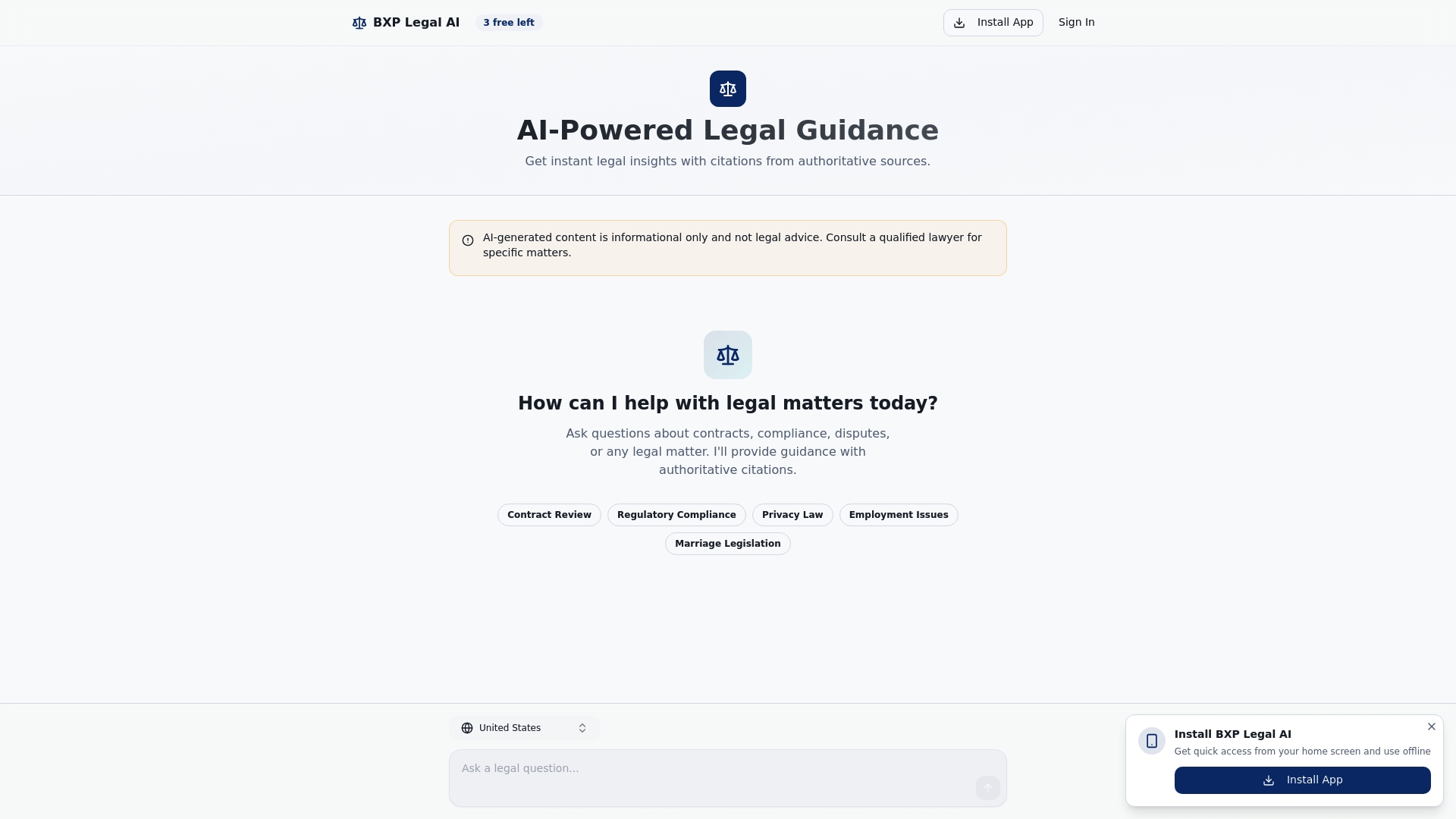
BXP Legal AI gives compliance officers and risk managers at SMBs instant access to AI-powered legal guidance across contracts, regulatory requirements, and multi-jurisdictional obligations. Whether you need to review vendor agreements, draft compliance policies, or navigate overlapping regulatory frameworks, the platform delivers actionable insights backed by authoritative sources. Features like document comparison tools help you catch gaps between contract versions, while multi-jurisdiction legal support ensures your compliance program holds up across state and federal lines. Start using AI-powered legal guidance to strengthen your compliance program today.
Frequently asked questions
What is the most important first step in regulatory compliance for SMBs?
Establishing strong internal controls, including segregation of duties and standardized procedures, is the foundational step because it creates the structure that every other compliance effort depends on.
How can SMBs minimize third-party compliance risks?
SMBs should conduct risk-based due diligence, categorize vendors by risk level, negotiate compliance terms into every contract, and monitor ongoing SOC 2 or ISO attestations for high-risk partners.
What documentation mistakes can lead to CCO liability?
Backdating records, leaving compliance efforts undocumented, and failing to maintain consistent activity logs are the primary mistakes that expose officers to personal liability under regulatory scrutiny.
Why is a compliance culture critical in small businesses?
A strong compliance culture means procedures are followed consistently without constant supervision, which reduces the risk of oversight failures and makes your organization far more defensible during a regulatory review.