
TL;DR:
- Compliance documents are categorized into legal, technical, administrative, financial, and operational groups.
- Regular review and updating of documents prevent regulatory gaps and potential penalties for SMEs.
- Technology and automation tools help manage, verify, and keep compliance documentation accurate and accessible.
Compliance officers at small and medium-sized enterprises face a recurring challenge: knowing which documents to maintain, how to organize them, and what gaps could expose the business to regulatory risk. With regulators tightening enforcement and audits becoming more frequent, the cost of poor documentation is no longer theoretical. Fines, sanctions, and operational disruptions are real consequences for businesses that treat compliance paperwork as an afterthought. This article breaks down the essential types of compliance documents every SME should know, organized by category, with practical examples and a decision framework you can apply immediately.
Table of Contents
- Understanding compliance document categories
- Legal and administrative compliance documents
- Technical and operational compliance documents
- Financial compliance documents: protecting against fraud and ensuring transparency
- Choosing the right compliance documents for your organization
- Why the basics aren't enough: a modern take on compliance documentation
- Streamline your compliance documentation with BXP Legal AI
- Frequently asked questions
Key Takeaways
| Point | Details |
|---|---|
| Compliance document categories | Understanding the five main types—legal, technical, administrative, financial, operational—simplifies compliance for SMEs. |
| Legal and administrative essentials | Policies, contracts, and audit records are foundational for protecting your organization. |
| Technical and financial records | Maintaining system logs, SOPs, and financial statements aids in risk management and audit readiness. |
| Tailor documentation | Focus only on relevant documents based on your industry, size, and jurisdictions. |
Understanding compliance document categories
Not all compliance documents serve the same purpose, and treating them as one undifferentiated pile is a common mistake. Compliance documents are categorized by function: legal (contracts, permits), technical (logs, vulnerability assessments), administrative (policies, training records), financial (statements, AML reports), and operational (SOPs, incident plans). Understanding these five categories is the foundation of any effective compliance program.
| Category | Sample document types |
|---|---|
| Legal | Contracts, permits, licenses, regulatory filings |
| Technical | System logs, vulnerability assessments, security controls |
| Administrative | Policies, training records, internal audit reports |
| Financial | Financial statements, AML reports, tax records |
| Operational | SOPs, incident response plans, risk assessments |
Each category carries distinct responsibilities. Here are key considerations for managing them effectively:
- Legal documents require version control and legal review before execution.
- Technical documents must align with current IT infrastructure and threat landscapes.
- Administrative documents need regular updates to reflect policy or personnel changes.
- Financial documents are subject to strict retention rules and regulatory reporting cycles.
- Operational documents should be tested against real scenarios, not just written and filed.
Exploring the broader landscape of types of legal documents can help you map which documents belong in which category for your specific business model.
Pro Tip: Use standardized templates for each category to reduce gaps and speed up onboarding of new compliance staff. Templates also make it easier to spot missing fields during internal audits.
Legal and administrative compliance documents
Legal and administrative documents are the structural backbone of any compliance program. They define what your organization is authorized to do, how it operates, and how it trains its people.
Legal compliance documents typically include:
- Contracts and agreements: vendor agreements, client contracts, partnership deeds
- Licenses and permits: business operating licenses, sector-specific permits (e.g., food safety, financial services)
- Regulatory filings: annual reports submitted to government bodies
- Non-disclosure agreements: protecting proprietary information in business relationships
Administrative documents support internal governance and accountability:
- Policies and procedures: written rules governing employee behavior and business processes
- Training records: evidence that staff have completed required compliance training
- Internal audit reports: documented findings from self-assessments
- Corrective action logs: records of how identified issues were resolved
Common compliance documents include policies and procedures, training records, licenses and permits, audit reports, and contracts and agreements. Each plays a distinct role in demonstrating regulatory adherence.
Best practice: Policies should be reviewed and re-signed by employees at least annually. Regulators increasingly expect documented acknowledgment, not just distribution.
For SMEs, licenses and permits are often the first compliance documents to lapse because renewal deadlines get buried in operational noise. Set calendar reminders 90 days before any permit expiration. Strong document drafting for compliance practices reduce ambiguity in contracts and policies, and understanding the importance of legal documentation helps leadership prioritize these records correctly.
Technical and operational compliance documents
Legal and administrative compliance are just a start. Equally vital are technical and operational documents that underpin daily risk controls.
Technical documents focus on your IT environment and security posture. Operational documents govern how your business actually runs on a day-to-day basis. They are related but serve different audit functions.

Technical documents include logs, vulnerability assessments, and security control documentation; operational documents include Standard Operating Procedures (SOPs), risk assessments, and incident response plans.
Here are the core documents in each group:
Technical compliance documents:
- System access logs
- Vulnerability scan reports
- Penetration test results
- Data encryption and backup records
- Security incident logs
Operational compliance documents:
- Standard Operating Procedures (SOPs) for key business processes
- Business continuity plans
- Incident response plans
- Risk assessment registers
- Change management records
For SMEs without a dedicated IT team, technical documents are frequently incomplete or outdated. A vulnerability scan from two years ago does not satisfy most current regulatory frameworks. Regulators want evidence that controls are active, not historical.
Pro Tip: Digitize all technical and operational records into a centralized document management system. This dramatically reduces retrieval time during audits and supports document verification for compliance. Pairing this with automation of compliance documents can cut manual effort by a significant margin.
Financial compliance documents: protecting against fraud and ensuring transparency
The most overlooked, yet regulated, documents are financial in nature. Let's address their vital role.
For SMEs, financial compliance documents serve two purposes: they satisfy regulatory reporting requirements and they protect the business from fraud exposure. Financial compliance documents include financial statements and anti-money laundering (AML) reports, along with tax records, expense reports, and payroll documentation.
Common errors and omissions in financial compliance records include:
- Missing or unsigned financial statements
- Incomplete AML transaction monitoring records
- Gaps in tax filing documentation
- Failure to retain records for the legally required period
- Inconsistent expense categorization across reporting periods
Avoiding these errors requires a structured review cycle, not just a year-end scramble.
| Document type | SME financial compliance | Other compliance records |
|---|---|---|
| Retention period | 5 to 7 years (varies by jurisdiction) | 1 to 5 years |
| Regulatory body | Tax authority, financial regulator | Industry-specific regulator |
| Audit frequency | Annual or triggered | Periodic or event-driven |
| Penalty for gaps | Fines, back taxes, sanctions | Warnings, operational restrictions |
Key stat: Businesses that fail to maintain adequate financial compliance records face penalties that can reach tens of thousands of dollars per violation, depending on jurisdiction and the severity of the gap. Proper document retention for compliance is not optional. For businesses operating across borders, multi-jurisdictional legal workflows add another layer of complexity to financial record-keeping.
Choosing the right compliance documents for your organization
With categories and examples clarified, it's important to tailor your compliance efforts. Here's a framework to do so.
Not all compliance documents apply to every business, and careful evaluation is critical. A retail SME has different documentation needs than a fintech startup or a healthcare provider. Follow these steps to build a relevant compliance document set:
- Map your regulatory environment: Identify which regulators govern your industry and jurisdiction.
- Assess your risk profile: Higher-risk operations (financial services, healthcare, data processing) require more extensive documentation.
- Audit what you have: Compare existing documents against the five categories in this article.
- Prioritize gaps: Address missing legal and financial documents first, as these carry the highest penalty risk.
- Schedule periodic reviews: Set a formal review cycle, at least annually, for all compliance documents.
| SME type | Must-have compliance documents |
|---|---|
| Retail/e-commerce | Business licenses, privacy policy, consumer contracts, tax records |
| Professional services | Client agreements, professional indemnity records, training logs |
| Healthcare | Licenses, patient data policies, incident reports, audit records |
| Fintech/financial | AML reports, financial statements, security logs, regulatory filings |
| Tech/SaaS | Data processing agreements, security assessments, SOPs, privacy notices |
For businesses operating in multiple regions, a multi-jurisdictional guide for SMBs is essential reading. Jurisdiction-specific requirements can add entirely new document categories that a domestic-only framework would miss. Always have a qualified legal professional review your compliance document set for adequacy before a formal audit.
Why the basics aren't enough: a modern take on compliance documentation
Most SMEs we encounter have the basics covered. They have a privacy policy, some contracts on file, and a business license that is probably current. But here is the uncomfortable truth: static documentation is a liability dressed up as compliance.
Regulations change. Business models evolve. A policy written in 2022 may not reflect your current data practices, workforce size, or product offering. Yet many organizations treat compliance documents as a one-time task rather than a living system. That gap is exactly where regulators find violations.
The real shift in thinking is this: compliance documentation is not a filing cabinet. It is a feedback loop. Documents should be tested against real scenarios, updated when processes change, and reviewed whenever a new regulation takes effect. For businesses with multi-jurisdictional compliance workflows, this is even more critical because a single outdated document in one jurisdiction can create liability across all of them. Technology is no longer optional for managing this complexity. It is the only scalable answer.
Streamline your compliance documentation with BXP Legal AI
Feeling ready to overhaul your compliance process? The categories and frameworks in this article give you a solid foundation, but execution is where most SMEs hit a wall.
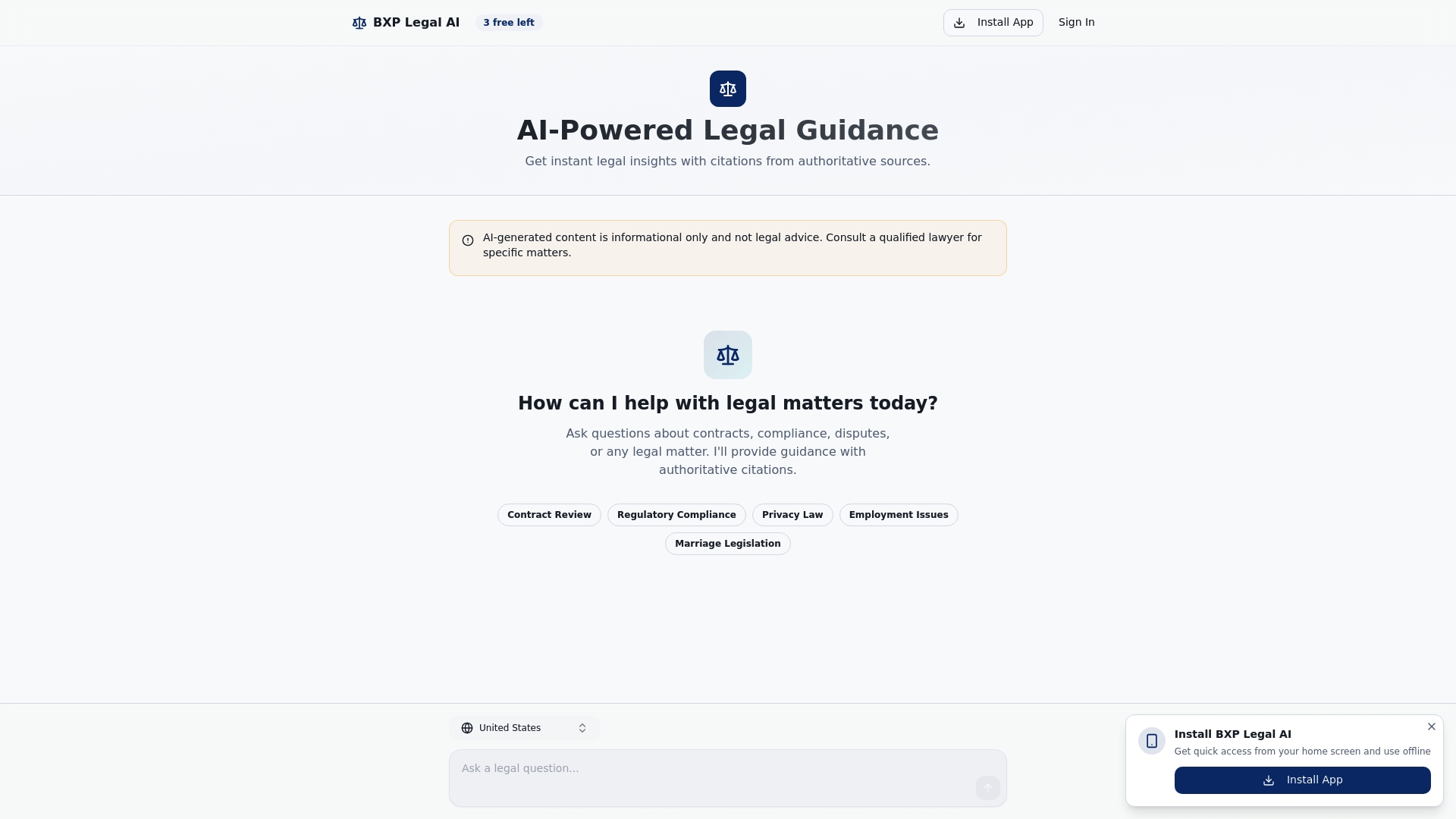
BXP Legal AI offers end-to-end compliance document solutions built for SMEs that need speed, accuracy, and regulatory confidence. From multi-jurisdiction support for cross-border operations to a document comparison tool that flags gaps between your existing documents and current regulatory standards, the platform is designed for compliance officers who cannot afford to miss a detail. Explore ready-to-use compliance templates or connect with the AI for instant guidance on your specific document needs. Your next audit does not have to be a scramble.
Frequently asked questions
What are the main types of compliance documents every SME needs?
Every SME should maintain policies, procedures, contracts, permits, audit reports, financial statements, and training records. Core compliance documents also include risk assessments and licenses to ensure full regulatory coverage.
How do I organize compliance documents for audits?
Group documents by the five functional categories (legal, technical, administrative, financial, operational), digitize records for fast retrieval, and run regular internal reviews. Categorizing by function is the most audit-ready approach.
Can compliance documents differ by industry or jurisdiction?
Yes, significantly. Not all compliance documents apply to every business, so always map your requirements to your specific sector and the jurisdictions where you operate.
What is the role of technical compliance documents?
They provide documented evidence of IT security controls and active safeguards. Technical documents like logs and vulnerability assessments are essential for passing cybersecurity-focused audits.
How often should compliance documents be updated?
Review and update core compliance documents at least once a year, and immediately after any regulatory change or significant shift in your business processes or structure.