
TL;DR:
- Commercial litigation involves everyday business disputes, not just large corporate lawsuits, and includes issues like contract breaches and partner conflicts. Understanding the legal processes and choosing between court and arbitration can help SMBs manage risks, prevent costly disputes, and make informed decisions. Proactively integrating legal strategies and using AI tools can significantly improve dispute prevention and resolution.
Most business owners assume commercial litigation only applies to large corporations battling it out in high-profile courtrooms. The reality? Commercial litigation covers a sweeping range of disputes rooted in everyday business activity, from a vendor who fails to deliver on a contract to a business partner who drains company funds. Studies suggest that the vast majority of businesses will face at least one significant legal dispute in their lifetime, yet most owners enter those situations underprepared and uncertain about what the process actually involves. This guide walks you through every key element so you can protect your business before, during, and after a dispute.
Table of Contents
- What is commercial litigation?
- Common types of commercial disputes
- How the commercial litigation process works
- Litigation vs. arbitration: What's the difference?
- Special considerations for SMBs in commercial litigation
- Our take: What most business owners overlook about commercial litigation
- Take the next step: Smarter protection and dispute resolution
- Frequently asked questions
Key Takeaways
| Point | Details |
|---|---|
| Understand your options | Commercial litigation covers a wide range of business-related disputes and includes alternatives like arbitration. |
| Process clarity matters | Knowing the phases of litigation helps you manage risks and avoid surprises. |
| Choose the right approach | Evaluate whether court, arbitration, or settlement is best for the specific dispute. |
| SMB-specific strategies | Small businesses should focus on prevention, compliance, and efficient dispute resolution to limit exposure. |
| Leverage technology | Legal tech tools can streamline commercial dispute management and reduce long-term business risk. |
What is commercial litigation?
Commercial litigation is, at its core, a civil legal process. It involves disputes that arise from business activity or business relationships. The parties involved are typically businesses, investors, contractors, shareholders, or other stakeholders with a financial or operational interest in the outcome.
Commercial litigation is civil litigation involving disputes from business activity or relationships, and it seeks remedies such as damages or court relief. Those remedies can range from monetary damages (where one party is ordered to pay another) to injunctions (where a court orders a party to stop or start a specific action). The scope is wide because business relationships themselves are wide.
Common triggers for commercial litigation include:
- A supplier who breaches a service contract
- A former employee who takes confidential trade secrets to a competitor
- A business partner who misappropriates funds or violates fiduciary duties
- A franchisee dispute over territory or royalty payments
- A shareholder who alleges mismanagement or unfair treatment
"Commercial litigation is not just about lawsuits. It is about any formal legal mechanism that resolves a dispute rooted in commerce." This framing matters because it includes arbitration, tribunal processes, and other court-adjacent channels.
Understanding these legal risks for businesses early means you are not scrambling when a dispute surfaces. The moment you recognize that a disagreement has legal weight, the clock starts ticking on decisions that can significantly affect your outcome.
Common types of commercial disputes
Not all commercial disputes look the same. They vary by industry, relationship type, and the specific rights or obligations at stake. The American Bar Association highlights that commercial litigation spans many specialized sub-areas, from business divorce litigation to trial practice and specialized court resources. This is not a one-size-fits-all workflow.
Here is a breakdown of the most common categories SMBs encounter:
| Category | Description | Typical Stakeholders |
|---|---|---|
| Contract disputes | Breach or non-performance of written or verbal agreements | Vendors, clients, contractors |
| Partnership/shareholder disputes | Disagreements over ownership, control, or distributions | Co-founders, investors, shareholders |
| Intellectual property disputes | Unauthorized use of trademarks, patents, or trade secrets | Competitors, former employees |
| Business torts | Fraud, misrepresentation, or unfair competition | Any business party |
| Franchise disputes | Conflicts over franchise agreements and territory | Franchisors and franchisees |
| Employment-related commercial claims | Non-compete breaches, trade secret theft, wage disputes | Employers, employees |
For SMBs specifically, the most frequent disputes tend to involve contract law basics gone wrong. A handshake deal with a long-time supplier, a service agreement that lacks a clear termination clause, or an independent contractor arrangement with no confidentiality provision can all become costly litigation triggers.
A few examples that are particularly relevant to smaller operations:
- A marketing agency client refuses to pay the final invoice, claiming work was substandard
- A co-founder exits the company and immediately starts a competing business, violating the operating agreement
- A former employee joins a competitor and takes your customer list with them
Pro Tip: Before any business relationship formally begins, walk through your contracts carefully. Analyzing legal contracts for clear deliverables, dispute resolution clauses, and jurisdiction terms can prevent the most common SMB litigation scenarios entirely.
Knowing when to seek legal advice is a skill that separates reactive business owners from proactive ones. The earlier you flag a potential dispute, the more options you have.
How the commercial litigation process works
Once a dispute crosses the threshold from disagreement to formal legal action, a structured process begins. Understanding each phase helps you make smarter decisions at every decision point.
The litigation workflow moves through pleadings, discovery, motions, trial (if needed), and either settlement or appeal. Here is what that actually looks like in practice:
-
Pleadings. The plaintiff files a complaint outlining their claims. The defendant responds with an answer or counterclaim. This phase establishes the legal framing of the dispute.
-
Discovery. Both sides exchange documents, answer written questions (interrogatories), and conduct depositions. This is often the most time-consuming and expensive phase. Think thousands of emails, contracts, and financial records.
-
Pre-trial motions. Either party can file motions to dismiss the case, to limit what evidence is admitted, or to seek summary judgment (a ruling without a full trial). Many disputes are resolved or dramatically narrowed here.
-
Settlement negotiations. Statistically, the overwhelming majority of commercial cases settle before reaching trial. At any point in the process, parties can negotiate a resolution. This is often the most efficient outcome for all sides.
-
Trial. If settlement fails, the case proceeds to trial before a judge or jury. This is the most expensive phase and is rarely where SMBs want to end up.
-
Appeal. A losing party can appeal the verdict, adding months or years to the process and significantly increasing costs.
The financial reality is stark. Commercial litigation can cost businesses tens of thousands to hundreds of thousands of dollars, depending on complexity. Timelines regularly stretch to two or three years for a full trial. Discovery alone can consume a business owner's time and attention in ways that damage day-to-day operations.
Pro Tip: The single most effective cost-reduction move in litigation is early legal review. Getting a qualified attorney to assess your situation during the pleadings phase, or ideally before a complaint is filed, can streamline your litigation outcomes significantly.

Every phase carries its own risk. Decisions made during discovery, for example, can affect your settlement leverage months later. Understanding the process means you are not blindsided at each transition.
Litigation vs. arbitration: What's the difference?
Once a dispute surfaces, you face a critical fork in the road. Do you go to court, or do you pursue arbitration? This is one of the most consequential decisions a business owner makes, and it is often predetermined by what your contract says.
Commercial disputes are often handled through court litigation or arbitration, with arbitration being frequently faster, more flexible, and private compared with traditional courtroom litigation. But there are real tradeoffs on both sides.
"Arbitration removes your dispute from the public court record, which is a major advantage for businesses that value confidentiality. But it also limits your ability to appeal if the outcome goes against you."
Here is a direct comparison to help clarify the choice:
| Attribute | Litigation | Arbitration |
|---|---|---|
| Cost | Generally higher | Often lower |
| Timeline | Months to years | Weeks to months |
| Confidentiality | Public record | Private |
| Control over process | Limited (court rules) | Higher (agreed rules) |
| Appeal rights | Full appeal process available | Very limited grounds for appeal |
| Formality | High | Lower |
| Binding outcome | Yes | Yes (binding arbitration) |
When does arbitration make more sense? Generally when:
- Your contract already includes an arbitration clause (many commercial contracts do)
- The dispute involves sensitive business information you do not want public
- Speed is critical and a two-year court timeline would be damaging
- Both parties want more control over the arbitrator's selection and the process rules
When does litigation make more sense? Primarily when you need discovery powers that arbitration does not provide, when you want to set a legal precedent, or when the other party is being bad-faith obstructionist and you need judicial enforcement power.
For most SMBs, the practical answer is: build arbitration clauses into your standard contracts, but understand what you are agreeing to before you sign. The choice between these forums is easier to make in advance than in the heat of a dispute.
Special considerations for SMBs in commercial litigation
Small and midsize businesses face a different commercial litigation landscape than large corporations. The financial stakes as a percentage of total revenue are higher, internal legal resources are typically limited or absent, and the distraction cost of litigation on leadership is more acute.
Commercial disputes span many specialized sub-areas, and SMBs often stumble by treating all disputes as interchangeable. They are not. A franchise dispute requires completely different strategy and expertise than an intellectual property claim.
Here are the most common traps SMBs fall into:
- Overestimating case strength. Just because you are right does not mean you will win. Courts require evidence, procedure, and legal standing. Many valid complaints fail on technical grounds.
- Underestimating total costs. Legal fees are just the beginning. Factor in management time, document production costs, expert witness fees, and the opportunity cost of distraction.
- Ignoring jurisdiction. If you operate across state lines or internationally, multi-jurisdictional legal compliance becomes a critical factor. Which state's laws apply? Which court has jurisdiction? These answers affect everything.
- Relying on inadequate contracts. The single biggest preventable source of commercial litigation is a contract that is vague, one-sided, or missing key clauses. Poorly drafted contracts invite disputes almost by design.
- Waiting too long to get legal advice. Many SMB owners try to resolve disputes informally for too long, then call a lawyer when options have narrowed. Early consultation is almost always cheaper than late intervention.
Pro Tip: Before entering any negotiation or sending any written communications related to a potential dispute, get legal guidance. Emails sent in frustration can become exhibits in litigation. Reviewing your business contracts before disputes arise is one of the highest-return legal investments you can make.
Technology is also changing the landscape. AI-powered legal tools now let SMBs conduct preliminary contract reviews, research legal concepts, and understand their rights without the cost of a full attorney consultation at every step. This does not replace qualified legal counsel, but it dramatically lowers the barrier to informed decision-making.
Our take: What most business owners overlook about commercial litigation
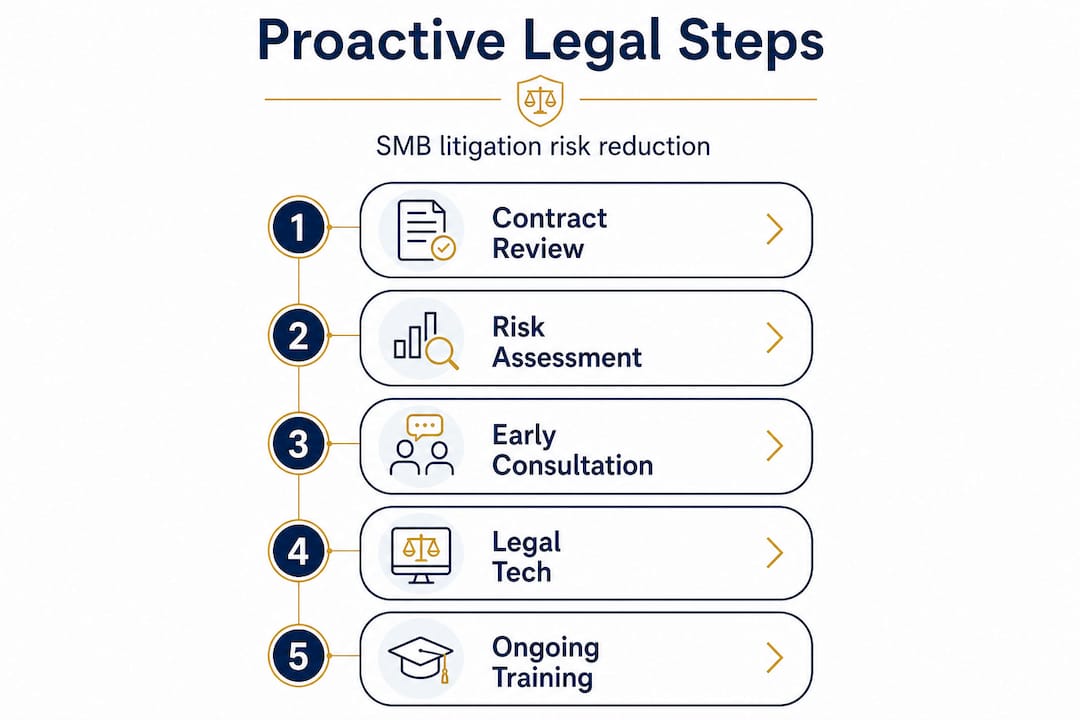
Here is the uncomfortable reality that most articles in this space skip: the biggest litigation risk for SMBs is not the lawsuit itself. It is the decision-making vacuum that exists before the lawsuit ever gets filed.
Most business owners think about commercial litigation as something that happens to them, a reactive event triggered by a bad actor. But in the majority of SMB disputes we see analyzed, the seeds were planted months or even years earlier, in a contract signed without review, a handshake deal without documentation, or a business relationship that grew without formal legal structure.
The conventional wisdom says "hire a good lawyer when things go wrong." Our perspective says: build legal thinking into your business operations continuously, not just during emergencies. A business that treats contracts as a formality, that never stress-tests its dispute resolution clauses, and that fails to document key business decisions is essentially pre-loading its own litigation risk.
There is also a mindset trap around conflict. Many SMB owners, especially founders, view any dispute as a fight they need to win. That winner-takes-all framing drives people toward full litigation when arbitration, mediation, or even a direct negotiated settlement would deliver better outcomes at a fraction of the cost. The "win" in a commercial dispute is usually preserving capital and relationships, not defeating the other party in a courtroom.
Leveraging legal tech is not about replacing lawyers. It is about making better-informed decisions faster so that when you do engage a qualified attorney, you are not starting from zero. SMBs that use AI-powered tools for preliminary contract review, compliance checks, and legal research enter disputes better prepared and exit them more efficiently.
The shift we advocate for: stop treating legal as a cost center you call in emergencies, and start treating it as an operational function that prevents emergencies from happening in the first place.
Take the next step: Smarter protection and dispute resolution
Commercial litigation does not have to catch you off guard. The businesses that manage disputes best are the ones that prepare for them before they start, using clear contracts, sound record-keeping, and accessible legal tools that keep them informed at every stage.
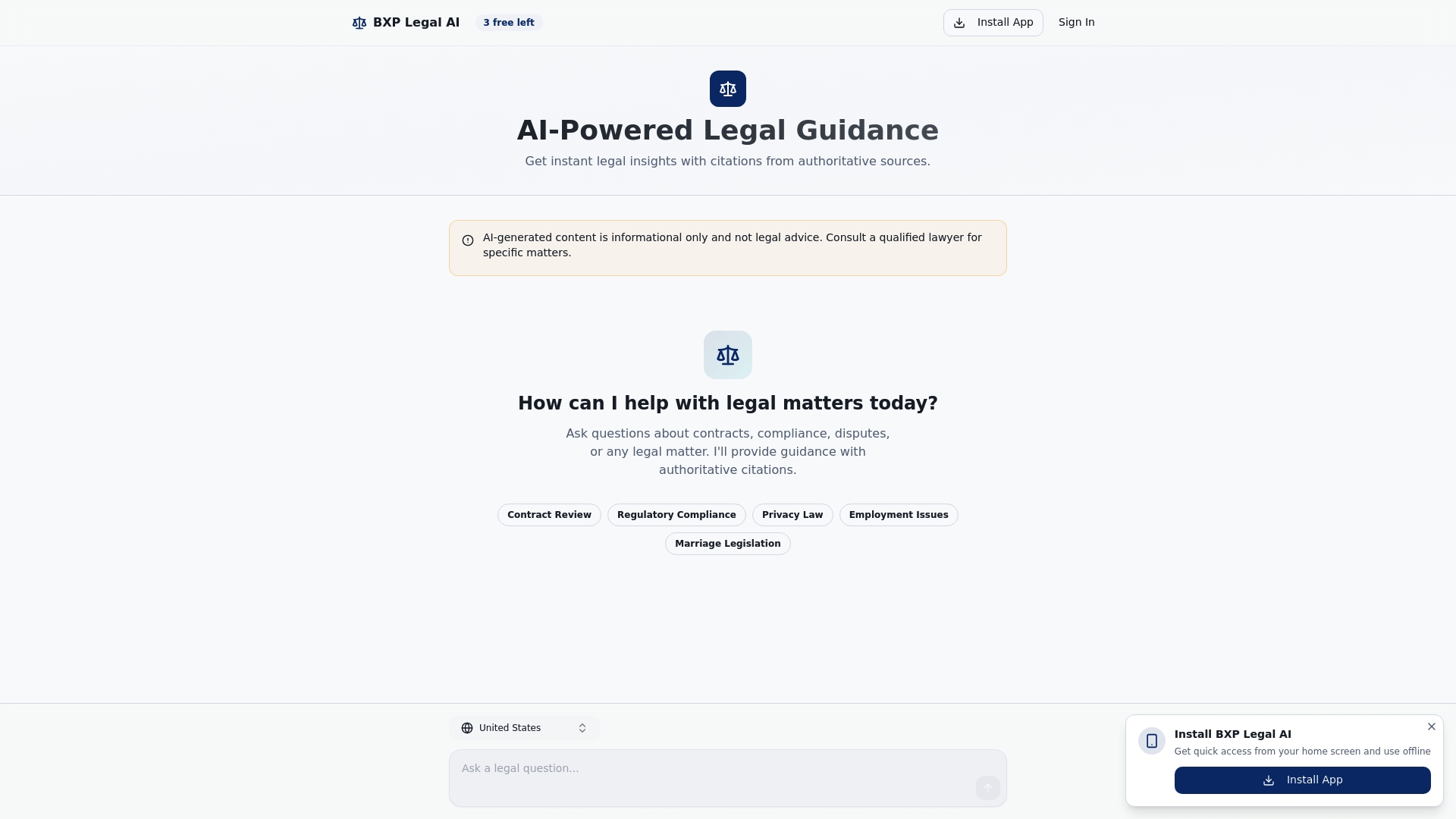
The BXP Legal AI platform is built precisely for business owners and managers who want immediate, AI-powered legal guidance without waiting weeks for a law firm appointment. Whether you need to understand a contract clause, research your rights in a dispute, or assess compliance across multiple jurisdictions, BXP Legal's features are designed to give you the clarity and confidence to make smarter legal decisions faster. Protecting your business starts with understanding it. Start there.
Frequently asked questions
What situations lead to commercial litigation?
Common triggers include contract disputes as well as partnership disagreements and business torts such as fraud or breach of fiduciary duty. Any dispute arising from a formal or informal business relationship can potentially become a commercial litigation matter.
How long does commercial litigation usually take?
Timelines vary significantly by case complexity and jurisdiction, but court-based litigation often extends to two or three years for a full trial. Arbitration is generally faster, more flexibly scheduled, and less expensive than traditional litigation, making it a practical alternative for many SMBs.
Can small businesses handle disputes without court?
Yes, many commercial disputes are resolved through negotiation, mediation, or arbitration without ever entering the court system. Commercial disputes are often handled outside traditional litigation, and most experienced legal advisors recommend exhausting these alternatives before filing a lawsuit.
What is the difference between litigation and arbitration?
Litigation is a public, court-based process subject to formal rules and full appeal rights, while arbitration is private, typically quicker, and conducted outside the court system. Arbitration is frequently faster and more confidential, but limits your ability to appeal an unfavorable outcome.
What can businesses do to minimize litigation risk?
Drafting clear, well-structured contracts with explicit dispute resolution clauses is the single most effective preventive measure. Maintaining thorough documentation of all business transactions and seeking early legal advice when disputes first emerge also significantly reduce the likelihood of costly formal litigation.