
TL;DR:
- Legal risk involves potential financial, reputational, or operational harm from legal uncertainties.
- Common overlooked risks include outdated contracts, worker misclassification, and privacy gaps.
- Proactive systems like regular reviews and clear documentation help small businesses manage legal exposure effectively.
Civil lawsuits cost small businesses $100 billion or more every single year. That number is staggering, but what's even more surprising is how many business owners and individuals assume legal risk is someone else's problem. It isn't. Whether you're signing a freelance contract, hiring your first employee, or storing customer emails, you're already navigating legal territory. This guide breaks down what legal risk actually means, the types that matter most, the hidden dangers people miss, what legal trouble actually costs, and the practical steps you can take right now to protect yourself.
Table of Contents
- What is legal risk?
- Major types of legal risk: What you need to know
- Hidden legal risks small businesses and individuals overlook
- The costs and impacts of legal risk for small businesses
- How to manage and reduce your legal risk
- The uncomfortable truth about legal risk: What most businesses get wrong
- Get proactive about your legal risk with BXP Legal AI
- Frequently asked questions
Key Takeaways
| Point | Details |
|---|---|
| Legal risk is everywhere | Anyone in business faces legal risks, not just large companies. |
| Types of risk differ | Regulatory, contractual, litigation, IP, and employment risks all pose serious threats if overlooked. |
| Prevention saves money | Proactive steps like compliance reviews and clear contracts can prevent most legal troubles. |
| Hidden dangers exist | Many legal problems start with small mistakes like ambiguous contracts or outdated policies. |
| Managing risk can be simple | Following a few best practices greatly reduces costly legal headaches. |
What is legal risk?
Legal risk sounds like something reserved for courtrooms and corporate boardrooms. In reality, it shows up in everyday decisions: a handshake deal with a vendor, a privacy policy you copied from another website, or a lease you signed without reading the fine print.
At its core, legal risk is the potential for financial loss, reputational damage, or operational disruption arising from non-compliance with laws, regulations, contractual failures, or legal actions. That definition covers a lot of ground, which is exactly the point. Legal risk isn't one thing. It's a category of exposure that can hit you from multiple directions at once.
Experts don't always agree on the precise boundaries. As the academic literature notes, no universal definition exists, but most agree legal risk stems from loss due to legal uncertainty. That uncertainty is the key word. You don't have to lose a lawsuit to suffer legal risk. The threat of a lawsuit, a regulatory investigation, or a contract dispute can drain time, money, and focus even if you ultimately win.
"Legal risk is not just about breaking the law. It's about any situation where legal uncertainty creates the potential for harm to your business or personal finances."
For small businesses, this plays out in very concrete ways. A contractor you classified as an employee might file a misclassification claim. A client might argue your deliverables didn't match the contract. A competitor might allege you used their trademarked logo without permission. None of these require bad intentions on your part. They just require a gap between what you did and what the law or a contract required.
Understanding legal documentation importance is one of the first practical steps toward closing those gaps. When agreements are written down clearly and reviewed regularly, the window for legal uncertainty shrinks considerably. That's not a guarantee of safety, but it's a meaningful reduction in exposure.
The bottom line: legal risk is real, it's broad, and it doesn't discriminate by business size. Anyone who enters into agreements, employs people, or operates under any regulatory framework faces it.
Major types of legal risk: What you need to know
Not all legal risks are the same. Knowing which category a threat falls into helps you respond faster and smarter. Key types include regulatory risk, contractual risk, litigation risk, IP risk, and employment/labor risk. Here's what each one actually means for you.
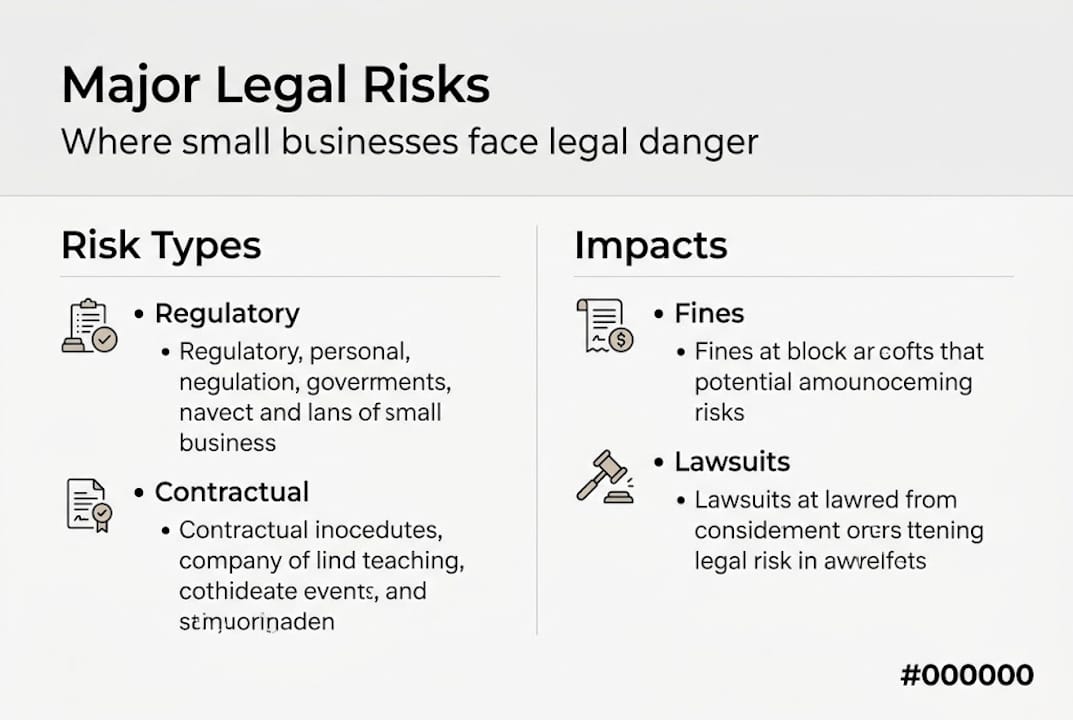
| Type | What it means | Real-world example |
|---|---|---|
| Regulatory risk | Failing to meet government rules or industry standards | Missing a required business license renewal |
| Contractual risk | Disputes or losses from unclear or broken agreements | A client claims your deliverable didn't match the contract |
| Litigation risk | Being sued or having to sue someone else | A customer slips in your store and files a personal injury claim |
| IP risk | Infringing on or failing to protect intellectual property | Using a stock photo without the right license |
| Employment/labor risk | Violations of hiring, pay, or workplace rules | Misclassifying a worker as an independent contractor |
For most small businesses, the most immediate threats tend to cluster around a few key areas:
- Contractual gaps: Vague language in agreements that leaves room for interpretation
- Regulatory non-compliance: Missing permits, licenses, or filing deadlines
- Employment missteps: Wage disputes, wrongful termination claims, or benefits errors
- Data and privacy failures: Collecting customer data without a proper privacy policy
- IP oversights: Using creative assets without verifying licensing rights
Staying on top of these requires more than good intentions. It requires systems. Reviewing your compliance steps regularly and keeping your compliance documents current are two of the most effective habits you can build. These aren't one-time tasks. They're ongoing practices that reduce your exposure over time.
Pro Tip: If you're unsure which type of legal risk is most relevant to your situation, start with your contracts and your employment arrangements. Those two areas generate the highest volume of disputes for small businesses.
Hidden legal risks small businesses and individuals overlook
Most people focus on the obvious legal risks: a lawsuit, a regulatory fine, a contract dispute. But the risks that actually catch businesses off guard tend to be quieter and more gradual. Misclassification, outdated contracts, and overlooked data privacy are among the most common edge cases, and ambiguities in these areas often trigger the first disputes.
Here are the most commonly overlooked legal risks, in order of how often they surprise business owners:
- Outdated contracts: A contract written three years ago may not reflect current law, your current services, or your current pricing structure. Using old templates without review is one of the fastest ways to create legal exposure.
- Worker misclassification: Calling someone a contractor when they function as an employee is a serious legal error. The IRS and state labor agencies look at the actual working relationship, not just the label.
- Data privacy gaps: If you collect names, emails, or payment information, you likely have legal obligations under state privacy laws. Many small businesses have no privacy policy at all.
- Verbal or informal agreements: Handshake deals feel efficient but create massive ambiguity. When disputes arise, there's no written record to fall back on.
- Rapid growth blind spots: Hiring quickly, expanding to new states, or launching new products can trigger compliance requirements you didn't anticipate.
Growth is actually one of the biggest hidden risk factors. When you scale fast, legal infrastructure often lags behind. You might hire employees in a new state without realizing that state has different wage laws. You might launch a subscription product without updating your terms of service.
Pro Tip: Set a calendar reminder every six months to review your core contracts and any agreements tied to your biggest clients or vendors. Pair this with a document retention policy so you always know what you have and where it lives. Also make sure your legal notices are current and visible wherever required.
Small issues compound. A missing clause in a contract today can become a six-figure dispute two years from now.
The costs and impacts of legal risk for small businesses
Knowing where legal risks hide is only part of the picture. Understanding what those risks actually cost is what motivates real action.
The numbers are hard to ignore. Small businesses pay 39% of all U.S. tort costs, and the smallest firms spend between 11 and 15 percent of their payroll on compliance. That's not a rounding error. That's a significant operational burden that falls hardest on the businesses least equipped to absorb it.

| Cost category | Impact on small business |
|---|---|
| Lawsuit defense costs | $3,000 to $150,000+ per case, even without a judgment |
| Compliance overhead | 11-15% of payroll for smallest firms |
| Regulatory fines | Hundreds to thousands per violation, per day in some cases |
| Reputational damage | Lost clients, negative reviews, reduced trust |
| Lost productivity | Owner and staff time diverted to legal issues |
Key stat: Civil lawsuits cost small businesses more than $100 billion per year in the U.S. alone. That figure includes direct legal fees, settlements, and the indirect cost of time spent managing disputes instead of running the business.
The ripple effects go beyond money. A legal dispute can freeze a business's ability to raise capital, sign new contracts, or attract talent. Investors and partners often run background checks that surface pending litigation. A single unresolved dispute can derail a deal that took months to build.
For individuals, the costs are just as personal. A contract dispute with a landlord, employer, or service provider can result in financial loss, damaged credit, or years of stress. Legal risk isn't abstract. It has a very real human cost.
Operating across multiple states or countries adds another layer. Navigating multi-jurisdiction compliance is genuinely complex, and using a compliance checklist tailored to your specific situation can help you track obligations without letting anything slip.
How to manage and reduce your legal risk
The good news is that most legal risks are preventable. Legal risk is often preventable with clear contracts, routine compliance reviews, and proactive mitigation steps. You don't need a full-time attorney on retainer to get started. You need a system.
Here's a practical sequence to follow:
- Audit your contracts: Review every active agreement. Look for vague language, missing termination clauses, and outdated terms. Replace or update anything that doesn't reflect your current business reality.
- Classify your workers correctly: Use the IRS common law rules or your state's test to verify whether your contractors should actually be classified as employees.
- Create or update your privacy policy: If you collect any personal data, you need a policy that meets current state and federal standards.
- Document everything: Verbal agreements, change orders, and informal decisions should all be written down and stored properly.
- Schedule compliance reviews: Quarterly or semi-annual reviews of your licenses, permits, and regulatory obligations prevent small lapses from becoming big problems.
- Use available tools: AI legal tools can help you review contracts faster, flag potential issues, and stay current on regulatory changes. Platforms designed for AI for legal compliance are making this more accessible than ever for small businesses.
Pro Tip: Get every agreement in writing, no matter how small. A simple email confirmation of a verbal deal creates a paper trail that can protect you if a dispute arises later. Courts and arbitrators rely heavily on written evidence.
Legal risk management isn't a one-time project. It's a habit. The businesses that avoid costly legal problems are the ones that treat compliance and contract hygiene as ongoing responsibilities, not annual checkboxes.
The uncomfortable truth about legal risk: What most businesses get wrong
Here's what most legal guides won't tell you: the biggest legal risk facing small businesses isn't ignorance of the law. It's overconfidence in static documents.
Business owners download a contract template, use it for three years, and assume they're covered. They're not. Laws change. Business relationships evolve. The contract that protected you in 2022 may leave you exposed in 2026. Ambiguities in outdated templates are exactly where first disputes begin.
The "set and forget" mindset is genuinely dangerous. Legal protection isn't a document you file away. It's a practice you maintain. That means revisiting your legal documentation insights regularly, staying curious about regulatory changes in your industry, and treating legal awareness as a core business skill, not a one-time expense.
The businesses that handle legal risk well aren't the ones with the most expensive lawyers. They're the ones that stay engaged, ask questions, and never assume yesterday's solution still fits today's situation.
Get proactive about your legal risk with BXP Legal AI
If this guide has made one thing clear, it's that legal risk requires ongoing attention, not a one-time fix. Taking the next step doesn't have to mean hiring a lawyer for every question.
BXP Legal AI gives you instant, AI-powered legal guidance on contracts, compliance, disputes, privacy, and more, all backed by authoritative citations. Whether you need to compare two contract versions or understand a new regulatory requirement, AI document comparison and our full suite of legal tools make it faster and more affordable to stay protected. Start reducing your legal risk today with smarter, more accessible legal support built for individuals and small businesses like yours.
Frequently asked questions
What is legal risk in simple terms?
Legal risk is the chance of losing money or facing trouble because you didn't follow laws, rules, or contracts. According to Wikipedia's definition, it includes potential financial loss, reputational damage, or operational disruption from non-compliance or contractual failures.
How can small businesses reduce legal risk?
Small businesses can use clear written contracts, review compliance obligations regularly, document all agreements, and seek expert advice when needed. Legal risk is often preventable with proactive mitigation steps and routine reviews.
What are the main types of legal risk to watch out for?
The major types are regulatory risk, contractual risk, litigation risk, intellectual property risk, and employment/labor risk. Each can affect businesses of any size.
Why do small businesses face higher compliance costs?
Small businesses carry a disproportionate burden because compliance costs 11-15% of payroll for the smallest firms, a much higher share than larger companies with dedicated legal and compliance teams.
What is an example of an overlooked legal risk?
An outdated contract or a missing data privacy policy can trigger disputes you never saw coming. Misclassification and data privacy gaps are among the most common blind spots for growing small businesses.