
TL;DR:
- Compliance technology transforms manual, reactive processes into continuous, auditable workflows that protect organizations. It centralizes evidence, automates checks, and scales compliance efforts without proportional staff growth, especially benefiting SMEs. Structured exception management and dynamic workflows improve audit readiness and operational efficiency, enabling smaller teams to manage complex obligations confidently.
Compliance technology is widely misunderstood. Most small and mid-sized enterprises picture it as a fancier way to manage spreadsheets or track policy sign-offs, but that framing undersells what these platforms actually do. The real value is in transforming fragmented, manual compliance processes into structured, repeatable, and auditable systems that protect your organization around the clock. This guide walks you through what compliance technology genuinely does, why it matters specifically for SMEs, and how to avoid the most costly mistakes teams make when adopting it.
Table of Contents
- What is compliance technology really for?
- Key roles and benefits for SMEs
- From static checklists to dynamic workflows: How it works
- Managing exceptions: Oversight, not workarounds
- What most compliance guides miss: Scaling with small teams
- How BXP Legal can help your SME scale compliance confidently
- Frequently asked questions
Key Takeaways
| Point | Details |
|---|---|
| Centralize and automate | Compliance technology organizes documents, automates checks, and gives SMEs real-time control. |
| Focus on true exceptions | Automated workflows let small teams spend their energy on real risks and policy changes instead of manual busywork. |
| Audit trail advantages | Good compliance platforms create evidence reports that make audits smoother and more defensible. |
| Exception management matters | Well-structured exception workflows help find and fix underlying compliance gaps. |
What is compliance technology really for?
Let's clear up the biggest misconception first. Compliance technology is not a digital checklist. It is not a filing system for policies or a replacement for a compliance officer. Those descriptions capture maybe 10 percent of the actual function.
Compliance technology's core role is to convert regulatory and internal requirements into repeatable workflows that continuously monitor, alert, and produce auditable evidence. That means your organization is not just documenting compliance after the fact. It is actively tracking live obligations, catching gaps as they emerge, and building a defensible evidence trail in real time.
Here is what that looks like in practice:
- Workflow creation: Translating regulations or internal policies into defined steps, owners, and timelines
- Real-time monitoring: Ongoing tracking of controls, thresholds, and obligations rather than point-in-time snapshots
- Centralized evidence logging: All documentation, sign-offs, and test results stored in one searchable location
- Automated alerts: Notifications when controls fail, deadlines approach, or data anomalies appear
- Audit-ready reporting: Pre-structured outputs mapped to specific frameworks or regulatory requirements
Compare this to manual compliance, where a team member periodically pulls reports, checks a shared drive, and sends reminder emails. That approach is reactive, error-prone, and nearly impossible to defend in an audit.
"Manual compliance processes rely on individual memory and periodic effort, while technology-driven compliance embeds control checks into operations so oversight becomes continuous rather than seasonal."
Understanding these compliance steps for SMBs is the starting point for every implementation decision you make going forward. Getting clarity here prevents you from buying tools that solve the wrong problem.
Key roles and benefits for SMEs
Many compliance platforms are designed with enterprise budgets and teams in mind, which causes smaller companies to assume the technology is out of reach or overkill. That assumption is wrong, and it is increasingly costly.
For SMEs, compliance technology plays three distinct roles that go beyond what larger organizations typically prioritize.
Role 1: Centralizing compliance artifacts
Small teams lose enormous time tracking down the right version of a policy, chasing down signed acknowledgments, or locating evidence from six months ago. A compliance platform becomes the single source of truth for policies, contracts, training records, vendor assessments, and exception logs. That centralization alone reduces friction in day-to-day operations significantly.

Role 2: Automating evidence gathering
Compliance technology accelerates evidence collection and streamlines audits by structuring and mapping control evidence to standards such as SOC 2. Instead of manually compiling screenshots and logs before an audit, the platform builds that evidence continuously. When an auditor asks for six months of access review logs, you export rather than reconstruct.
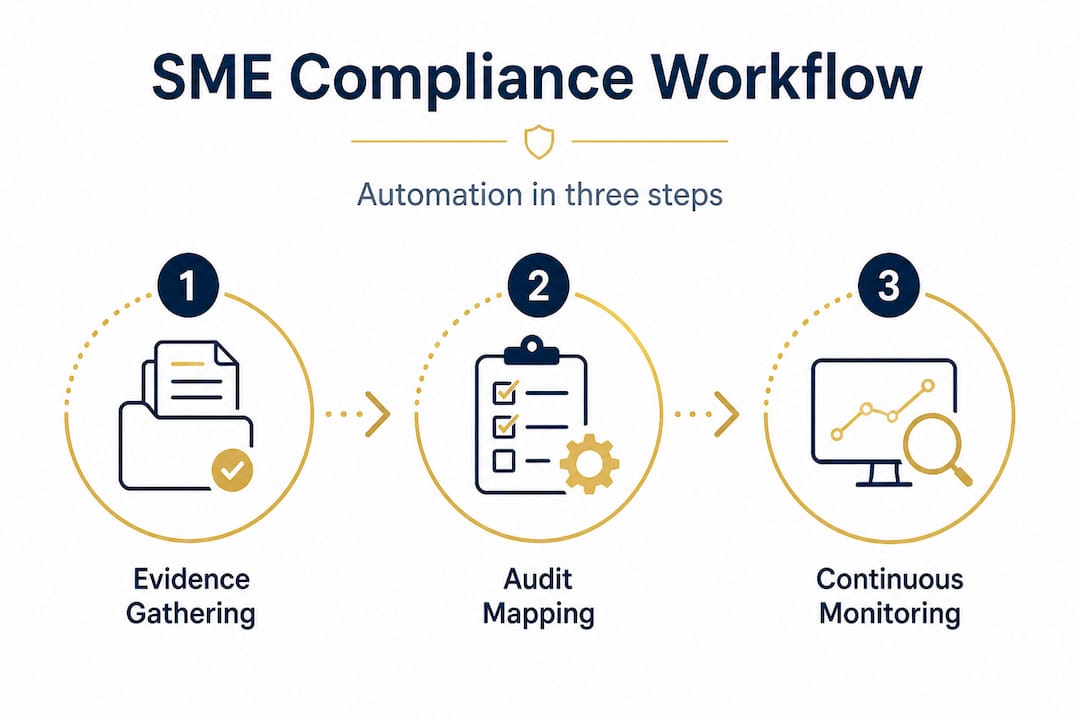
Role 3: Scaling without proportional headcount
This is the most underappreciated benefit for SMEs. For small teams, compliance technology is less about eliminating compliance work and more about scaling it: centralizing artifacts (policies, contracts, evidence), automating repeatable checks, and providing audit-ready trails. You can grow your regulatory obligations without growing your team at the same rate.
| Benefit | Manual approach | Technology-driven approach |
|---|---|---|
| Evidence collection | Manual, pre-audit scramble | Continuous, automated |
| Policy distribution | Email-based, hard to track | Platform-managed with sign-off records |
| Audit preparation | Weeks of reconstruction | On-demand export |
| Exception tracking | Informal, undocumented | Structured workflow with history |
| Regulatory updates | Caught manually or late | Automated monitoring and alerts |
This table illustrates why legal tech and SME compliance are becoming inseparable for growth-oriented companies. The operational leverage is real and measurable.
Pro Tip: Before you evaluate any compliance platform, map your three most time-intensive compliance tasks for the past quarter. If those tasks are not clearly automated or streamlined by the tool you are considering, keep looking.
The SME compliance benefits extend beyond cost savings. Organizations with structured compliance programs are better positioned for partnership agreements, funding rounds, and enterprise sales cycles where due diligence is a gate.
From static checklists to dynamic workflows: How it works
The shift from static to dynamic compliance is not incremental. It is a fundamentally different model for how your organization relates to its obligations.
Static compliance looks like this: Once per quarter, someone opens a spreadsheet, works through a list of controls, updates statuses manually, and emails results to a manager. The process captures a moment in time. Between those moments, you are flying blind.
Dynamic compliance works continuously. A modern compliance platform automates tracking, reporting, and alerts, with centralized dashboards and audit trails for ongoing transparency and accuracy. Controls are tested on a schedule, or triggered by specific events, and results flow into a live dashboard that any authorized stakeholder can view.
Here is a step-by-step view of how a dynamic compliance workflow typically operates:
- Intake: A new regulatory requirement or internal policy is entered into the platform and mapped to relevant controls
- Assignment: Ownership and deadlines are automatically assigned based on pre-configured rules
- Execution: Control owners complete tasks, upload evidence, or confirm completion within the platform
- Monitoring: The system checks completion status and flags anything overdue or out of threshold
- Alerting: Automated notifications go to owners and managers when action is required
- Exception routing: Items that cannot be completed as specified are routed into a structured exception workflow (more on this below)
- Reporting: Dashboard and audit outputs are available on demand, already mapped to relevant frameworks
This workflow replaces at least a dozen separate manual steps and eliminates the coordination overhead that burns so much of a small compliance team's time.
| Feature | Static checklist | Dynamic platform |
|---|---|---|
| Monitoring frequency | Periodic | Continuous |
| Evidence storage | Manual file saves | Automated, tagged, and searchable |
| Alert mechanism | Calendar reminders | System-triggered, role-based |
| Audit output | Manual compilation | On-demand, pre-formatted |
| Exception handling | Ad hoc | Structured workflow |
Managing multi-jurisdictional workflow compliance becomes far less chaotic when your platform can track different obligations across different regions simultaneously rather than relying on manually maintained regional spreadsheets.
Pro Tip: When demoing a compliance platform, specifically ask how it handles exception routing and audit trail generation. Those two features reveal more about real-world usability than any marketing overview will.
Well-designed automated document workflows integrate directly with compliance platforms, so that when a new contract or policy is created, it automatically triggers the appropriate compliance review steps. That connection between document management and compliance monitoring closes one of the most common gaps in SME operations.
Managing exceptions: Oversight, not workarounds
Exception management is the feature most teams underestimate, and the one that separates genuinely mature compliance programs from those that just look good on paper.
An exception happens when a standard control cannot be met as written. Maybe a third-party vendor cannot meet your data retention requirement. Maybe a legacy system cannot support multi-factor authentication on the same timeline as everything else. These situations are normal and unavoidable. The question is how your organization handles them.
Here is what poor exception management looks like:
- An informal email between a manager and a compliance officer, with no documentation
- A verbal agreement that a control will be addressed "later"
- A policy waiver granted with no expiration date or compensating controls
- No record of who approved the exception or why
Every one of those practices creates audit exposure and governance gaps. When regulators or auditors ask how you handled a specific control gap, "we sent an email" is not a defensible answer.
Good compliance tech treats exceptions as a first-class workflow with structured intake, triage, and governance visibility, because recurring exceptions can signal a policy gap or operational misfit. That insight is critical. When the same exception gets requested repeatedly, it means your policy is out of step with operational reality and needs to be updated, not just waived again.
Effective structured exception management includes:
- Formal intake: Every exception request is submitted through the platform with a description of the gap, the business justification, and the proposed compensating control
- Triage and review: A designated owner or committee reviews and approves or denies the request
- Audit trail: The decision, rationale, and approver are all logged in the platform permanently
- Expiration and renewal: Exceptions have defined timeframes and must be actively renewed rather than remaining open indefinitely
- Trend analysis: Platform-level reporting identifies which controls or policies generate the most exception requests over time
"Treating exceptions as a workflow signal rather than a one-off inconvenience is what separates compliance programs that evolve from ones that stagnate."
A structured SME risk assessment process works hand in hand with exception management. When you review exception trends quarterly, you get a live view of where your highest operational risk concentrations actually sit.
What most compliance guides miss: Scaling with small teams
Most articles about compliance technology focus on features, pricing tiers, or integration lists. They treat adoption as a software decision rather than a strategic one. That framing misses the most important variable: people.
Small compliance teams are not short on commitment or intelligence. They are short on hours. A two-person compliance function at a 150-person company is not going to become a ten-person team next year. The question is how to make those two people dramatically more effective without burning them out or exposing the company to risk.
The answer is not automation for its own sake. Plenty of companies automate the wrong things, spending budget on workflows that did not need to exist in the first place. Real leverage comes from three specific moves: centralizing where evidence lives, automating the checks that consume the most repetitive effort, and reserving human attention for genuine exceptions and policy judgment calls.
Teams that treat exception management as a core function rather than an afterthought consistently get better audit outcomes. They spend less time firefighting because they have early warning signals built into their workflow. They also build institutional knowledge about which controls are actually hard to meet in their specific operational context, which makes future policy writing far more realistic.
The other thing most guides skip is the value of structured compliance evidence in building stakeholder trust. When a potential enterprise customer asks about your SOC 2 status, being able to generate a clean evidence package on short notice is not just impressive. It can be the difference between closing a deal and losing it. When your board asks about regulatory exposure, having a dashboard that shows real-time control status is a fundamentally different conversation than presenting a quarterly summary someone compiled manually.
If you want to reduce risk for your SME in a way that actually scales, the strategic investment is in building compliance infrastructure that outlasts any single team member and communicates clearly to every stakeholder who needs visibility.
How BXP Legal can help your SME scale compliance confidently
Making the shift from manual compliance to structured, technology-driven workflows is exactly where many SMEs get stuck. The concepts are clear, but finding tools that fit your team size, budget, and regulatory context takes real guidance.
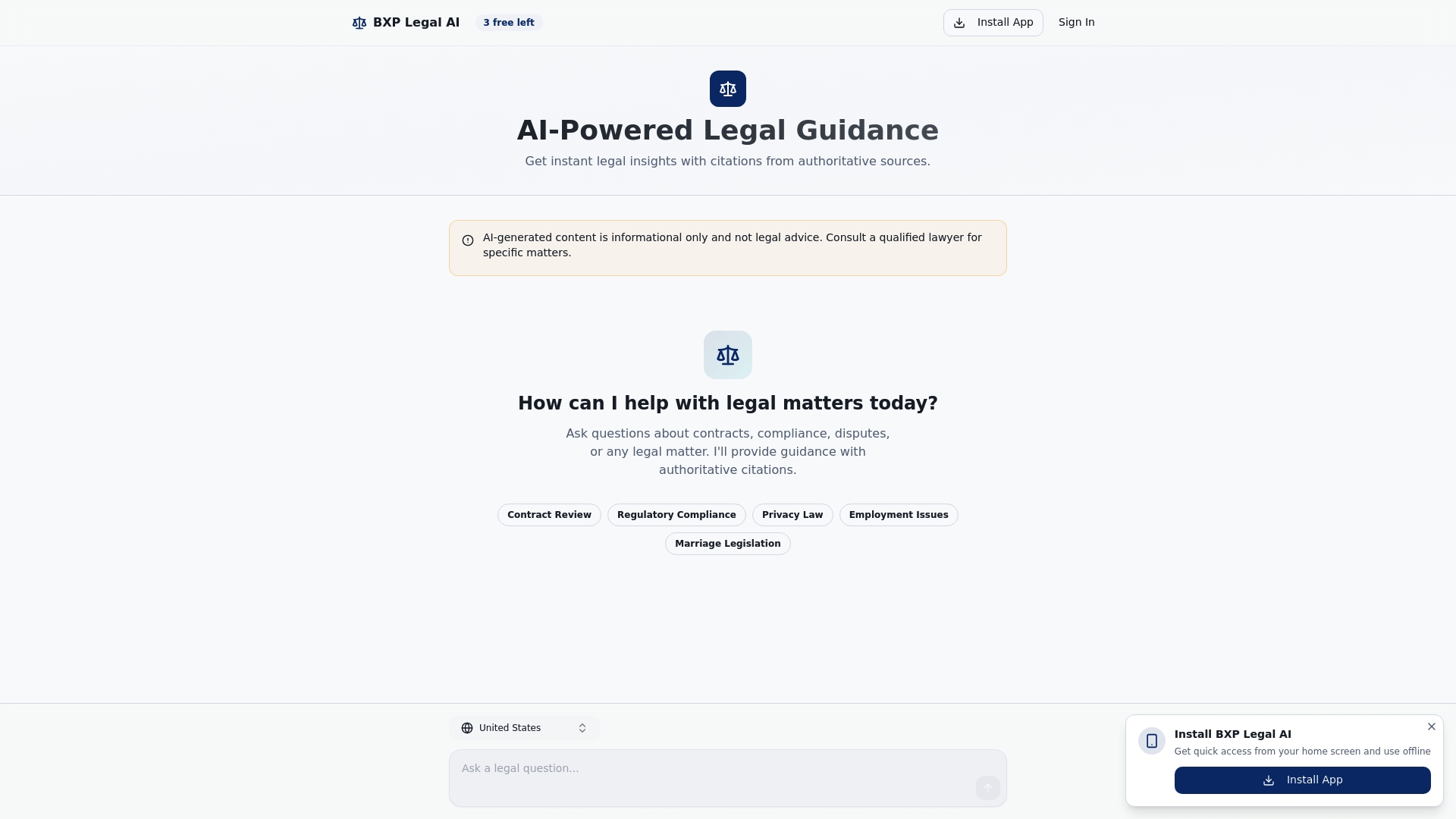
BXP Legal is built for compliance officers and contract managers at companies like yours. The platform delivers instant, citation-backed legal and compliance guidance across contracts, regulatory requirements, privacy law, and multi-jurisdictional obligations, without the cost or delay of traditional legal counsel for every question. The AI features support audit-ready document drafting, compliance research, and exception analysis so your team spends less time searching and more time managing what matters. Start exploring how BXP Legal fits into your compliance workflow today.
Frequently asked questions
How does compliance technology help with audits?
Compliance technology automates evidence collection, flags non-compliance in real time, and generates audit-ready reports, so your team exports rather than reconstructs documentation when auditors arrive.
What makes exception management so important in compliance platforms?
Structured exception management ensures that policy gaps and recurring issues are formally reviewed and documented rather than informally waived. Good compliance tech treats exceptions as a first-class workflow with intake, triage, and governance visibility.
Is compliance technology only useful for large companies?
Not at all. For small teams, compliance technology is specifically about scaling centralization, automation, and audit-readiness without requiring proportional headcount growth.
What are some examples of repeatable compliance workflows?
Common examples include automated policy attestation requests, continuous evidence collection for SOC 2 controls, centralized exception intake and approval routing, and scheduled access review reminders with automated logging.