
TL;DR:
- Online legal services provide 24/7 access, reducing traditional barriers for small businesses and individuals.
- They offer cost-effective, predictable flat fees for routine legal tasks, saving money compared to hourly rates.
- Suitable for structured tasks like contracts and filings, but complex legal issues still require traditional lawyer involvement.
Finding quality legal help at a price that doesn't wipe out your operating budget is one of the most frustrating challenges small business owners and individuals face. Traditional law firms can charge $300 to $500 per hour, and even a brief contract review can turn into a multi-hundred-dollar bill before you know it. Online legal services have emerged as a practical alternative, giving you access to real legal support without the overhead. This article breaks down when these platforms deliver genuine value, where they fall short, and how to build a legal strategy that works for your actual situation and budget.
Table of Contents
- Why accessibility and convenience matter
- Cost savings and value predictability
- Best-fit tasks: What online legal services excel at
- When traditional legal help is still needed
- Why a blended approach to legal services often wins
- Make the most of online legal services with the right platform
- Frequently asked questions
Key Takeaways
| Point | Details |
|---|---|
| Access and convenience | Online legal services offer 24/7 support and document access without travel or scheduling stress. |
| Cost transparency | With flat-rate and subscription options, online legal solutions help you plan and predict your legal expenses. |
| Best-suited tasks | Routine documents and compliance filings are online services' strong suits, while complex legal issues warrant traditional lawyers. |
| Know the limits | Hybrid or traditional legal expertise is crucial for disputes, high-value, or jurisdiction-specific matters. |
| Blended approach wins | Combining digital tools for simple needs with expert review for complex cases maximizes value and peace of mind. |
Why accessibility and convenience matter
Once you've recognized the everyday obstacles of legal access, it's vital to see how online solutions directly overcome them. The traditional model assumes you have time during business hours to sit in a waiting room, that you live near a qualified attorney, and that you can afford ongoing retainer fees. Most small business owners don't check any of those boxes.
Online legal services break all three barriers at once. 24/7 remote access means you can generate, review, or sign a document at 11 p.m. on a Tuesday without waiting for office hours. That matters enormously when you're managing a business, a family, and every other obligation that fills your week.
Here's what that looks like in practical terms:
- Document creation and storage: Draft NDAs, employment agreements, and vendor contracts from any device, then store them securely in a digital portal.
- E-signatures: Collect legally binding signatures remotely, removing the need for in-person meetings or printing.
- Secure messaging: Communicate with legal professionals or AI-powered tools through encrypted channels, protecting confidentiality.
- Remote consultations: Video or chat-based Q&A with licensed attorneys is now standard on many platforms.
- Digital audit trails: Every version, signature, and edit is logged, which is invaluable if a dispute arises later.
For someone who wears multiple hats, the ability to handle legal tasks asynchronously is not just convenient. It's transformational. You get speed, clarity, and confidence on your schedule instead of someone else's.
"Technology-enabled legal services allow individuals and small businesses to access core legal functions without being physically present or limited to traditional business hours."
This shift is especially powerful for businesses in rural or underserved areas, where a qualified local attorney may be hours away. It's also critical for legal guidance for small businesses operating across multiple states, where jurisdiction complexity used to demand expensive multi-firm relationships.
Cost savings and value predictability
Now that you know how online services open up access, let's see how they transform legal spending for the better. Cost is where the difference becomes impossible to ignore.
Traditional hourly billing is unpredictable by design. You don't always know how many hours a task will take, and even simple matters can escalate quickly when back-and-forth communication is involved. Online platforms flip this model entirely. Most charge flat fees per document or offer monthly subscription plans that cover a set number of tasks.
| Task | Traditional attorney (avg.) | Online platform (avg.) |
|---|---|---|
| Simple contract draft | $400 to $800 | $30 to $150 |
| LLC formation documents | $1,000 to $2,500 | $100 to $500 |
| Basic NDA | $300 to $600 | $10 to $50 |
| Will or basic estate doc | $1,500 to $3,000 | $100 to $300 |
For routine legal tasks, online platforms are designed to be cheaper and more predictable than hourly billing. That predictability alone is worth a lot when you're managing a tight operating budget.

The data backs this up. 67% of small business owners say cost is the primary barrier to getting legal help, and subscription-based online platforms are specifically designed to remove that obstacle. For $20 to $50 per month, many platforms give you access to template libraries, attorney Q&A, and document storage.
If you want to consult legal experts for more complex needs, some platforms offer tiered plans that include limited attorney review time, giving you a safety net without the full retainer cost.
Pro Tip: For simple vendor agreements or basic service contracts, a guided online template may be entirely sufficient. Compare what you'd pay for one attorney hour to the cost of an annual platform subscription before defaulting to traditional billing.
The AI solutions for legal guidance emerging in 2026 take this further by surfacing relevant legal rules and clause suggestions automatically, reducing the time you spend researching and increasing confidence in what you're signing.
Best-fit tasks: What online legal services excel at
Understanding cost advantages sets the stage for identifying where and when online help is most effective. Not every legal need is created equal, and digital platforms shine brightest on structured, repeatable tasks.
The core mechanics that make online legal services effective include structured questionnaires, jurisdiction-aware templates, remote attorney Q&A, and digital audit trails. These features are purpose-built for the most common legal needs individuals and small businesses encounter.
Here's a ranked list of tasks where online platforms consistently deliver strong results:
- Standard contract drafting: NDAs, independent contractor agreements, service contracts, and partnership outlines are highly suited to templated workflows.
- LLC and business formation: Online guided filings handle the paperwork and state submission efficiently.
- Compliance filings and renewals: Annual report submissions, registered agent updates, and standard regulatory filings work well digitally.
- Basic employment documents: Offer letters, confidentiality agreements, and employee handbooks can be customized through guided tools.
- Intellectual property basics: Trademark application prep and copyright notices benefit from structured online platforms.
| Legal task category | Online platform fit | Notes |
|---|---|---|
| Document drafting | Excellent | Templates are jurisdiction-specific |
| Compliance filings | Very good | Automated reminders help |
| Attorney Q&A | Good | Limited to general guidance |
| Contract negotiation | Moderate | Works for low-stakes agreements |
| Litigation support | Limited | Attorney involvement usually needed |
Explore AI tools for contracts and compliance to see how automation reduces error rates in document prep. If you're handling larger agreements, expert contract drafting resources can guide you toward stronger clauses. You can also build repeatable systems using document automation workflows once your standard documents are established.
Pro Tip: Always verify that a platform's templates are current and jurisdiction-specific for your state. A generic contract missing one required clause can be unenforceable, which defeats the entire purpose of having the document.
When traditional legal help is still needed
While digital legal tools offer many strengths, there are crucial scenarios where a licensed attorney remains essential. Knowing these boundaries protects you from a false sense of security.
The core limitation of online legal services is that they reduce the cost of production, not necessarily the cost of a bad outcome. As one legal scholar notes, cheaper output does not automatically mean better legal outcomes, especially when regulatory complexity or adversarial dynamics enter the picture.
Situations that typically require traditional legal representation include:
- Complex litigation: If you're being sued or suing someone, you need an attorney who can appear in court and build strategy.
- High-value negotiations: Mergers, acquisitions, and large commercial deals carry risks that template contracts don't account for.
- Contested employment disputes: Wrongful termination claims, harassment allegations, and labor board complaints involve layered facts that require expert judgment.
- Divorce and family law: Contested divorces involving property, custody, or business ownership are rarely straightforward.
- Real estate disputes: Title issues, construction defects, and landlord-tenant litigation benefit from local legal knowledge.
Online platforms are also less suitable for jurisdiction-specific matters where state or local regulations create unusual nuance. A template that works in Texas may be problematic in California, and a platform that doesn't flag that distinction creates real risk.
For those cases, AI for legal research can still help you prepare, understand the relevant rules, and ask better questions when you do meet with an attorney. And if you're unsure whether your situation requires professional help, consulting legal experts early is always the smarter move. Research on AI and legal outcomes continues to reinforce that technology supports but does not replace human judgment in high-stakes scenarios.
Why a blended approach to legal services often wins
Here's an opinion you won't hear from many platforms selling you a subscription: the smartest legal strategy isn't all-digital or all-traditional. It's a deliberate blend.
Most small business owners can safely handle 80% of their legal tasks online. Standard contracts, basic filings, employment templates, and compliance renewals don't need a $400-per-hour attorney. Automating those tasks frees up your legal budget for the 20% that actually carries risk.
The mistake we see most often is treating online tools as either the complete solution or dismissing them entirely. Both views leave money and protection on the table. Use a platform to draft, then schedule a targeted review with a licensed attorney for anything involving real financial exposure or unusual facts.
Knowing when to consult legal experts is itself a legal skill worth developing. The future of AI-driven law points toward hybrid workflows becoming the norm, not the exception. Getting comfortable with that blend now puts you ahead of the curve.
Make the most of online legal services with the right platform
If you're ready to put these advantages to work, the right technology partner is your next step. Not all platforms are equal, and choosing one that covers your actual use cases matters more than picking the cheapest option.
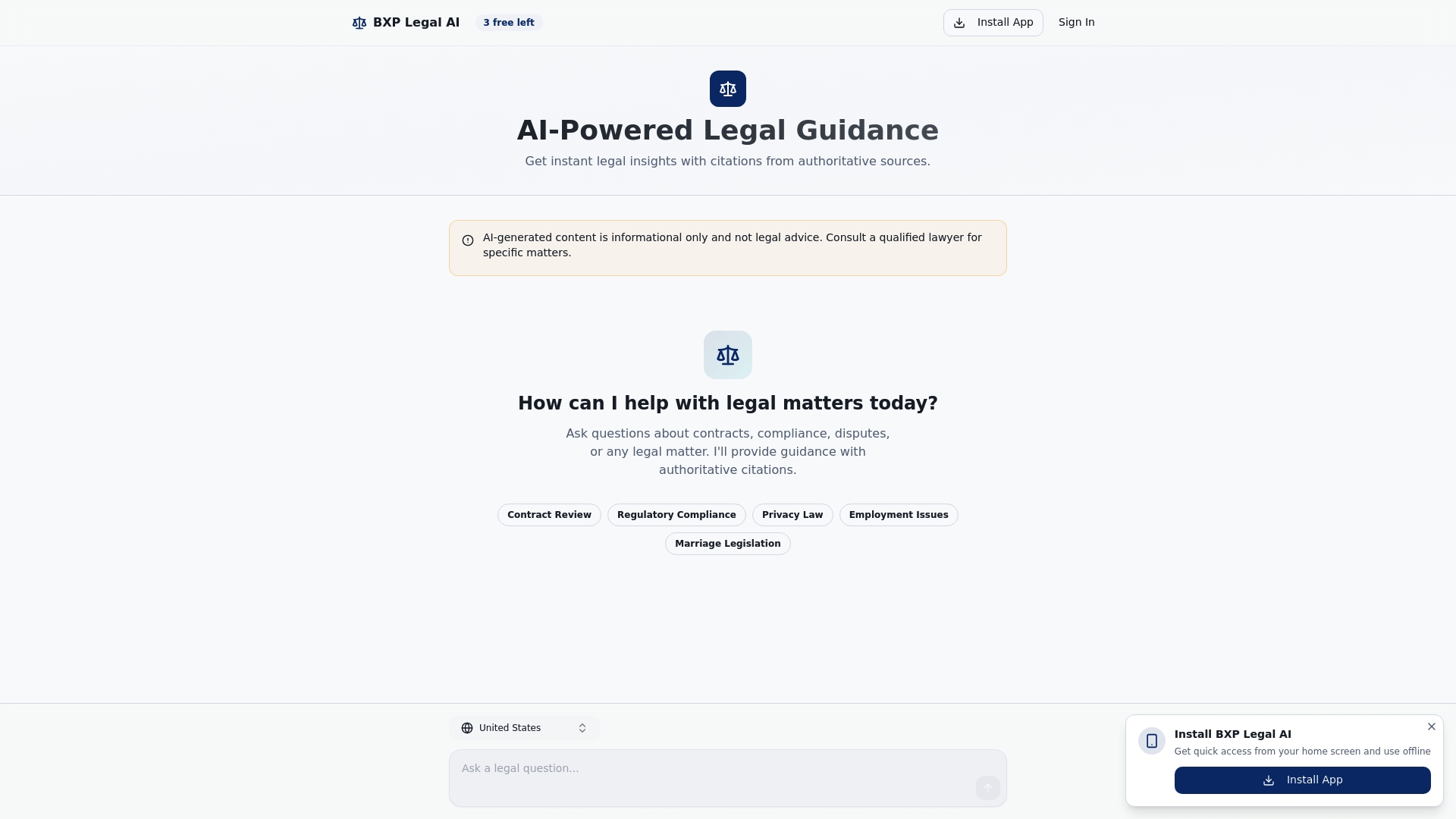
The BXP Legal AI platform is built specifically for individuals and small businesses that need real legal guidance without the overhead of traditional law firms. From contract drafting and compliance questions to privacy law and employment issues, BXP Legal gives you AI-powered answers backed by authoritative citations. You can also use the document comparison feature to spot differences between contract versions quickly. Start exploring what's possible when legal help is finally built around your schedule and your budget.
Frequently asked questions
What types of legal tasks are best handled online?
Standard document drafting and routine compliance filings are ideal for online platforms, but complex or adversarial matters typically still require in-person attorney representation.
How much money can I save with online legal services?
You can often save hundreds to thousands of dollars per document by using flat-rate online platforms. Routine legal tasks like wills, NDAs, and business formation documents cost a fraction of traditional attorney rates.
Are online legal services secure and confidential?
Reputable platforms use encrypted portals and digital audit trails to protect your documents and communications, making them comparable to traditional firm security standards for most use cases.
Can online legal services handle disputes and litigation?
Basic document prep and general Q&A are within scope, but complex litigation and high-stakes negotiations require a licensed attorney who can represent you and adapt to evolving facts.
How do I know if an online legal platform fits my needs?
Evaluate whether your legal task is routine and document-based, then verify the platform's credentials and template coverage for your jurisdiction before committing, as outlined in practical evaluation guides for assessing online legal services.
Recommended
- Why small businesses need legal guidance: reduce risk
- Online legal guidance: speed, clarity, and confidence
- Legal compliance explained: essential steps for SMBs
- Legal compliance checklist for SMBs: essential 2026 steps
- The Advantages of Hiring a Virtual Legal Assistants - Attorney Assistant | Attorney Assistant